
Vodka & Neutral Spirits Library / Guide 07
Activated Carbon& Filtration
How carbon filtration works and what it can change.
Vodka can be filtered to remove particles and to adjust its final character. Physical filtration removes suspended material. Activated carbon can reduce some dissolved aroma and flavour compounds through adsorption.
Filtration is a style decision — more filtration does not automatically mean better vodka.
Scope Guide 02 covers rectification. Guide 08 covers water, dilution and texture. Here we focus only on filtration and activated carbon.
Start with the filtration job →Continue where you left off →Guide contents
Follow the finishing stage from simple filtration to activated carbon, then see what the treatment can change and how to read filtration claims behind the bar.
Why vodka is filtered
Filtration is a finishing choice. The first question is simple: what is the producer trying to remove or change?
Two different jobs
A vodka may already look clear after distillation and rectification. Producers can still use filtration to remove suspended material or activated carbon to reduce some aroma and flavour compounds.
A filter can catch small particles and help leave the spirit clear before bottling.
Activated carbon can reduce some dissolved aroma and flavour compounds that a normal particle filter cannot remove.
“Filtered” alone does not tell you whether the producer removed particles, used activated carbon, or combined several finishing steps.
Filtration vs activated carbon
Physical filtration and activated carbon are often spoken about together, but they do different jobs.
The filter removes material that is suspended in the liquid.
Some aroma and flavour compounds can stick to the carbon surface even when the vodka already looks perfectly clear.
One useful word: adsorption
Adsorption means compounds stick to a surface. In this case, some dissolved compounds in the spirit stick to activated carbon.
Adsorption is different from absorption. For this guide, the practical point is simply that activated carbon can hold some compounds on its surface.
What activated carbon is
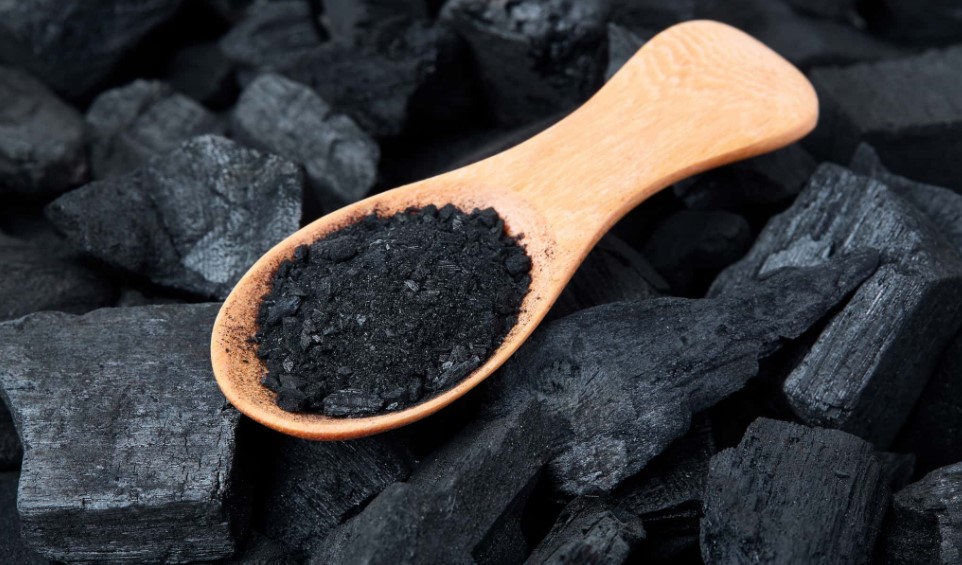
Activated carbon is a highly porous material used by some producers as a finishing treatment for vodka.
How it works
Its porous structure gives it a very large surface. As the spirit comes into contact with the carbon, some aroma and flavour compounds stick to that surface.
This gives the producer another way to adjust the spirit after distillation and rectification.
Different activated carbons can affect the spirit differently, so carbon filtration is not one identical process used by every producer.
How carbon filtration is controlled
The result depends on how the producer uses the carbon. There is no single filtration recipe for every vodka.
Different activated carbons can give different results.
The amount of carbon affects how much treatment is possible.
Flow speed or contact time changes how much opportunity the spirit has to interact with the carbon.
The starting spirit and its strength also influence the final result.
The important lesson
Carbon does not remove everything equally. Producers control the treatment to reduce what they do not want while keeping the style they do want.
The goal is the desired vodka style, not the maximum possible amount of filtration.
What filtration can change
For a bartender, this is the most useful part: carbon filtration can influence how much character remains in the final vodka.
From production choice to the glass
Activated carbon can reduce some aroma and flavour compounds. Depending on the starting spirit and the amount of treatment, the finished vodka may become lighter in aroma, lighter in flavour or less expressive of its raw material.
Some aroma compounds can be reduced during carbon treatment.
The spirit can lose some flavour character depending on how strongly it is treated.
Filtration can help a producer move the final vodka toward a cleaner, more neutral style.
Filtered vodka is not automatically smoother or better. The result depends on the original spirit, the filtration method and the style the producer wants.
Reading filtration claims
“Filtered five times” sounds impressive, but the number alone tells you very little about what happened to the vodka.
Charcoal filtered, cold filtered, multi-stage filtered or another production claim.
Physical filtration, activated carbon, cooling or a combination of finishing steps.
Clarity, aroma, flavour or the overall style of the vodka.
The spirit is chilled so some material becomes easier to remove with a physical filter. This is different from activated-carbon adsorption.
Vodka does not have to be charcoal filtered. Producers choose filtration methods according to their production process and intended style.
Behind the bar
When a brand talks about filtration, ask three questions: What was used? What was the producer trying to change? What did the treatment contribute to the final style?
Producers use it to remove unwanted material and, with activated carbon, to reduce some aroma and flavour compounds. The aim is the style they want — not simply the highest possible level of filtration.
Remember the difference
Two jobs, two mechanisms
- Physical filtration removes suspended material
- Activated carbon works by adsorption
- Adsorption means compounds stick to a surface
- Carbon treatment can reduce some aroma and flavour compounds
Remember the purpose
Filtration helps shape style
- Different producers use different filtration methods
- More filtration does not automatically mean better vodka
- Look beyond the number of times filtered
- Ask what the treatment actually changed
REFSources & Further Reading
Primary legal and research sources used to verify the filtration and activated-carbon points in this guide.
Law · vodka and charcoal claims
European Union · Regulation (EU) 2019/787Current consolidated spirit-drinks regulation · vodka definition and optional activated-charcoal treatmentUnited States · 27 CFR §5.142Current neutral spirits and vodka standard · “charcoal filtered” labeling thresholdActivated carbon in distillates
Balcerek et al. · Activated carbon treatment of agricultural distillatesResearch · how carbon amount and spirit strength affect aroma compoundsCai et al. · Further purification of food-grade alcoholResearch · granular activated carbon used in a multi-stage purification processThe takeaway
Read the filtration.
Then read what remains.
Activated carbon can reduce selected aroma and flavour compounds after distillation. Carbon type, contact, flow and treatment intensity determine the scale of that change.