Academy guide / Expanded edition
Cognac
Cognac is a protected French wine spirit whose identity begins with origin. Follow the AOC from vineyard and base wine through Charentais double distillation, oak maturation, assembly and the label.
ScopeThis guide stays Cognac-specific throughout. It establishes the AOC first, then separates legal requirements from the producer choices that shape each eau-de-vie and final release.
Start the guide →Continue reading →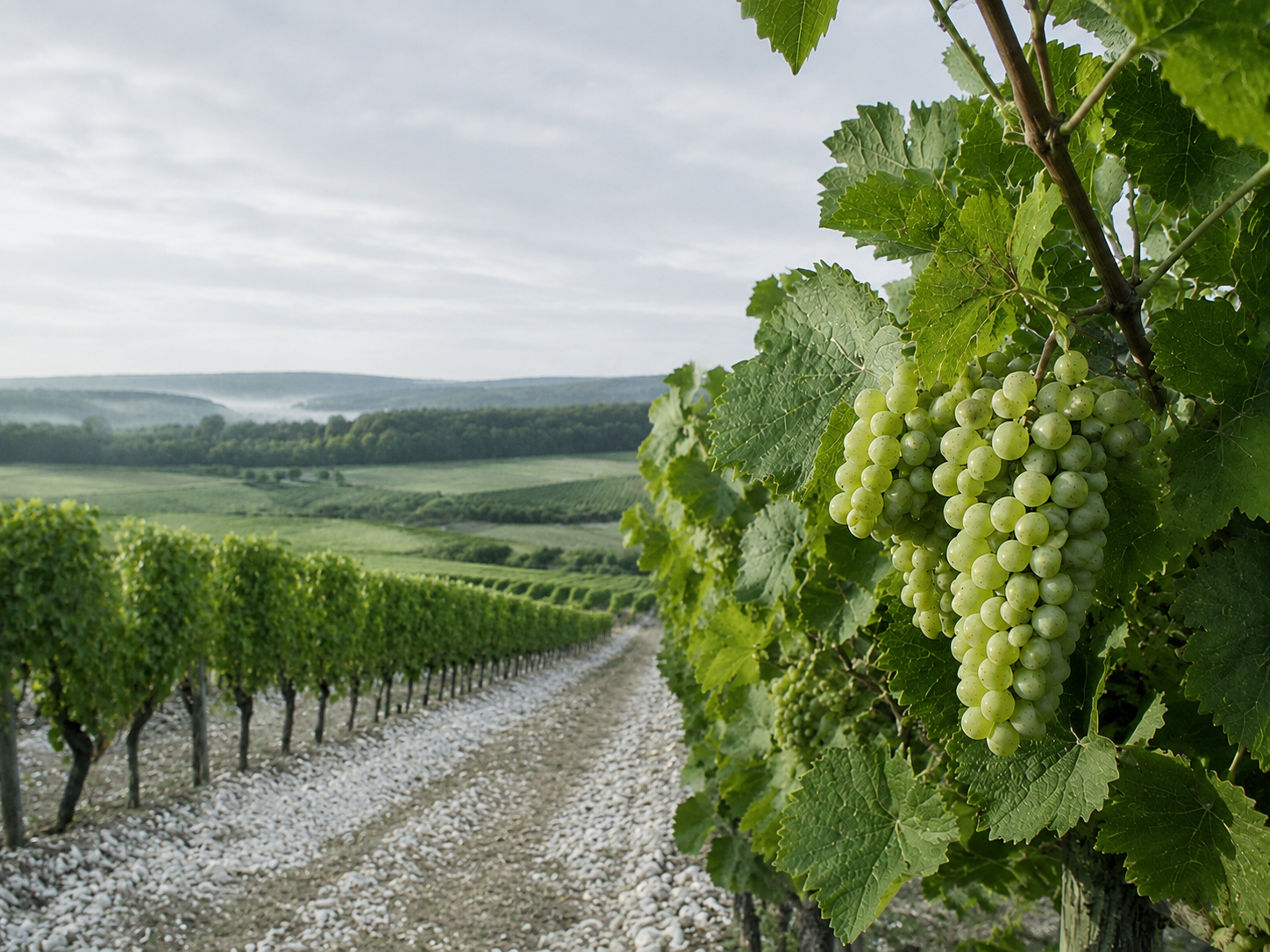
Read the AOC and grape origin
Follow wine → still → oak
Read age and origin in the glass
Guide contents
Ten short chapters. Start with the AOC, then follow grape → wine → double distillation → oak → assembly → label → glass. Sources and further reading sit together at the end.
The AOC defines Cognac
Place, grapes, wine, distillation and oak ageing sit inside one protected production chain.
A protected production chain
The Cognac production area was delimited in 1909. Production conditions were defined in 1936, and the six cru areas followed in 1938. The current French specification was homologated on 10 June 2026.
The delimited area covers most of Charente-Maritime, a large part of Charente and selected communes in Dordogne and Deux-Sèvres. Grapes, wine production, distillation and the first two years of maturation are controlled through the appellation system.
Grapes and production are tied to the delimited Cognac area.
Authorised white grapes are fermented under specific rules.
Charentais batch double distillation defines the standard route.
At least two years of uninterrupted ageing in oak containers.
Minimum 40% abv when released to consumers.
Traceability and official checks protect the designation.
Check yourself
What does the AOC protect beyond the name “Cognac”?
Answer it before revealing the explanation.
A connected production chain: delimited origin, authorised grapes and wine rules, Charentais double distillation, controlled oak ageing, traceability and release requirements.
The six crus define grape origin
Cru names identify where the grapes come from inside the appellation. Fine Champagne follows its own Grande and Petite Champagne rule.
Six recognised growing areas
The crus were delimited from geological and sensory study of the region. Their names may appear as complementary geographical designations when the final Cognac meets the origin requirements.
Six growing areas
Floral, fine and long-lived eaux-de-vie traditionally associated with slow maturation.
Related floral and fine characteristics, commonly reaching maturity sooner.
Rounded and perfumed eaux-de-vie, historically associated with violet character.
The largest cru, associated with supple, rounded and fruit-led eaux-de-vie.
Fruit-led eaux-de-vie that tend to develop relatively quickly.
Also recognised as Bois à terroirs in the specification, with fruit-led styles.
Fine Champagne is assembled only from Grande Champagne and Petite Champagne eaux-de-vie, with Grande Champagne supplying at least 50%.
Check yourself
What must a Fine Champagne Cognac contain?
Answer it before revealing the explanation.
Only Grande Champagne and Petite Champagne eaux-de-vie, with Grande Champagne making up at least 50% of the blend.
Ugni Blanc builds the base
Ugni Blanc dominates because its acidity, modest sugar and restrained aromatic profile suit wine destined for distillation.
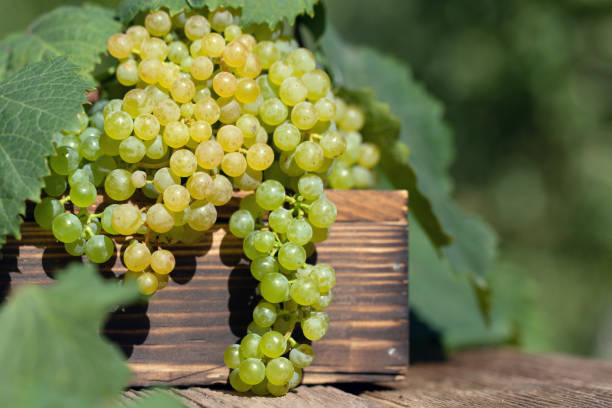
Ugni Blanc leads the vineyard
Ugni Blanc accounts for more than 98% of the Cognac vineyard. It ripens relatively late and combines productivity with high acidity and modest sugar accumulation. The resulting wines commonly sit around 8 to 9% abv and retain natural freshness before distillation.
The 2026 specification lists Colombard, Folle Blanche, Montils, Sémillon and Ugni Blanc as principal varieties. Folignan and Monbadon are accessory varieties, each limited within the vineyard rules. Coutia, Luminan and Vidal may be used only through tightly controlled adaptation agreements.
The base wine is made for the still. High acidity helps it remain stable through winter, while modest alcohol increases the amount of wine needed for each litre of eau-de-vie and therefore the concentration of aroma.
The foundation
Delicate, acidic and well suited to long maturation after distillation.
Historic variety
Aromatic and balanced, now present in a much smaller share of the vineyard.
Aromatic support
High acidity with a more expressive aromatic contribution.
Base wine is made for the still
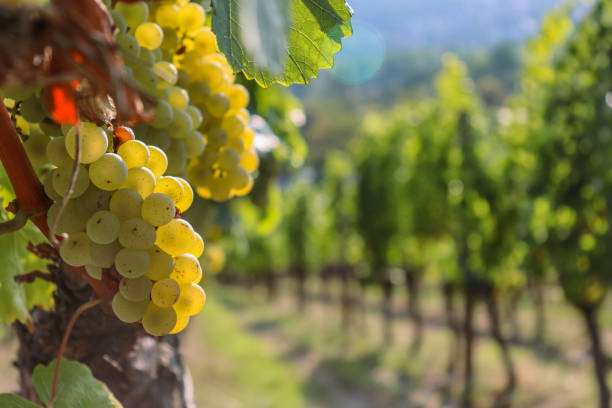
Pressing and fermentation build a dry, acidic wine whose job is to reach the still cleanly and on time.
Build a wine for the still
Harvest generally runs from mid-September into October. Grapes are pressed promptly. Pneumatic or traditional plate presses are used, while continuous Archimedes-screw presses are prohibited.
Enrichment is prohibited during Cognac wine production: sugar cannot be added to raise alcoholic strength. Sulphur dioxide is also prohibited during the fermentative period because it can increase acetaldehyde formation during distillation.
At the time of distillation, the wine must fall between 7% and 12% abv. Production commonly targets about 9% abv with high acidity and a clean aromatic profile.
Distillation must finish by 31 March following the harvest. Short wine storage helps protect the delicate aromatic foundation.
Press
Extract juice gently while limiting solids and harsh phenolic material.
Ferment
Turn grape sugar into alcohol and build the first fruity and floral aroma compounds.
Hold briefly
Protect the wine until seasonal distillation is complete.
Check yourself
Why is Cognac base wine deliberately acidic and relatively low in alcohol?
Answer it before revealing the explanation.
The wine is built for distillation. Acidity supports stability through the winter season, while modest strength provides a delicate starting material for double distillation.
Double distillation selects the eau-de-vie
Two batch distillations turn wine into eau-de-vie while the distiller manages concentration and fraction selection.
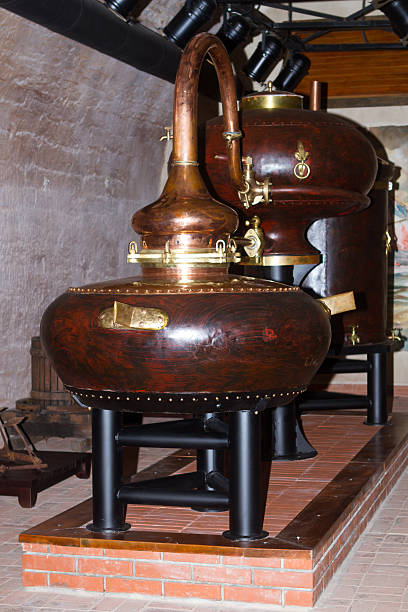
Two successive chauffes
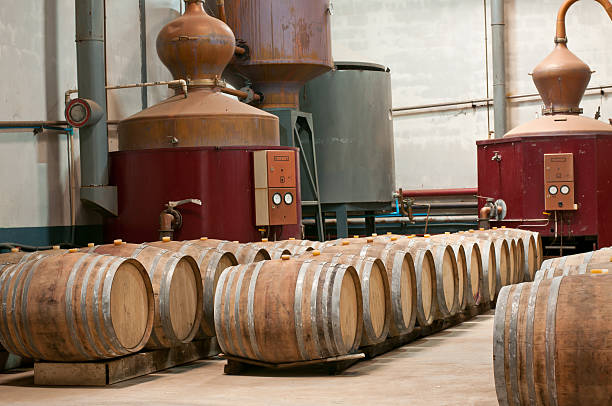
The première chauffe distils the wine into brouillis, commonly around 28 to 32% abv. The second run, known as the bonne chauffe or repasse, distils the brouillis and allows the distiller to separate the beginning, selected heart and later fractions.
The eau-de-vie collected in the daily receiver may not exceed 73.7% abv at 20°C. This is the current legal ceiling. Copper contact and fraction selection help retain desired fruit and texture while reducing unwanted sulphur compounds and heavier late-run material.
The eau-de-vie collected in the daily receiver may not exceed 73.7% abv at 20°C under the current Cognac specification.
The double-distillation sequence
Acidic, dry and commonly around 9% abv.
The full wine charge is distilled in batches.
Low-strength distillate prepared for the second chauffe.
Heads, heart and later fractions are separated by the distiller.
The selected fraction enters the maturation programme.
Check yourself
What is the purpose of the second chauffe?
Answer it before revealing the explanation.
The bonne chauffe redistils the brouillis and lets the distiller separate fractions, selecting the eau-de-vie that will enter maturation.
Distiller choices shape house material
The AOC fixes the frame. Lees, heat, cuts and recycling give the distiller meaningful control inside it.
Selection creates house material
Wine may be distilled with or without retained fine lees. Fine lees can support body, pastry-like aroma and textural richness, while clearer wine can support a lighter profile. The decision also affects still operation because suspended material requires careful heating.
Cut timing determines which volatile compounds enter the selected eau-de-vie. Heads and later fractions may be recycled into wine or brouillis under controlled conditions. Heating rate and charge management further change copper contact, reflux and the progression of each run.
Batch double distillation, defined Charentais equipment, current-crop wine, seasonal deadline and maximum collection strength.
Lees retention, heating rate, cut points, fraction recycling, batch grouping and the intended maturation path.
Oak and cellar build maturity
Oak, cellar humidity, cask history and time determine how the eau-de-vie develops toward maturity.
Maturation is actively managed
Cognac intended for direct consumption must mature in oak containers for at least two years. Newer casks can add colour, tannin, spice and structure quickly. Seasoned casks, known in the region as fûts roux, support slower oxidation and development with gentler extraction.
Fine-grained Tronçais-type oak and wider-grained Limousin-type oak are established references. Grain, seasoning, toasting, cask age and previous use all influence the rate and character of extraction.
Cellar humidity influences evaporation and alcoholic strength over time. Cask age, grain, seasoning, heat treatment, previous use and cellar conditions all contribute to the maturation path.
When mature stock leaves oak for glass storage, legal ageing stops. Glass preserves the spirit without adding further oak age.
Universal foundationPlace Cognac oak, cellar, evaporation and selection inside the wider maturation system →
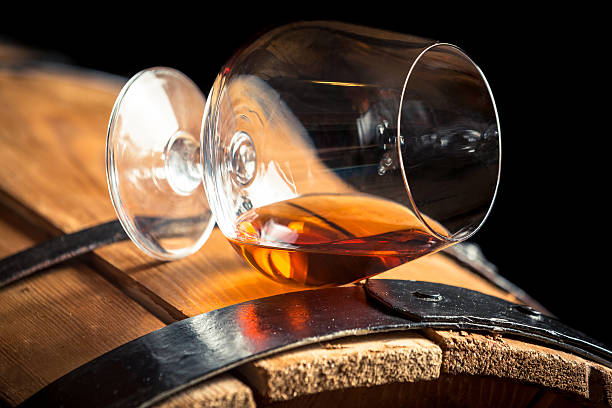
Legal floor
Controlled oak ageing · minimum two yearsCognac intended for consumer release must complete the required controlled ageing period in oak.
Cellar choice
Oak · cask history · humidity · timeThe cellar master manages vessel, environment and duration to build the desired maturity.
Wood contribution
Oak can contribute colour, tannin, vanillin, lactones, spice and toasted character.
Time and oxygen
Oxidation and esterification reshape fruit, texture and aromatic complexity.
The angels' share
Water and alcohol leave the cask at rates influenced by temperature, humidity and airflow.
Long maturation
Older Cognac may develop walnut oil, mushroom, forest floor, dried fruit and tobacco-like complexity.
Check yourself
What does an age statement measure?
Answer it before revealing the explanation.
Controlled time in oak. Maturity depends on how the spirit, cask and cellar used that time; glass storage does not add further legal oak age.
Assembly prepares the release
Mature stocks are selected, combined, reduced and prepared for bottling within the Cognac specification.
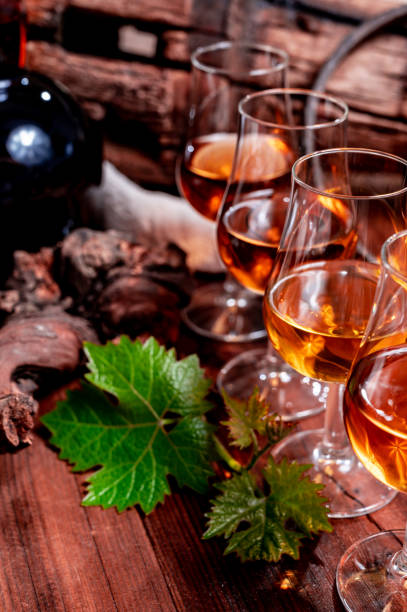
Mature stock is assembled to a target style
Most Cognac is assembled from eaux-de-vie of different ages, crus, cask histories and cellar conditions. Unblended releases also exist. Repeated tasting and stock knowledge guide the final composition.
Alcoholic strength is reduced carefully with distilled or demineralised water. Some producers use petites eaux, a prepared mixture of water and eau-de-vie, for gradual reduction.
The Cognac specification allows defined finishing methods, including E150a plain caramel for colour adjustment, permitted sweetening materials and a traditional oak-chip infusion. Aromatisation is prohibited.
Select components for aroma, flavour, texture, maturity and consistency.
Lower strength progressively while monitoring aromatic balance and texture.
Use only the methods permitted by the Cognac specification.
Read age and origin separately
Age designation and geographic designation answer different questions. Read both before inferring style.
Read the label in this order
Age designation
VS · VSOP · Napoléon · XO · XXO
The designation reflects the minimum age of the youngest eau-de-vie in the final Cognac.
Geographical claim
Grande Champagne · Petite Champagne · Borderies · Fins Bois · Bons Bois · Bois Ordinaires
When a cru is named, the Cognac must satisfy the requirements for that geographical designation.
Fine Champagne
Grande Champagne + Petite Champagne
Fine Champagne is assembled only from Grande Champagne and Petite Champagne eaux-de-vie, with Grande Champagne supplying at least 50%.
Bottling information
Alcohol strength · nominal volume · producer or bottler details
These details complete the practical label read. Cognac released to consumers must be bottled at a minimum of 40% abv.
| Designation | Minimum age of youngest eau-de-vie | Useful equivalents and context |
|---|---|---|
| VS | 2 years | Very Special, 3 Etoiles, Sélection and De Luxe |
| Supérieur | 3 years | Cuvée Supérieure and Qualité Supérieure |
| VSOP | 4 years | Réserve, Vieux, Rare, Royal and Very Superior Old Pale |
| Vieille Réserve | 5 years | Réserve Rare and Réserve Royale |
| Napoléon | 6 years | Includes Très Vieille Réserve, Héritage, Excellence and related terms |
| XO | 10 years | Hors d’âge, Extra, Ancestral, Gold, Impérial and Extra Old |
| XXO | 14 years | Extra Extra Old is the specific 14-year minimum designation |
Minimum designations provide a floor. The youngest eau-de-vie sets the category even when older eaux-de-vie are included. A vintage statement follows controlled traceability and identifies the harvest year of the eau-de-vie.
Hors d’âge sits within the ten-year XO age category. XXO carries the specific fourteen-year minimum.
Check yourself
A bottle says “XO · Petite Champagne.” What do those two terms tell you?
Answer it before revealing the explanation.
XO gives the minimum age category of the youngest eau-de-vie: at least 10 years. Petite Champagne identifies the grape origin of every eau-de-vie in that Cognac.
Taste from evidence
Describe the Cognac first. Then connect origin, distillation, oak and assembly only where the evidence supports it.
Follow development in the glass
Cognac can show floral and fruit notes alongside oak-derived vanilla, toast and spice. Longer maturation may add candied or dried fruit, tobacco, walnut oil, mushroom and forest-floor complexity. Describe what is present before assigning a production explanation.
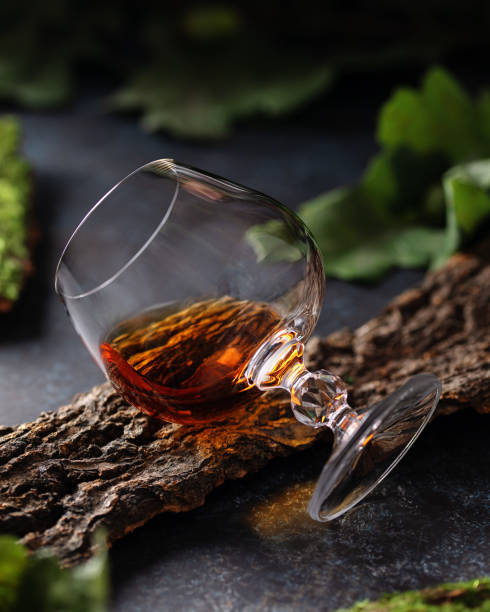
A stemmed tulip-shaped glass helps collect aroma while allowing controlled nosing. Cognac can be served neat, with ice, in a mixed drink, in cocktails or alongside food. The best format is the one that supports the intended experience.
Five-question tasting tool
Appearance
Record colour and clarity. Use verified maturation information when assessing age.Aroma
Begin with fruit, floral, oak and maturity families.Palate
Assess alcohol, flavour intensity, texture, balance and development.Finish
Follow length, persistence and how the profile changes.Evidence
Link descriptors to production only when the connection is reasonable.Check yourself
When tasting professionally, what comes first: description or production explanation?
Answer it before revealing the explanation.
Description. Record what you can observe in the glass, then use verified production information to explain plausible causes.
Download
Simple guide carousel PDF
Use the short visual version as a teaching aid or quick recap. The expanded page remains the complete learning guide.
Label reading
What to check first
- Read the protected name
- Read the age as the youngest component
- Separate cru from age designation
- Check Fine Champagne carefully
- Record the bottling strength
Tasting
What to ask in the glass
- What do I perceive before I explain it?
- Which production choices could support this profile?
- What does the texture tell me?
- How active does the oak feel?
- What would I compare next?
REFSources & Further Reading
Official and educational references behind this Cognac guide. Kept together here so the production story stays uninterrupted.
Law & protected origin
Official Cognac AOC specification · June 2026Primary technical reference · origin, grapes, distillation, ageing and labelling Légifrance · Order of 10 June 2026Primary law · homologation of the current Cognac specification BNIC · A protected originOfficial appellation guidance · crus, Fine Champagne, age and labelsVineyard & production
BNIC · Cognac grape varietiesOfficial category guidance · vineyard and authorised grapes BNIC · Origin and production processOfficial category guidance · wine, double distillation, ageing, blending and reductionMaturation, labels & tasting
BNIC · An exceptional spiritOfficial category guidance · aromatic development and maturation BNIC · Tasting CognacOfficial category guidance · serving and tasting culture BNIC · Responsible consumption & ingredientsOfficial category guidance · ABV and permitted preparation contextThe takeaway
Read the origin.
Then follow the spirit.
Cognac combines protected origin, grape material, wine production, double distillation, oak maturation and blending. The label establishes the framework; the glass shows how those choices were expressed.