
Comparison 01
Pot Still
vs Column Still
Design, Operation & Spirit Style.
Pot and column stills are designed and operated differently. Still type influences reflux, rectification and collection, but it does not determine spirit style or quality on its own.
Scope This comparison explains how pot and column stills operate, how distillers control reflux and select fractions, and how those choices are applied in Scotch, Jamaican rum, Cognac, Tequila and neutral spirit production.
Start with still design →Continue where you left off →Compare the systems
Depending on their design, column stills can operate continuously.
After this comparison
01
Explain why still type alone does not determine flavour or quality
02
Compare batch distillation with continuous column operation
03
Identify how reflux, cuts, draw points and strength influence the collected spirit
Answer first
What is the difference between a pot still and a column still?
A pot still normally distils in batches and changes throughout each run. A column uses plates or packing to create repeated vapour–liquid contact and many systems can operate continuously. Neither design automatically makes a heavier, lighter, better or worse spirit; operation and collection decisions determine the result.
Comparison sequence
Compare still design, operating mode, reflux, fraction selection and collection strength before applying the principles to individual spirit categories.
01Still type alone does not determine style02Batch and continuous operation03Pot stills change during each batch04Columns use plates or packing05Cuts, draw points and reflux06Collection strength and spirit style07Hybrid stills combine both systems08Apply the comparison by categoryREFSources & Further Reading
Still type alone does not determine spirit style
Pot and column stills have different designs, but either system can produce a range of spirit styles.
Compare design and operation
Pot stills generally operate in batches. The still is charged with a fermented alcoholic liquid, heated and emptied before the next distillation. Column stills use rectification plates or packing to manage reflux, and many can operate continuously.
Still design, number of distillations, reflux, copper contact, heat input, cut or draw points and collection strength all influence the spirit. Pot and column stills can therefore produce different levels of flavour intensity and rectification.
Still type influences the process, but operation determines the result.
Pot stills always produce fuller spirits
Pot stills often retain more congeners, but reflux, cut points and collection strength can produce a lighter style.
Column stills only produce neutral spirit
Column stills can produce neutral spirit, lighter blending components or distinctly characterful distillates.
Still design and management
Identify the equipment, then examine how reflux, heat and collection were controlled.
Batch and continuous operation
Pot stills operate in batches. Column stills can operate continuously when feed, heat, reflux and collection remain controlled.
Batch operation
A pot still is charged for each batch
- ChargeFill the still with a measured volume of liquid.
- DistilComposition changes as volatile fractions leave.
- SelectCollect, redirect or recycle the fractions.
- EmptyStop, empty and prepare the next batch.
Continuous operation
Feed enters while the still operates
- FeedFermented liquid enters the column.
- ContactRising vapour meets descending liquid.
- CollectSpirit and other fractions leave at selected points.
- ControlHeat, flow and reflux maintain stable conditions.
Pot stills change during each batch
As volatile fractions leave the still, the composition of the boiling liquid, vapour and collected distillate changes.
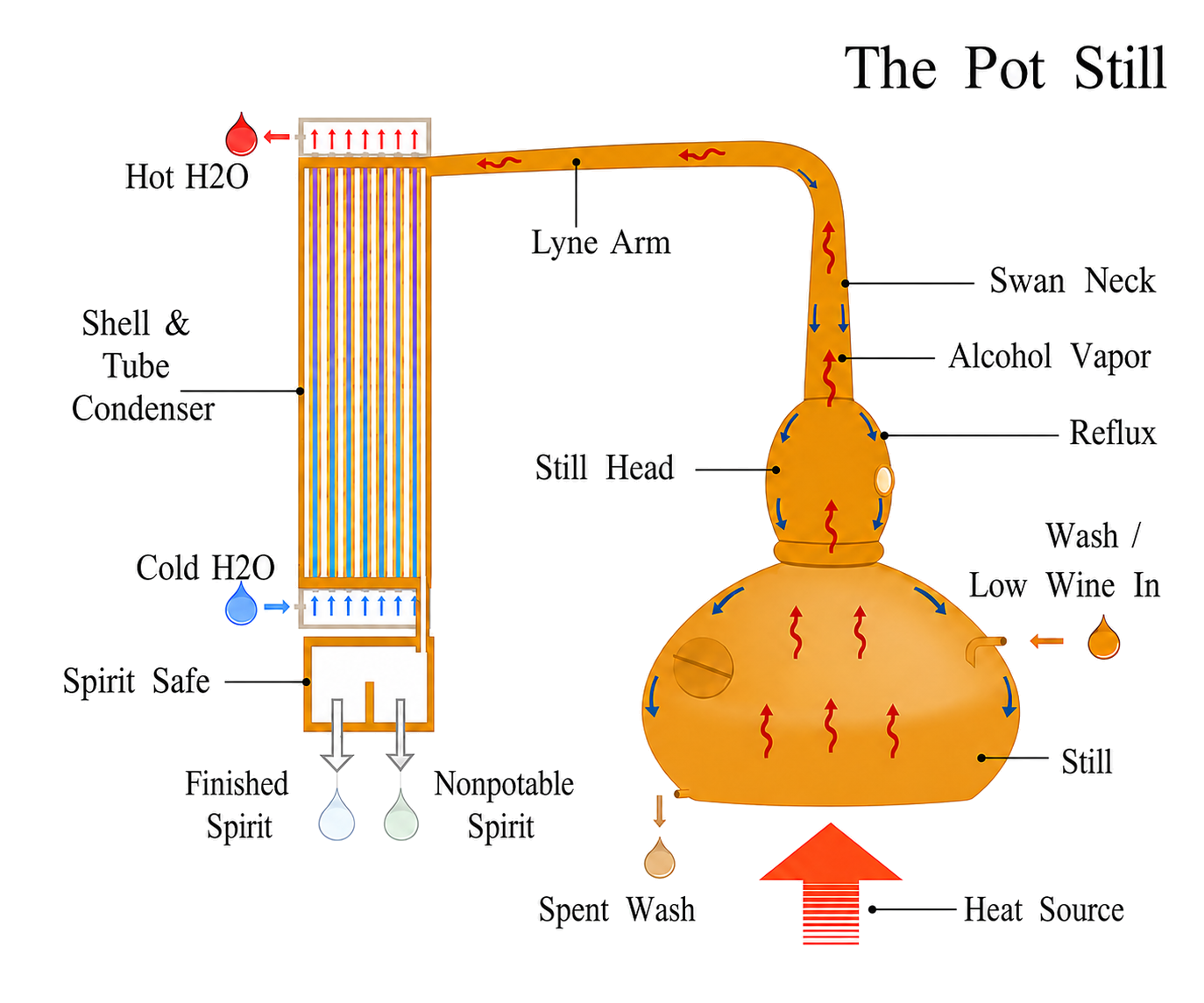
Still design influences reflux
Still height, neck shape, boil ball, lyne arm angle and condenser design influence reflux and copper contact. Heat input, fill level and distillation rate determine how the still performs during each batch.
Repeated distillation increases concentration and allows further fraction selection. Cognac and Scotch malt whisky both commonly use two pot distillations, but their equipment and operating requirements differ.
What to verify
Charge, number of distillations, still shape, condenser, copper location, heat input, cut points and collection strength.
Columns use plates or packing
Rectification plates force vapour through liquid held on each plate. Packing creates a large surface area for condensation and reflux.
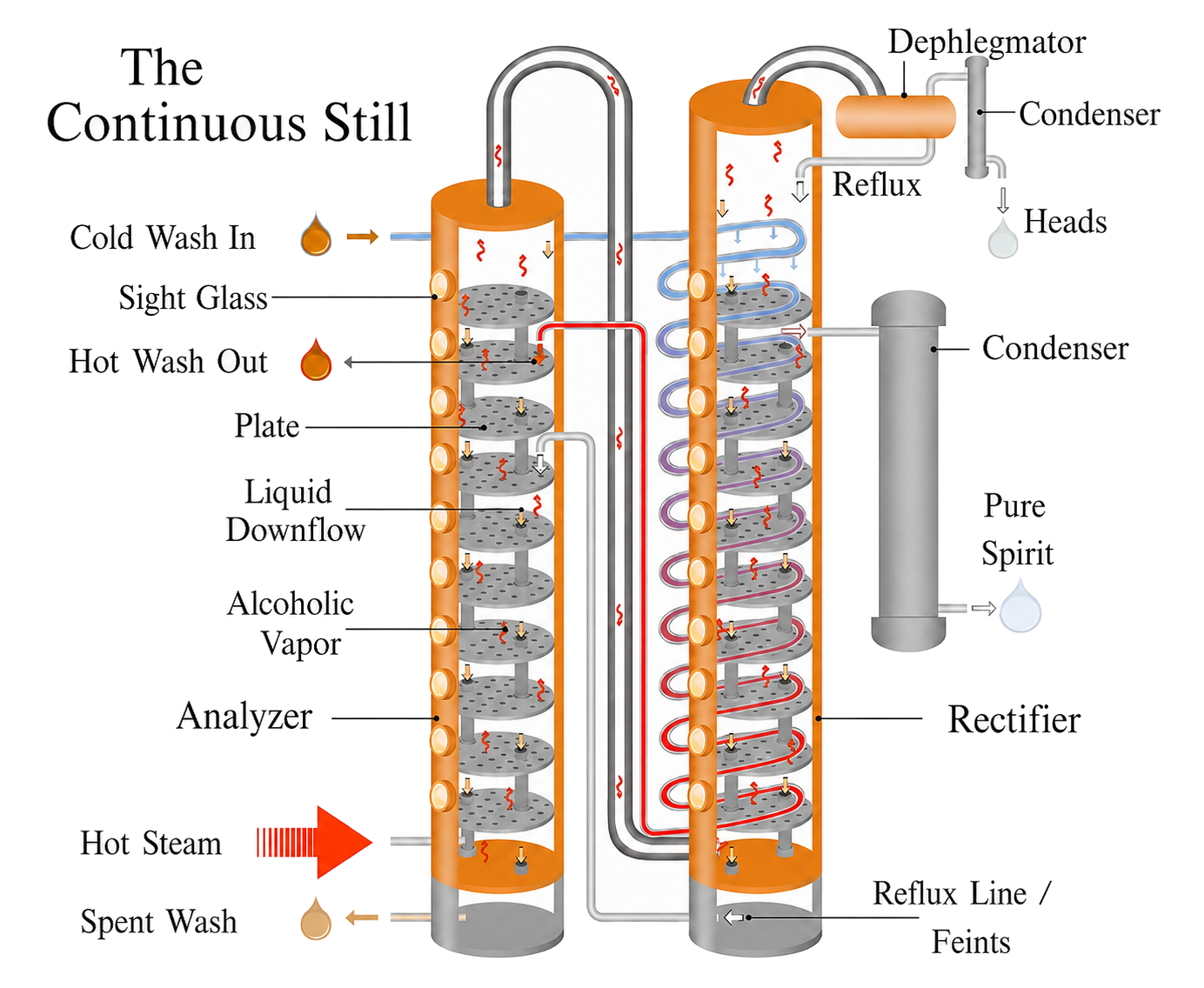
Column design controls reflux and rectification
The number and efficiency of plates, feed location, pressure, heat input, reflux and draw points determine how a column separates the fermented liquid. Single, double and multiple-column systems are designed for different production requirements.
A column can produce a characterful rum distillate, a lighter whisky component or a highly rectified neutral spirit. The style depends on the complete system and how it is operated.
Cuts, draw points and reflux control selection
Both systems concentrate and select fractions, but the distiller controls the process in different ways.
ControlPot systemColumn system
FeedDefined charge and fill levelComposition, feed rate and feed location
HeatHeat input changes across a runHeat and flow support stable operating conditions
RefluxGeometry, cooling and operation influence internal returnRectification plates or packing manage reflux
SelectionTime-varying cuts or fractionsDesigned draw points, recycle and removal streams
OutputCollected portion of a changing runStream collected to a set operating target
Both systems concentrate and select fractions
In batch distillation, the distiller separates heads, heart and tails as the run progresses. In a continuous column, fractions can be collected or removed from different points once the still has reached stable operating conditions.
Greater reflux, more rectification plates or a taller packed section can increase rectification and reduce some less volatile congeners. This changes spirit style but does not guarantee higher quality.
Collection strength does not explain spirit style alone
A higher collection strength usually indicates greater rectification, but it does not describe every congener retained in the spirit.
Fermented alcoholic liquid
Raw material preparation and fermentation determine the starting composition.
Distillation system
Still design, reflux and fraction selection change the proportions collected.
Collection strength
ABV indicates the concentration of ethanol in the collected spirit.
Spirit composition
The congeners retained influence aroma, flavour and texture.
Consider strength and composition together
Two spirits collected at a similar strength can contain different congeners. The fermented liquid, reflux, copper contact and fraction selection all influence the composition of the new spirit.
Maturation, blending, dilution and filtration can then change the style and texture before bottling.
Tasting discipline
Describe the spirit first. Connect a sensory characteristic to distillation only when verified production information supports the explanation.
Hybrid stills combine pot and column features
A hybrid still can use a pot as the boiler and a plated column to increase reflux and rectification during batch distillation.
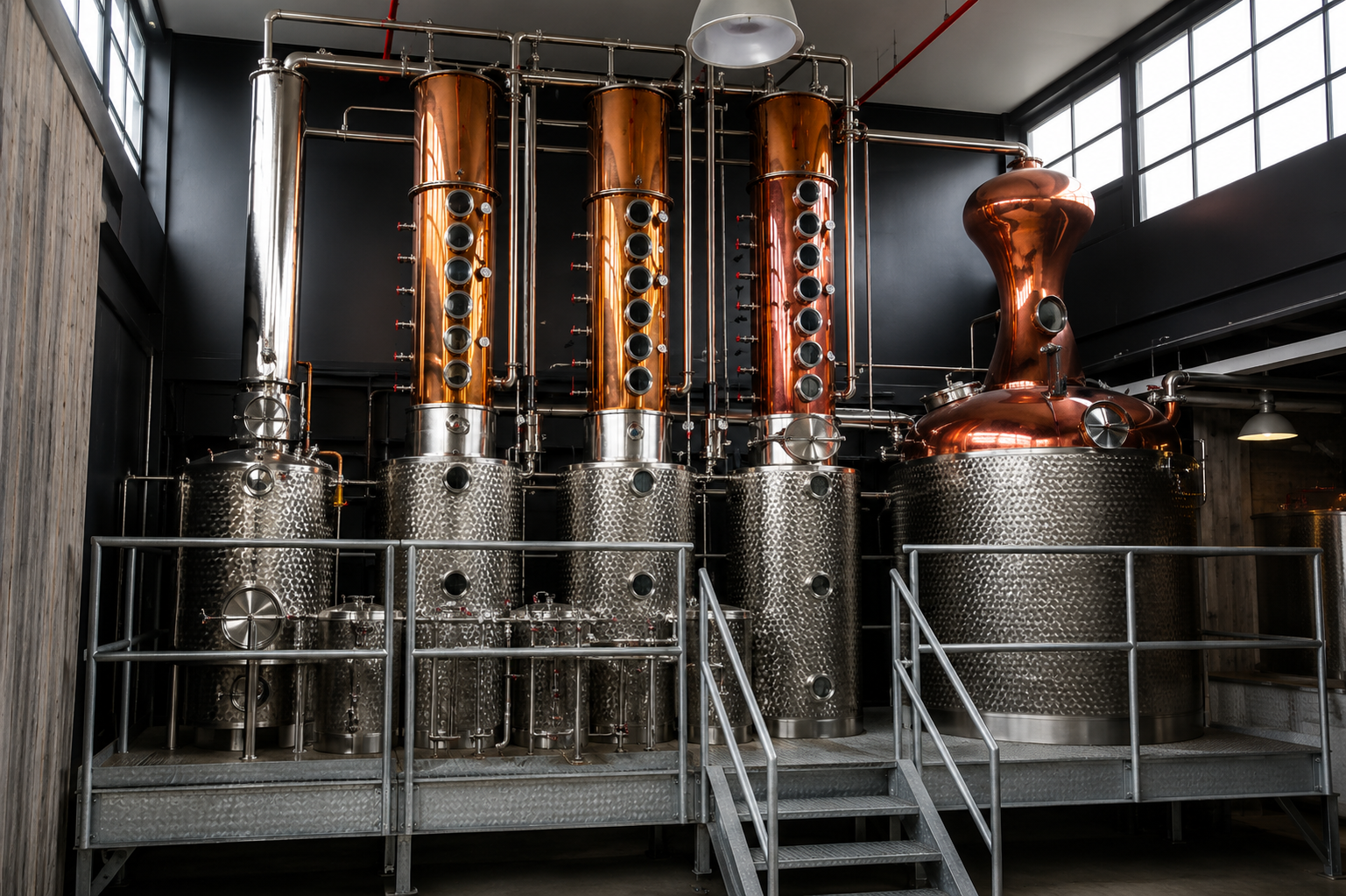
Pot + plated column
A pot supplies vapour to a plated column above or beside it.
Batch column
A column processes one charge at a time rather than receiving a continuous feed.
Retort system
Jamaican double-retort stills pass vapour through charged retorts before condensation.
Pot and column components
Producers can blend separately distilled pot and column components.
Describe which parts of the still are used
The term “hybrid” covers several designs. Identify where the liquid is heated, how vapour and liquid interact, how reflux is controlled and where the spirit is collected.
“Double distilled” describes the number of distillations, but it does not explain still design, reflux, cut points or collection strength.
Apply the comparison to each spirit category
Still design and operation must be considered alongside the production rules and traditions of each category.
Spirit categoryWhat to compareApplied chapter
Scotch whiskyCompare pot-distilled malt whisky with continuously distilled grain whisky.Open Scotch →Jamaican rumCompare double-retort pot stills with column stills used for different rum marques.Open Jamaican →CognacExamine regulated double distillation in Charentais pot stills.Open Cognac →TequilaCompare permitted pot and column stills, number of distillations and fraction selection.Open Tequila →Neutral spiritExamine how managed reflux, rectification and draw points produce highly rectified spirit.Open rectification →Five questions
- 01What enters the still?
- 02Is operation batch, continuous or hybrid?
- 03Where does vapour meet returning liquid?
- 04How are fractions or streams selected?
- 05What are the collection strength and intended style?
Proof & Principle check
01Is the comparison accurate?
02Is it useful by itself?
03What does it link to?
04What links back to it?
RefSources & Further Reading
References
Sources behind the comparison
The system comparison and category applications were checked against professional study standards, peer-reviewed science and official category rules on 27 August 2026.
System and science
WSET Level 3 Award in SpiritsPot, column and hybrid stills; reflux, plates, packing and multi-column systemsBeverages · Volatile Aromatic Congeners in WhiskeyPeer-reviewed review of production variables and volatile compositionJournal of the Institute of Brewing · Copper and distilled spiritResearch on copper location and sulfur-compound formationOfficial category evidence
HMRC · Producing Scotch WhiskyCurrent UK guidance and Scotch Whisky technical fileBNIC · Cognac productionOfficial Charentais double-distillation sequenceCRT · NOM-006-SCFI-2012Official Tequila production standardJIPO · Jamaica Rum GIOfficial geographical-indication specificationeCFR · §5.142 Neutral spirits or alcoholCurrent United States neutral-spirit identity standardThe takeaway
Compare the still design.
Then compare its operation.
Still design influences reflux and rectification. The fermented liquid, heat input, copper contact, cut or draw points and collection strength determine the spirit produced. Quality depends on how successfully those choices achieve the intended style.