
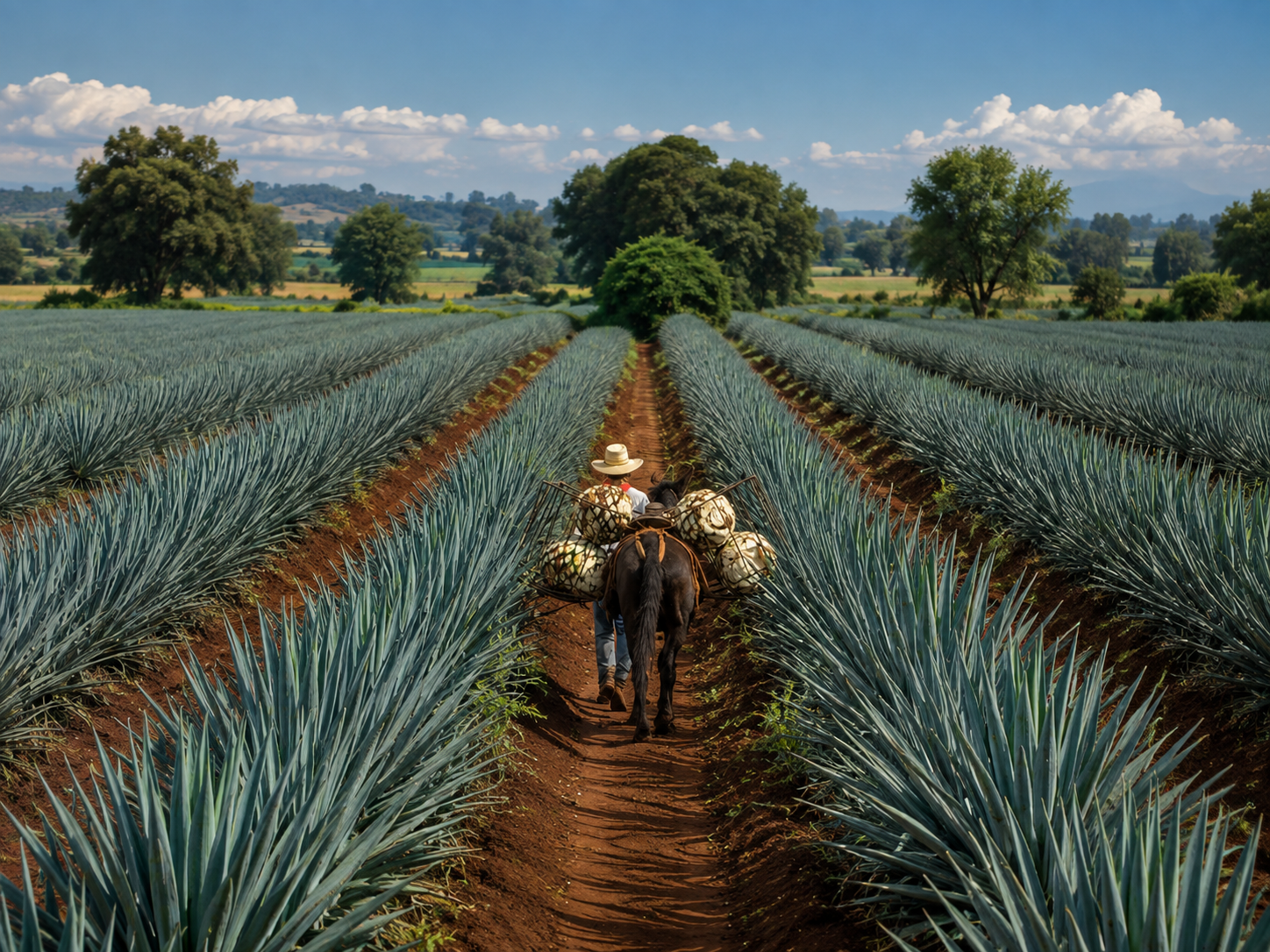
The DOT defines Tequila
Origin, one agave variety and NOM-006 establish the protected category before producer choices begin.
Tequila is protected by the Denominación de Origen Tequila and governed by NOM-006-SCFI-2012. Qualifying production takes place inside the protected territory and uses Agave tequilana Weber variedad azul as the agave source.
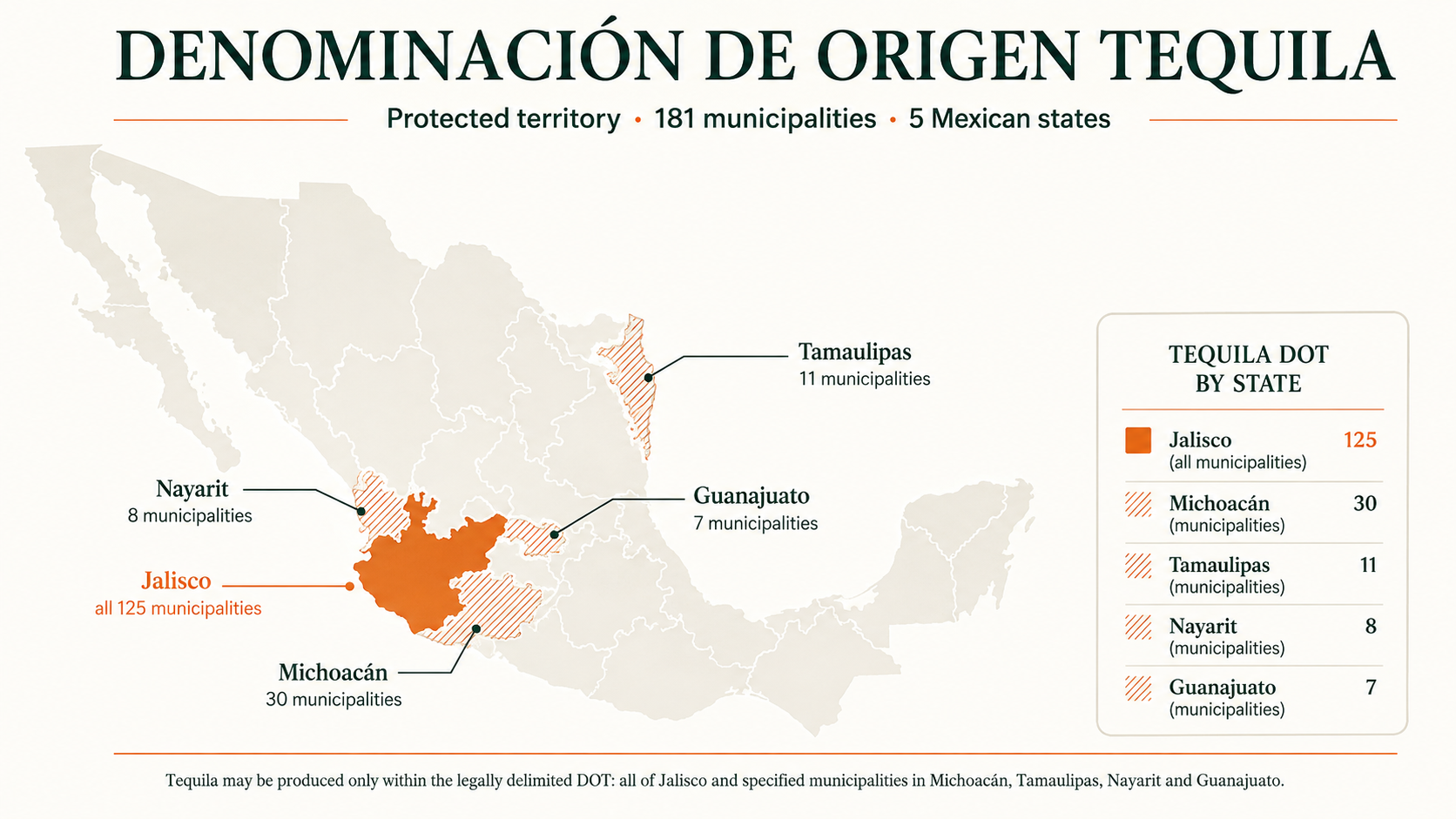
The DOT covers 181 municipalities across Jalisco, Michoacán, Tamaulipas, Nayarit and Guanajuato. Origin is part of Tequila’s legal identity.
Check yourself
What three things anchor Tequila’s legal identity?
Answer it before revealing the explanation.
The protected DOT, Blue Weber agave, and compliance with NOM-006-SCFI-2012.
Category tells you the sugar source
The two legal categories answer one practical question: where did the fermentable sugars come from?
NOM-006 recognises two Tequila categories. Category describes the source of fermentable sugars; quality and style require separate assessment.
Tequila 100% de agave
All fermentable sugars come from Blue Weber agave grown within the protected territory. The product is bottled at origin under the authorised producer’s control.
Tequila
At least 51% of the reducing sugars come from Blue Weber agave. Up to 49% may come from other permitted reducing sugars during formulation.
Label language: “Mixto” is common industry shorthand. The legal category name is Tequila.
Check yourself
What does “100% de agave” tell you with certainty?
Answer it before revealing the explanation.
All fermentable sugars came from Blue Weber agave grown inside the protected territory, and the Tequila was bottled at origin under the authorised producer’s control.
Blue Weber agave sets the starting point
The legal variety is fixed. Agriculture, maturity, harvest and handling create variation before the distillery begins.
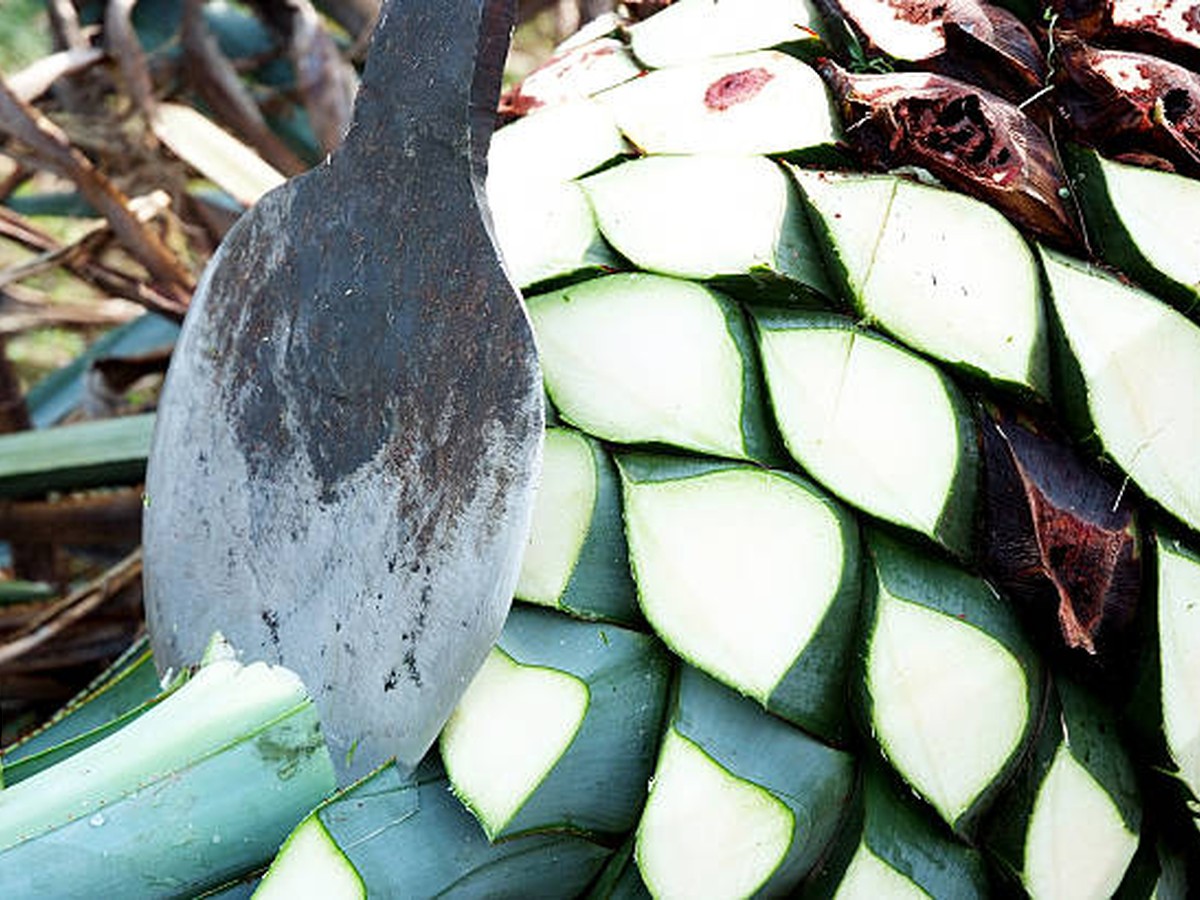
Agave tequilana Weber variedad azul, commonly called Blue Weber agave, is the permitted agave variety for Tequila. The plant develops over several years and is harvested when it has reached suitable development for production.
The piña contains the carbohydrates used in production, principally stored as fructans. Growing site, maturity, harvest timing, trimming and handling all influence the raw material that reaches the distillery.
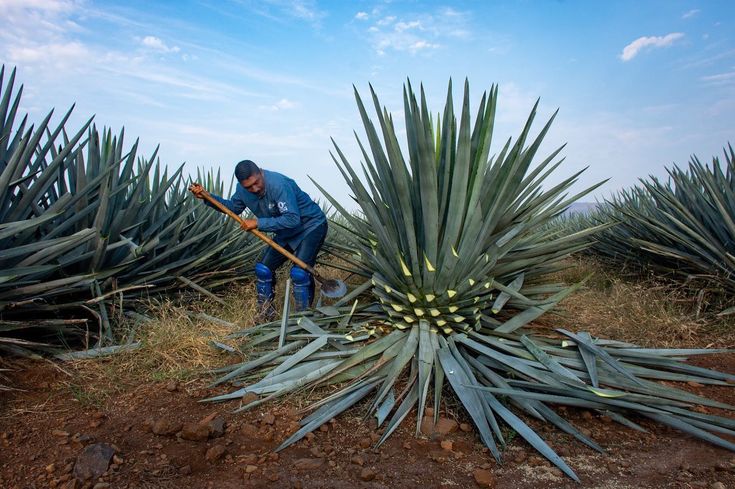
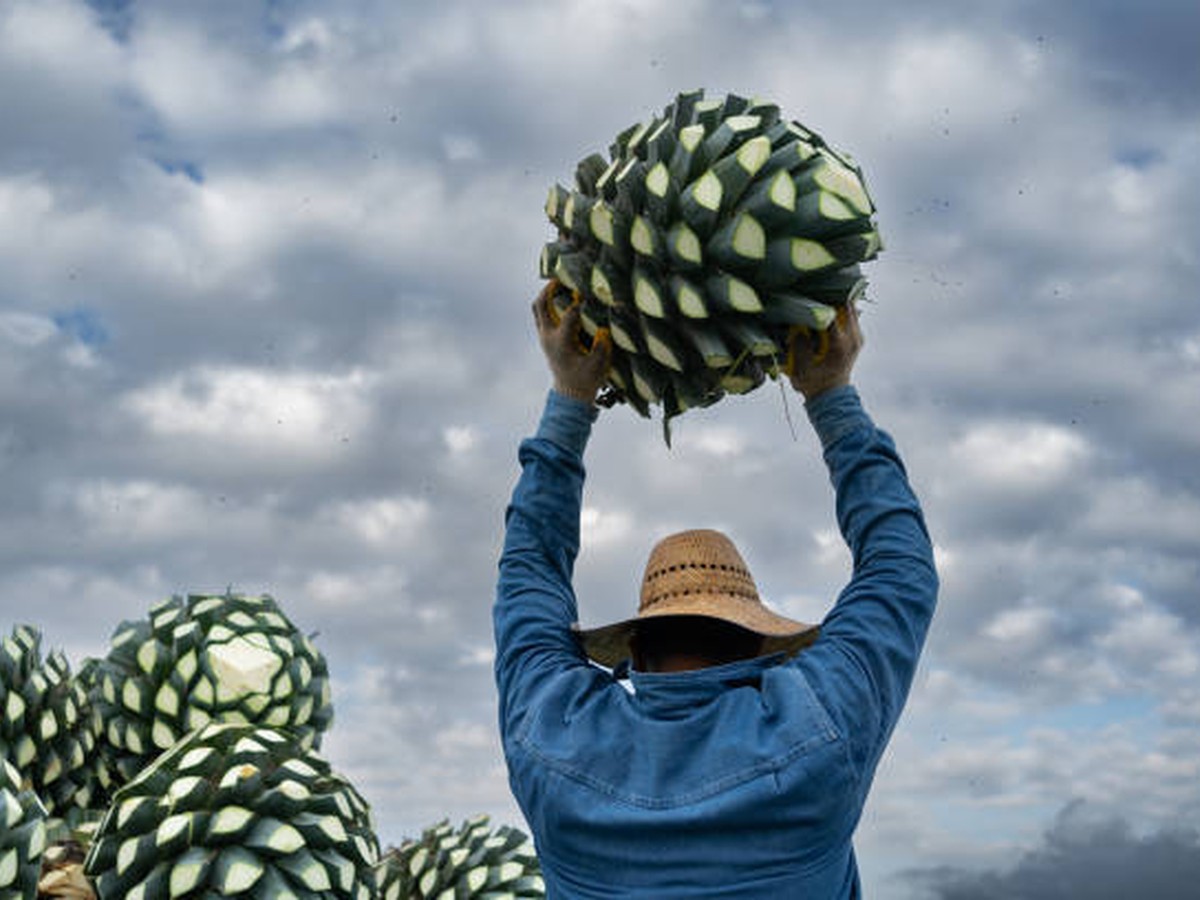
Learning point: origin and agriculture set the starting material; processing determines how that material is transformed.
Continue · Chapter 04Hydrolysis unlocks fermentable sugar →Hydrolysis unlocks fermentable sugar
The piña stores carbohydrates. Production must make those carbohydrates available to yeast.
What is hydrolysis?
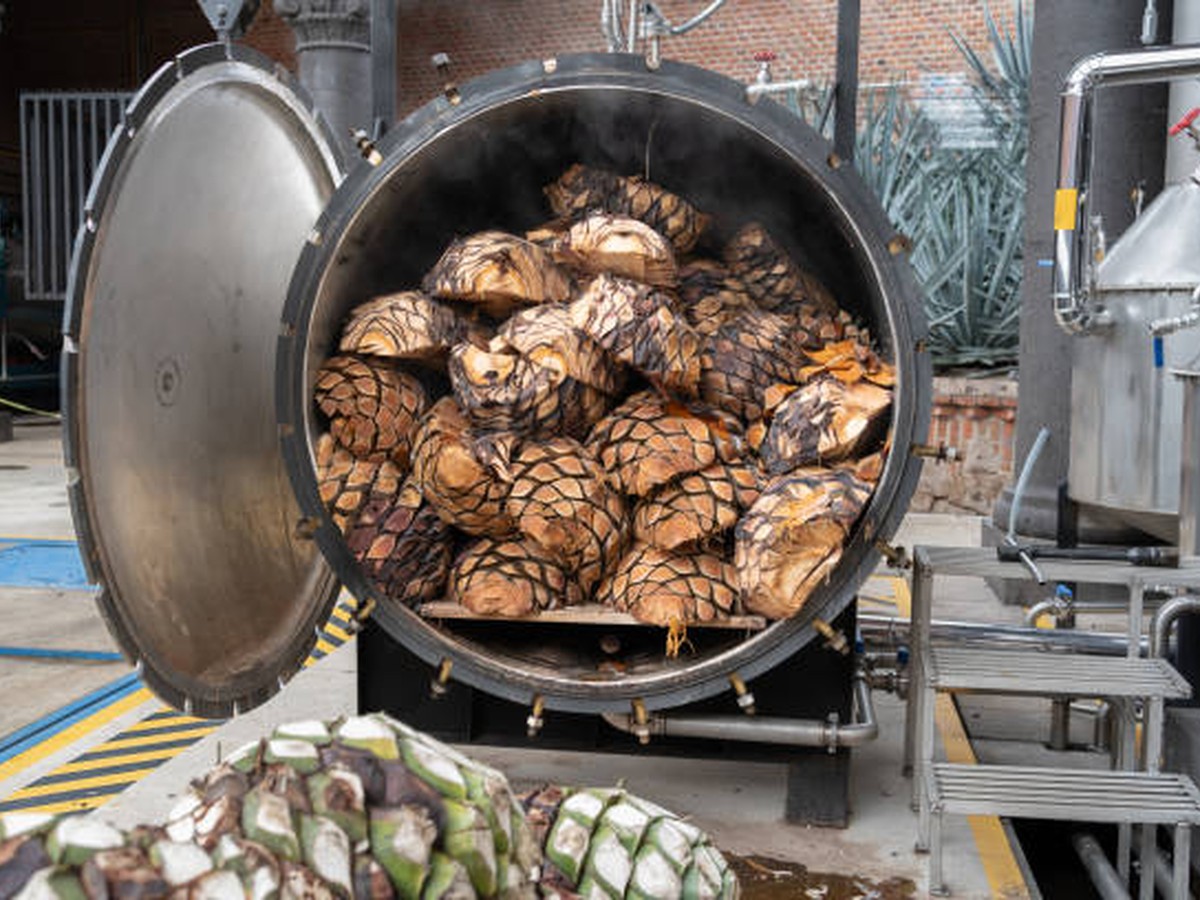
Hydrolysis is a reaction in which water breaks larger molecules into smaller ones. In Tequila production, it makes the agave’s fructans available as fermentable sugars.
After jima, hydrolysis is followed by extraction, recovering the sugar-rich liquid that will be prepared for fermentation.
Producer choice
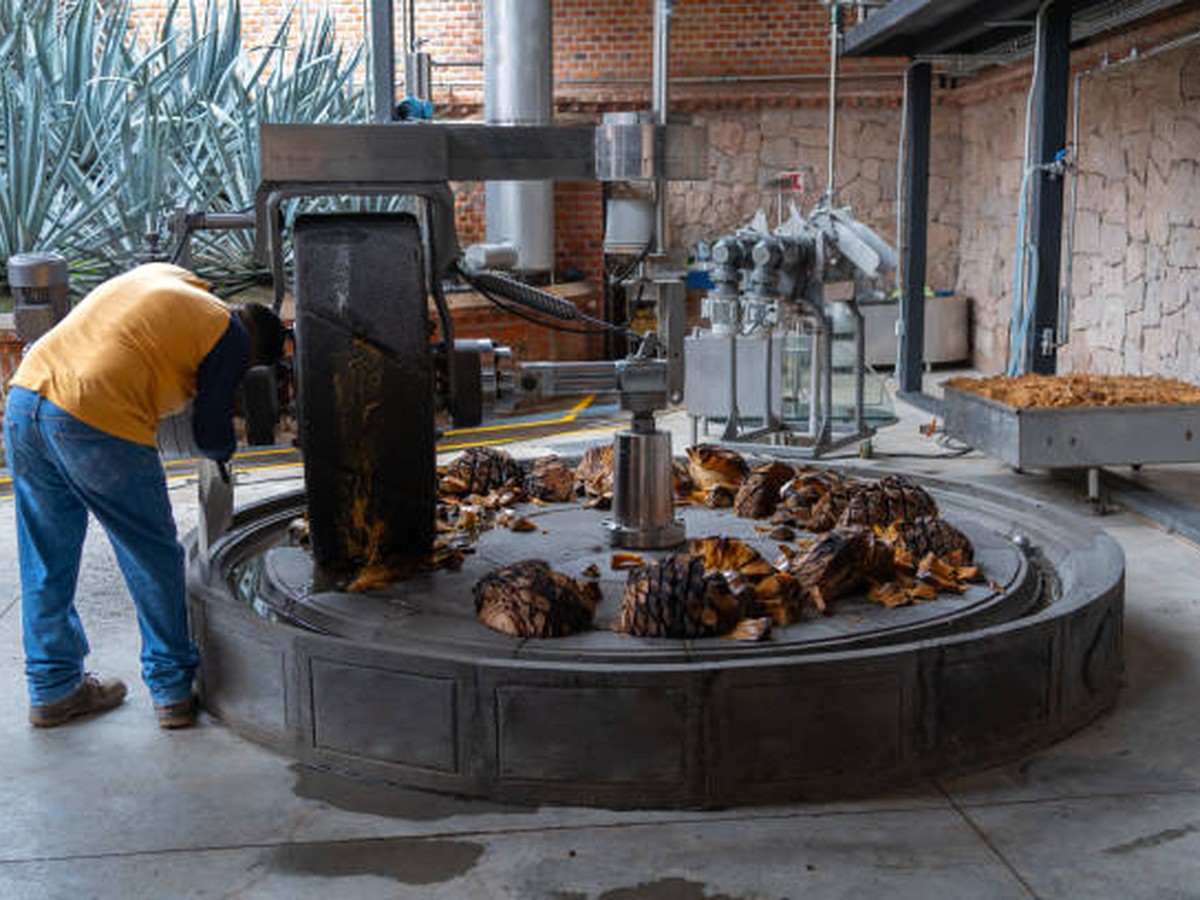
Stone ovens, masonry ovens and autoclaves are established cooked-agave routes. Diffuser systems can change the order by extracting carbohydrates before hydrolysis. Tahona and roller-mill systems are common extraction approaches for cooked agave.
Check yourself
What job does hydrolysis perform?
Answer it before revealing the explanation.
It breaks down stored agave carbohydrates into simpler sugars that yeast can ferment.
Fermentation and distillation build the spirit
Yeast creates alcohol and aroma precursors; distillation then selects and concentrates volatile material.
Fermentation
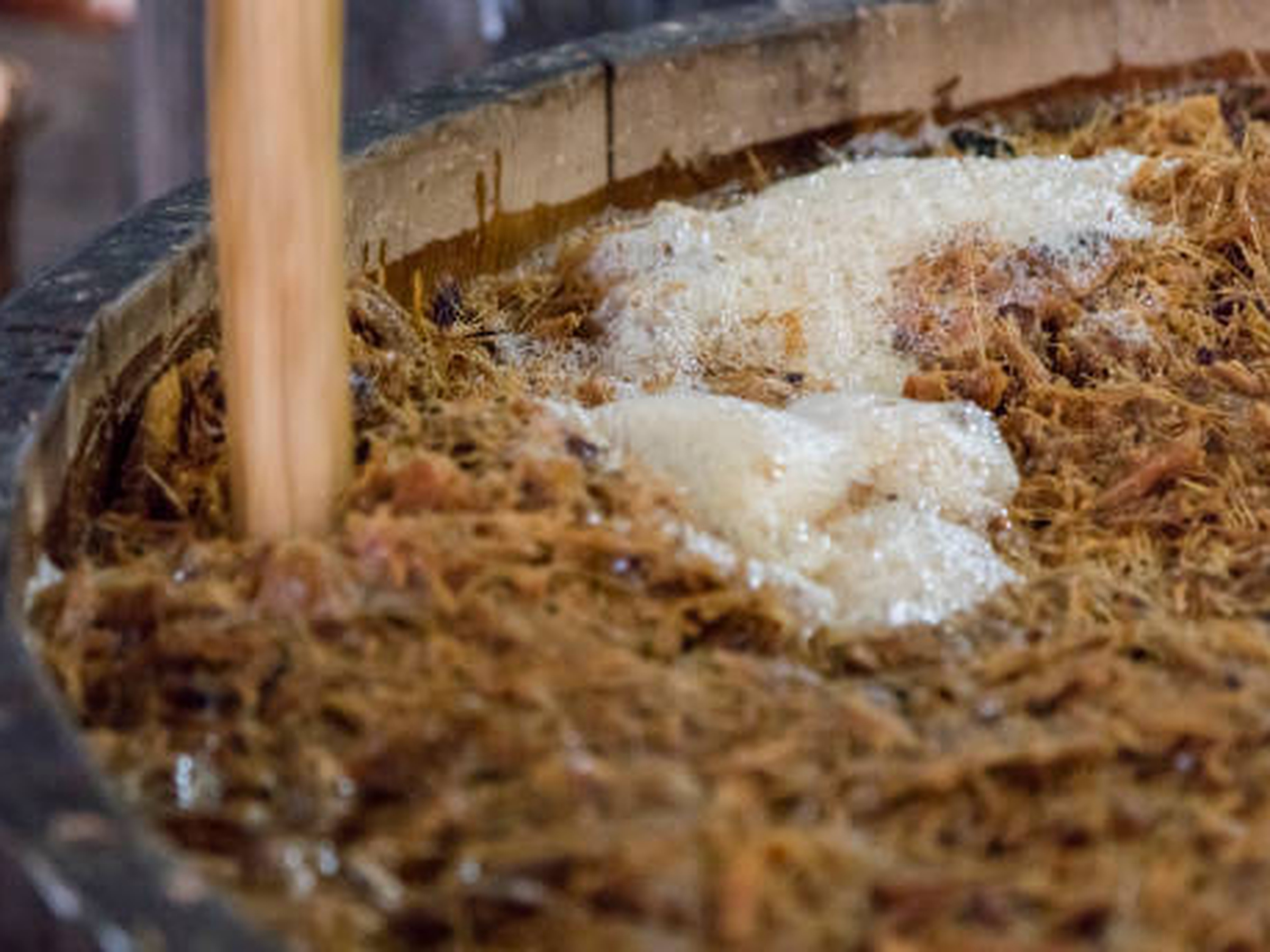
Yeast converts fermentable sugars into alcohol and carbon dioxide while creating compounds that contribute to Tequila’s final sensory character. Yeast strain, temperature, time, vessel and the presence or absence of agave fibre can all influence style.
Distillation
Distillation concentrates alcohol and redistributes volatile compounds. Still design, number of passes, heating rate, reflux and run selection are producer choices within the standard.
Tequila may be distilled in pot-style alambiques or column stills, both of which are recognised within CRT inspection requirements.
Universal foundation: Follow the common fermentation mechanism before comparing agave-specific choices →
Universal foundation: Follow batch and continuous separation, reflux, copper contact and collection before returning to Tequila →
Comparison 01: Compare pot and column routes through operation rather than stereotype →
Continue · Chapter 06Class tells you what happened after distillation →Class tells you what happened after distillation
Category explains sugar source. Class explains post-distillation treatment and maturation framework.
Blanco / Plata
Less than 2 months in woodTransparent; commercial strength is adjusted with dilution water. It may spend less than two months in oak or encino.
Joven / Oro
Blend / abocamientoMay combine Blanco with Reposado, Añejo or Extra Añejo, or result from abocamiento of Blanco.
Reposado
Minimum 2 monthsMatured in direct contact with oak or encino. The 600 L vessel maximum applies to Añejo and Extra Añejo; Reposado is defined by direct wood contact and its minimum time requirement.
Añejo
Minimum 1 year · ≤600 LMatured in direct contact with oak or encino vessels with a maximum capacity of 600 litres.
Extra Añejo
Minimum 3 years · ≤600 LMatured in direct contact with oak or encino vessels with a maximum capacity of 600 litres.
Cristalino: a commercial style commonly applied to filtered aged Tequila. The legal class list remains Blanco, Joven, Reposado, Añejo and Extra Añejo.
Check yourself
What is the difference between category and class?
Answer it before revealing the explanation.
Category tells you the source of fermentable sugars. Class describes post-distillation style and maturation requirements.
Vessel and time shape maturation
Reposado, Añejo and Extra Añejo share wood contact, but their legal time and vessel rules differ.
A large wooden vessel especially relevant to Reposado. Capacities can be far greater than a conventional barrel.
Reposado requires at least two months in direct wood contact. Añejo and Extra Añejo add minimum time plus a 600 L maximum vessel size.
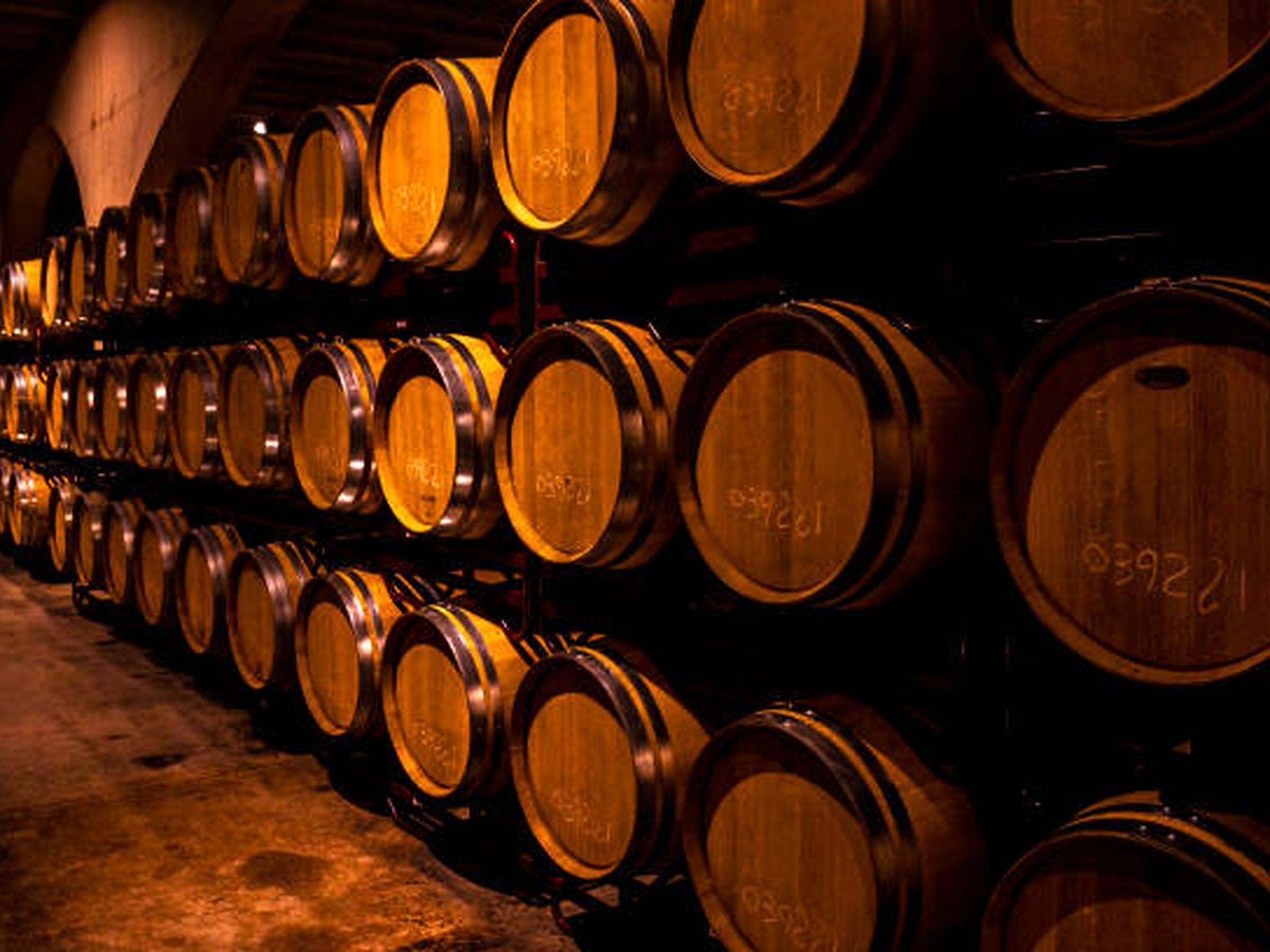
A larger vessel generally gives less wood surface area per litre than a small barrel, so extraction and wood influence tend to develop differently.
A Tequila can spend more than one year in a large pipón and remain Reposado because Añejo also requires maturation in vessels no larger than 600 litres.
NOM-006 uses the legal terms roble o encino. This guide keeps that wording without forcing a species translation.
Universal foundation: Compare vessel size, heat, previous use, climate and time before returning to Tequila classes →
Check yourself
Why can a Tequila mature for more than one year and still be Reposado?
Answer it before revealing the explanation.
Reposado is defined by at least two months of direct wood contact. The 600 L maximum enters with Añejo and Extra Añejo; Añejo also requires at least one year.
Abocamiento is a separate production choice
The sugar-source category and post-distillation treatment answer different questions.
NOM-006 defines abocado as the procedure used to soften or modify Tequila through specified ingredients. An abocante is an ingredient used for that purpose; abocamiento is carrying out the procedure.
NOM-006 limits the use of the defined abocantes and requires production records for the materials used.
Keep the questions separate: “100% de agave” identifies the fermentable sugar source. Abocamiento is governed separately after distillation.
Continue · Chapter 09Read the label in a fixed order →Read the label in a fixed order
Legal terms first. Producer and marketing claims come after the category framework is clear.
Category
Tequila or Tequila 100% de agave?
Class
Blanco, Joven, Reposado, Añejo or Extra Añejo?
NOM registration
Identifies the authorised producer registration associated with the Tequila.
ABV
NOM-006 specifies a commercial range of 35–55% Alc. Vol.; read the bottle’s actual strength.
Claims
Then interpret terms such as cristalino, premium, handcrafted or Highlands as additional context.
Check yourself
What does the NOM registration help you identify?
Answer it before revealing the explanation.
The authorised producer registration that accompanies the official NOM mark. Brand ownership and producer identity are separate pieces of information.
Taste from evidence
Describe what is in the glass first. Use verified production information to explain plausible causes.
Structured tasting helps separate observation from assumption. Record appearance, aroma, palate and finish, then interpret the style using the production information that is actually available.
Five-question tasting tool
1. Appearance
Observe: colour, depth and clarity. Use colour as appearance evidence. Age and quality require separate evidence.
2. Aroma
Look for: cooked agave, grassy / herbaceous notes, citrus, pear, stone fruit, banana, pineapple, floral tones, black or white pepper, vanilla, coconut, caramel, toast and oak spice where present.
3. Palate
Assess: flavour intensity, agave character, fruit, floral notes, pepper, spice, texture, oak influence and integration. Note how alcohol and flavour intensity work together.
4. Finish
Follow: length and development. What remains: agave, pepper, tropical fruit, herbs, oak, vanilla or drying tannin?
5. Interpretation
Describe the style: fresh and agave-led, fruity and floral, grassy / herbaceous, peppery, earthy / savoury, rich and textural, oak-led or balanced between agave and maturation.
Check yourself
When tasting professionally, what comes first: observation or production explanation?
Answer it before revealing the explanation.
Observation. Record what the spirit shows, then use verified production information to explain plausible causes.