Whisk(e)y Library / Scotch Category Guide
Scotch
Whisky
Law, Production & Sensory Analysis.
Scotch whisky takes its character from its raw materials, fermentation, distillation and time in oak. This guide explains the legal requirements, the differences between malt, grain and blended Scotch, and how to use that knowledge when reading a label or tasting a whisky.
Scope Covers malt, grain and blended Scotch. Production examples identify the category they illustrate.
Start with the law →Continue where you left off →
Interpret the category, age and production information on a Scotch label
Explain how production and maturation influence whisky character
Describe a whisky clearly and support your explanations with reliable information
Guide contents
Follow the ten chapters in order, or open a chapter to review a particular subject.
The law defines Scotch
The legal definition establishes where Scotch is made and the requirements for production, maturation and bottling.
What are the legal requirements for Scotch whisky?
Scotch whisky must be produced and matured in Scotland. It is made from water and malted barley, with other whole cereal grains permitted in some categories, and distilled below 94.8% abv. It must mature in oak casks no larger than 700 litres for at least three years and be bottled at 40% abv or above. Only water and plain caramel colouring may be added.
The rules also govern where mashing and fermentation take place, how starch is converted into sugar and the character retained in the whisky.
Compare identityCompare Scotch requirements with the Japanese Whisky industry standard →
Requirements at a glance
- Distillation strength
- Below 94.8% abv
- Minimum maturation
- 3years
- Maximum oak cask capacity
- 700litres
- Minimum bottling strength
- 40% abv
- Raw materials
- Water and malted barley. Other whole cereal grains may be added where the category permits.
- Production
- The ingredients must be mashed, converted into a fermentable liquid, fermented and distilled at the same distillery in Scotland.
- Conversion and fermentation
- Starch conversion must use only the cereals’ own enzyme systems. Fermentation is carried out by adding yeast.
- Distillation strength
- Below 94.8% abv, so the distillate retains aroma and taste from its raw materials and production.
- Maturation
- Entirely in Scotland for at least three years, only in oak casks with a capacity of no more than 700 litres, in an excise warehouse or permitted place.
- Retained character
- The whisky must retain colour, aroma and taste derived from its raw materials, production and maturation.
- Permitted additions
- Only water and plain caramel colouring.
- Bottling strength
- A minimum of 40% abv.
Source: Scotch Whisky Regulations 2009, Regulation 3: legal definition and category requirements.
What this means in production
A distillery can buy malted barley, but must carry out the subsequent mashing, fermentation and distillation itself. Purchased wort or wash cannot replace those stages. Starch conversion relies on enzymes within the cereals; externally supplied enzymes are not permitted. The mashing chapter explains how malt enzymes convert starch into fermentable sugars.
These requirements apply across Scotch whisky. Each category has further conditions: single malt, for example, uses malted barley as its only cereal and is batch-distilled in pot stills at one distillery. The five Scotch categories and their label meanings are explained in Chapter 02.
Read the category first
Begin with the legal category. Then look at the age statement, region, cask information and bottling strength.
| Legal category | What it means |
|---|---|
| Single Malt | Produced at one malt distillery from water and malted barley, using pot stills. |
| Single Grain | Made at one distillery and falls outside the single malt definition. Other whole cereals may be used alongside malted barley. Continuous distillation is common. |
| Blended Malt | A blend of two or more single malt Scotch whiskies from more than one distillery. |
| Blended Grain | A blend of two or more single grain Scotch whiskies from more than one distillery. |
| Blended Scotch | A blend of one or more single malt Scotch whiskies with one or more single grain Scotch whiskies. |
The stated age refers to the youngest whisky in the bottle.
The producer has omitted an age statement. Every component must still meet the minimum three-year maturation requirement.

Region
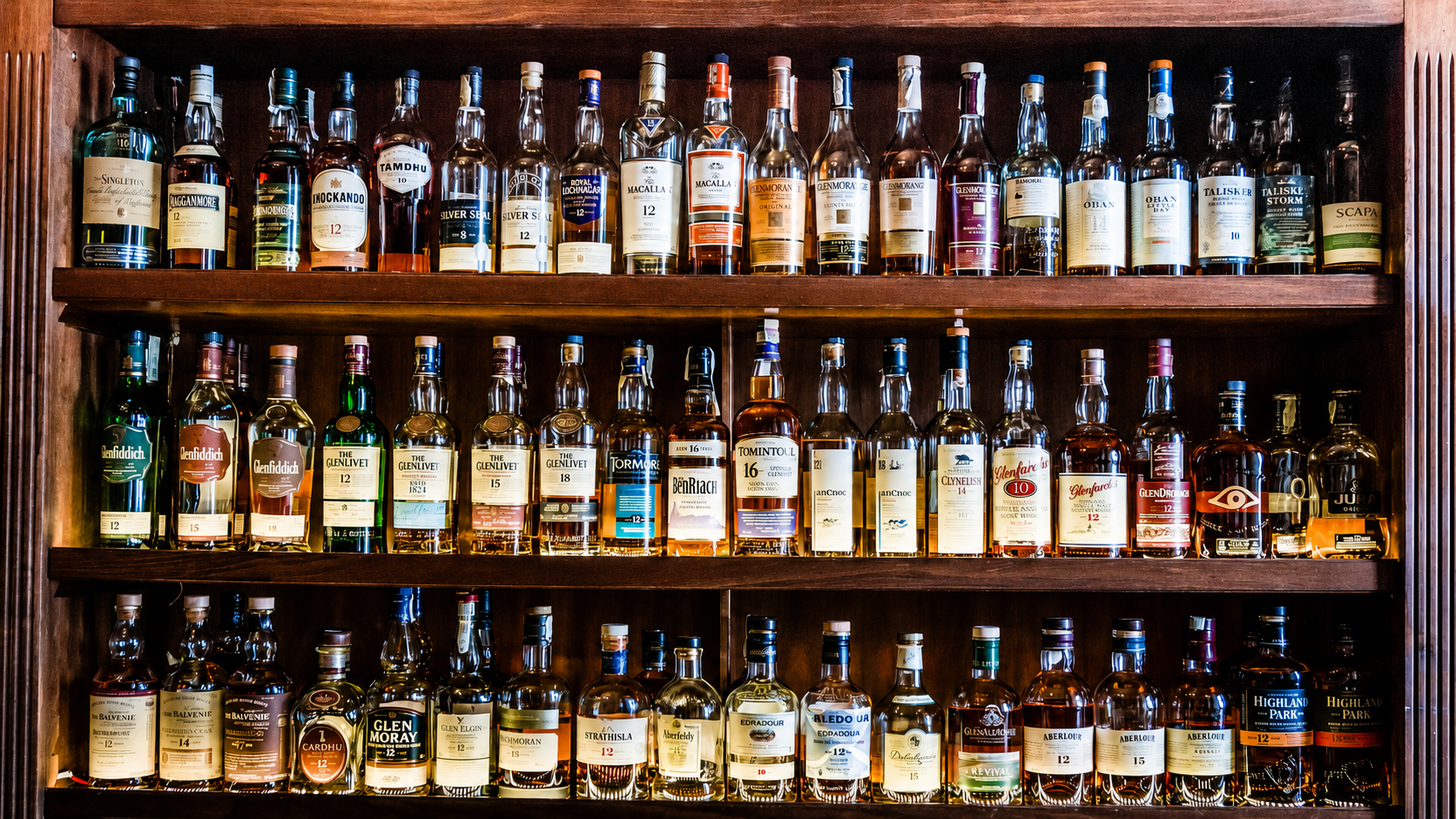
Five recognised regions
Campbeltown, Highland, Islay, Lowland and Speyside provide geographic context. Each contains a range of distillery styles, so regional associations are most useful alongside information about the individual producer.
Distillery directory
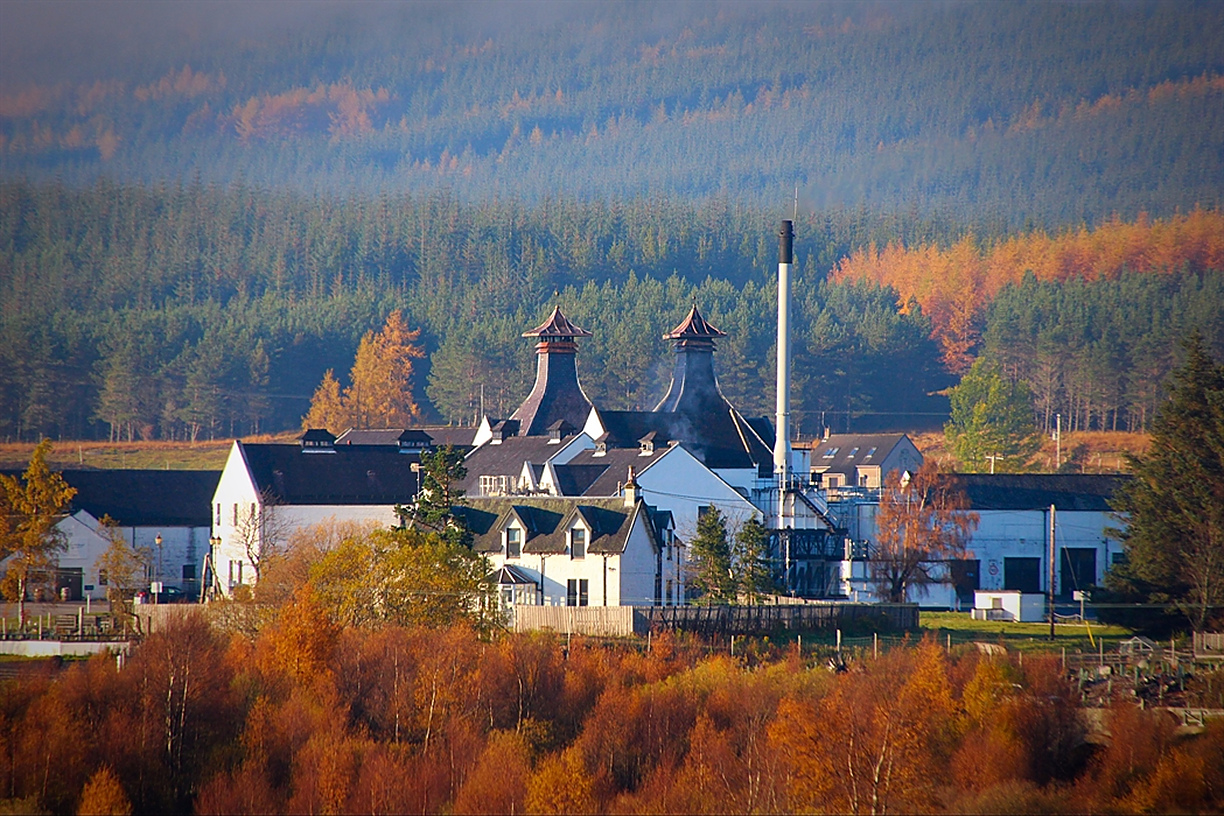
Explore Scotland’s operating distilleries
154 operating distilleries across Scotland · May 2026 directory. Browse the entries by region.
Open directory
Distillery directory
Explore Scotland’s operating distilleries
154 operating distilleries across Scotland · May 2026 directory. Browse the entries by region.
Current operating directory
Every operating Scotch distillery
154 operating distilleries · May 2026. Select a region to browse its entries.
Highland57 distilleries
Speyside50 distilleries
Lowland25 distilleries
Islay11 distilleries
Campbeltown3 distilleries
Grain8 distilleries
Check yourself
A bottle says “Single Malt Scotch Whisky, 12 Years Old.” What does the age tell you?
Answer in your own words before checking.
The youngest whisky in the bottle has matured for at least 12 years.
The category sets the grain bill
Malt and grain Scotch use cereals differently. The grain bill helps explain the production stages that follow.
Raw materials
Malt whisky
Single Malt
Malted barley is the only cereal used in single malt Scotch. Production takes place at one distillery, with distillation in pot stills.
Grain whisky
Single Grain
Grain Scotch uses malted barley, often alongside cereals such as wheat or maize. Continuous stills are common. “Single” refers to one distillery, which may use more than one cereal.
Blending
Blended categories
Mature malt and grain whiskies are selected and combined according to the category being produced.
Water and yeast
Water is used throughout production, including steeping, mashing, cooling and dilution. Yeast converts fermentable sugars into alcohol and produces flavour-active compounds during fermentation.
The cereals supply starch. Malting and mashing make fermentable sugars available, and fermentation produces the alcoholic liquid for distillation.
Connected knowledgeCompare malted barley in Scotch with the mixed barley bill of Pot Still Irish Whiskey →
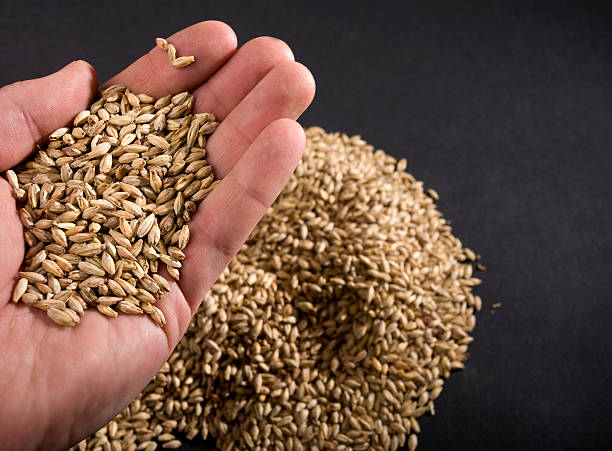
Malting activates the barley
Malting prepares barley for mashing through steeping, germination and drying. Peat smoke may be introduced during drying.
Malting / germination
Steeping and germination
Barley is steeped in water to raise its moisture content and allow germination to begin. Enzymes develop during germination, while changes within the grain make its starch more accessible for conversion during mashing.
Malted barley provides the cereal base for malt Scotch and enzymes used to process cereals in grain Scotch production.
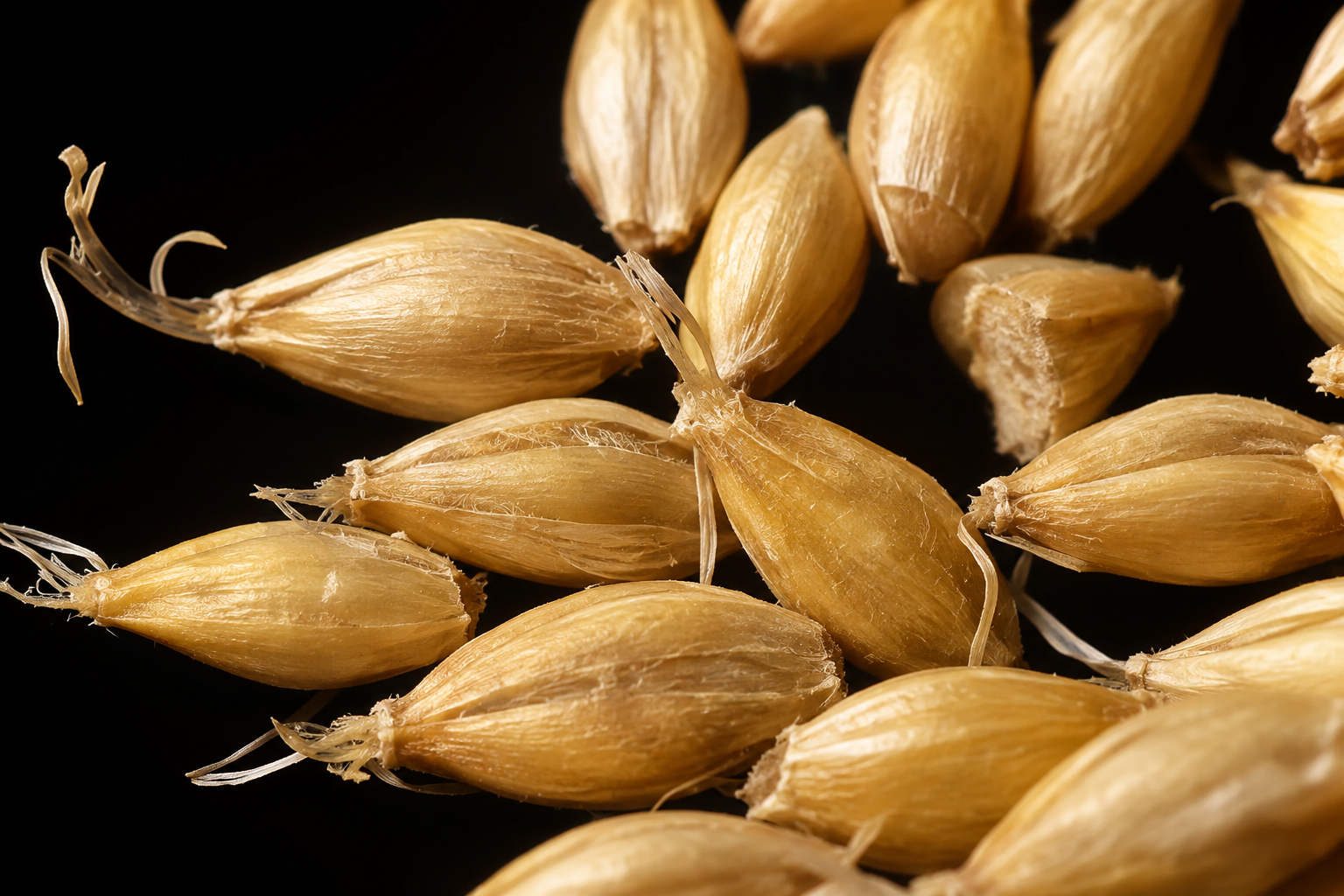
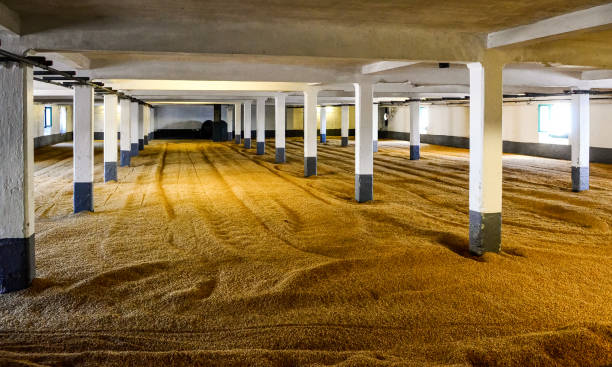
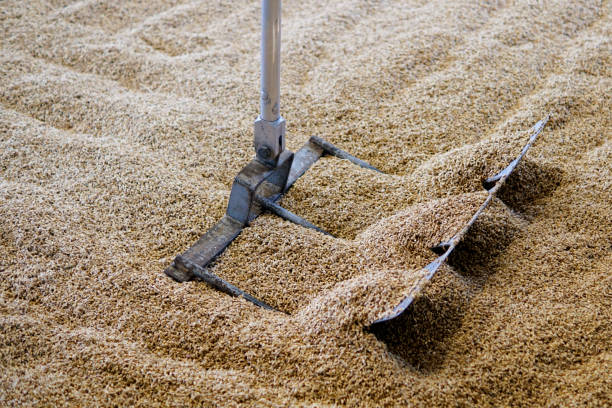
Barley absorbs water so germination can begin.
Enzymes develop and changes within the grain prepare it for mashing.
Drying stops germination and stabilises the malt for milling.
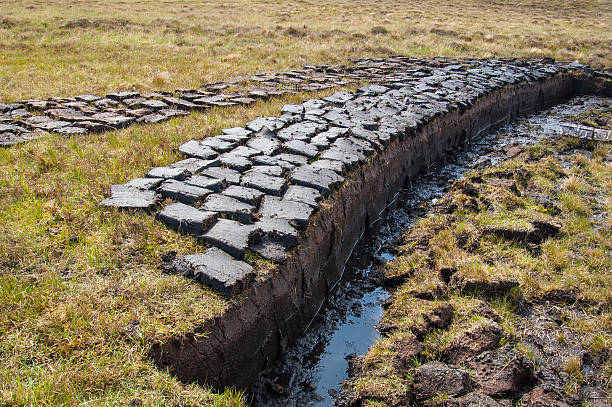
Peat may be burned during drying so phenolic smoke compounds are absorbed by the malt.
How peat affects character
Peat smoke contains phenolic compounds that can give whisky smoky, earthy, medicinal, savoury or ashy aromas. Their character varies with the peat source, extraction depth, combustion conditions and treatment of the malt.
Some of these compounds pass through subsequent production stages into the new make spirit. Distillation and maturation influence their concentration and how they are perceived in the finished whisky.
Peat is optional. Producers can dry malt without peat smoke, and many Scotch whiskies are made from unpeated malt.
Check yourself
At which production stage can peat smoke enter the whisky-making process?
Answer in your own words before checking.
During malt drying, when smoke from burning peat comes into contact with the barley.
PPM means parts per million. Peat-related figures describe measured phenolic content and need to be read with an understanding of what was measured. Production and maturation affect perceived smokiness, so the figure alone gives an incomplete picture of the finished whisky.
Mashing extracts fermentable sugars
Mashing produces the sugary liquid that yeast will ferment. Cereal preparation differs between malt and grain production.
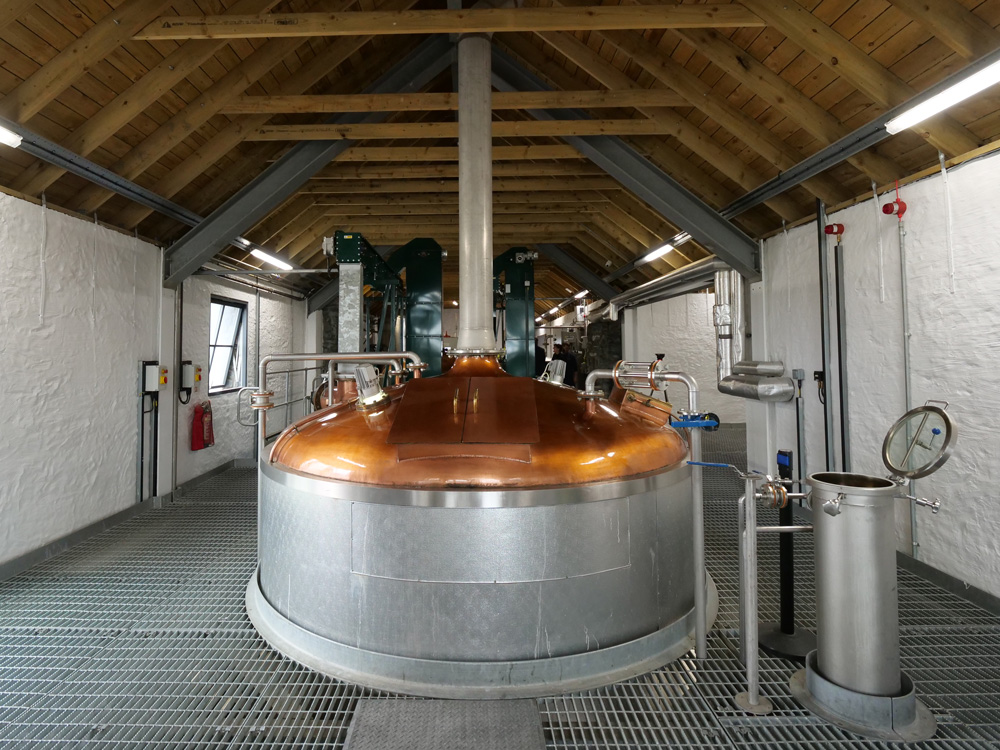
Production / mashing
From grist to wort
For malt Scotch, dried malted barley is milled into grist and mixed with hot water. Enzymes convert starch into fermentable sugars. The liquid drawn from the grain bed is called wort.
Grain Scotch may include unmalted wheat or maize. These cereals can require cooking to make their starch accessible before enzymes from malted barley complete the conversion.
Extraction conditions and wort clarity influence the composition of the liquid entering fermentation and can affect the resulting spirit’s character.
Fermentation builds aroma
Yeast, temperature, fermentation time and washback conditions influence the liquid that reaches the stills.
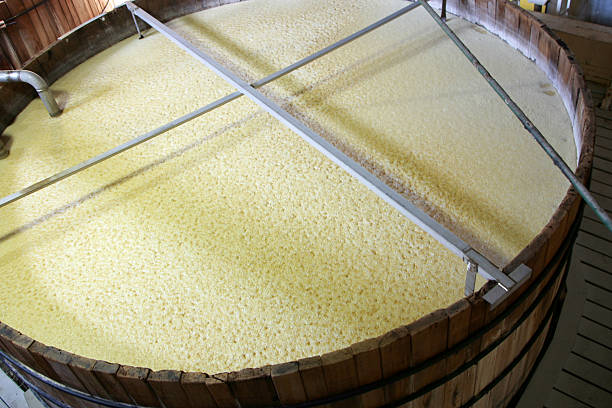
Alcohol and aroma formation
As yeast ferments sugars, it produces alcohol and flavour-active compounds, including esters, higher alcohols and acids. The resulting alcoholic liquid is called wash. Its composition depends partly on the yeast and fermentation conditions.
The amount of yeast added, wort temperature, sugar concentration and fermentation time all affect yeast activity. Washback hygiene also influences the microorganisms present.
Yeast growth affects ester formation. Fermentation time and washback conditions also influence the balance of compounds contributing fruity, cereal, oily or savoury character.
Some malt distilleries extend fermentation beyond the main period of alcohol production. Bacterial activity during this additional time can change the wash’s composition and contribute to the resulting spirit’s character.
The quantity of yeast added affects how fermentation develops.
Wort temperature and fermentable sugar concentration affect yeast metabolism.
These influence microbial activity and the composition of the wash.
Check yourself
How does yeast contribute to whisky character?
Answer in your own words before checking.
During fermentation, yeast produces alcohol and flavour-active compounds that help determine the composition of the wash entering distillation.
Universal foundationExplore how yeast produces alcohol and aroma compounds during fermentation →
Continue · Chapter 07Distillation selects character →Distillation selects character
Still design, copper contact, reflux, heating rate and spirit collection influence the new make spirit.
Malt and grain distillation
Pot and continuous distillation
Most single malt Scotch is distilled twice in copper pot stills, although some producers use triple distillation. The first distillation produces low wines. During the second, the distiller collects the middle portion of the run for maturation.
Grain Scotch is commonly distilled in continuous stills. These systems typically produce a lighter spirit, widely used alongside malt whisky in blended Scotch.
Connected knowledgeCompare lighter base whisky and flavouring components in Canadian whisky →
Universal foundationExplore separation, reflux, copper contact and spirit collection →
Changing when spirit collection begins or ends changes the mixture of compounds retained. The collected spirit is separated from the earlier foreshots and later feints.
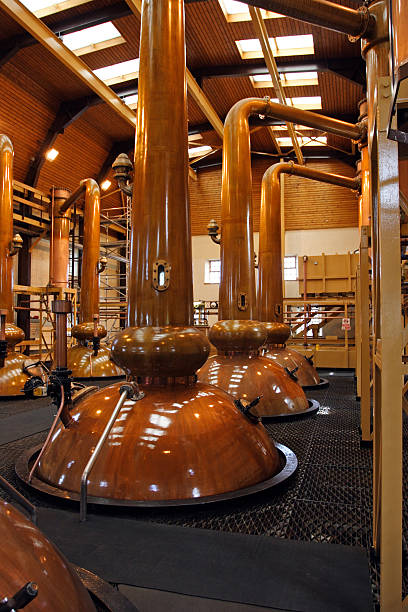
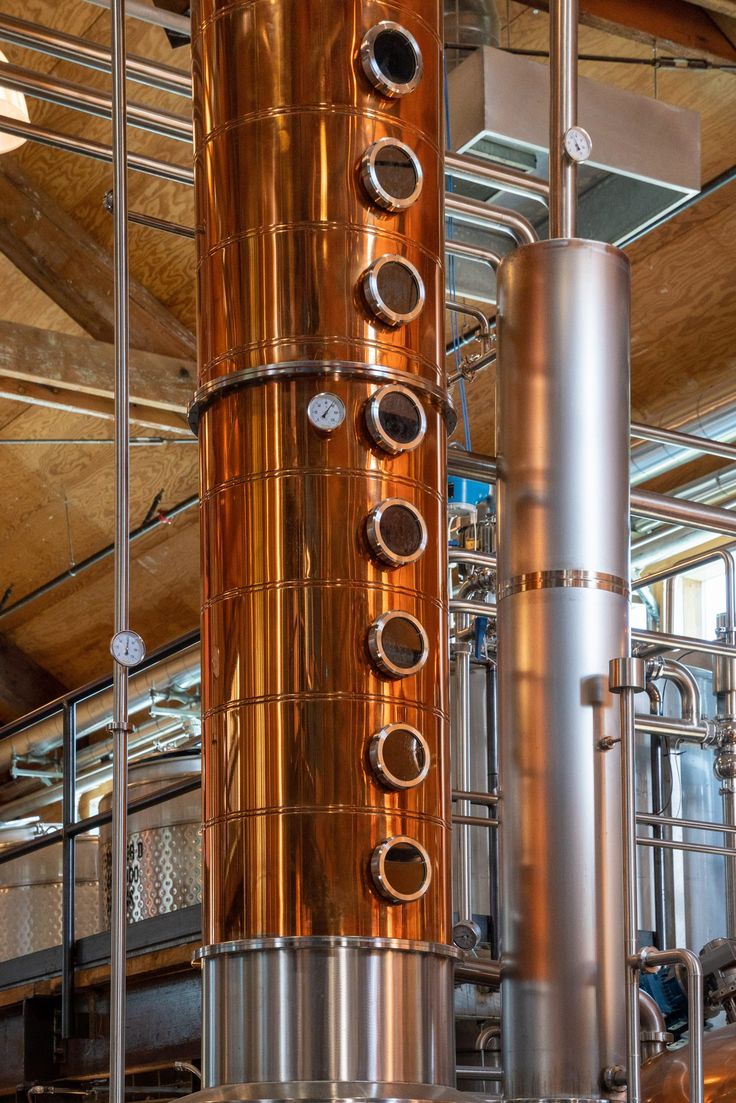
Comparison 01Compare how pot and column stills operate →
Heating rate influences reflux and separation. Faster operation can favour a heavier spirit; slower operation often favours a lighter style. The result also depends on the still’s design.
Worm tubs can contribute a heavier, meatier style; shell-and-tube condensers are more common.
Phenols absorbed during malt drying can pass through distillation and remain part of new make character.
Casks transform the spirit
Cask selection and warehouse conditions influence how Scotch develops during its minimum three years of maturation.
Legal requirements
Oak · Scotland · minimum three years · maximum 700 LAll Scotch must meet these maturation requirements.
Producer choice
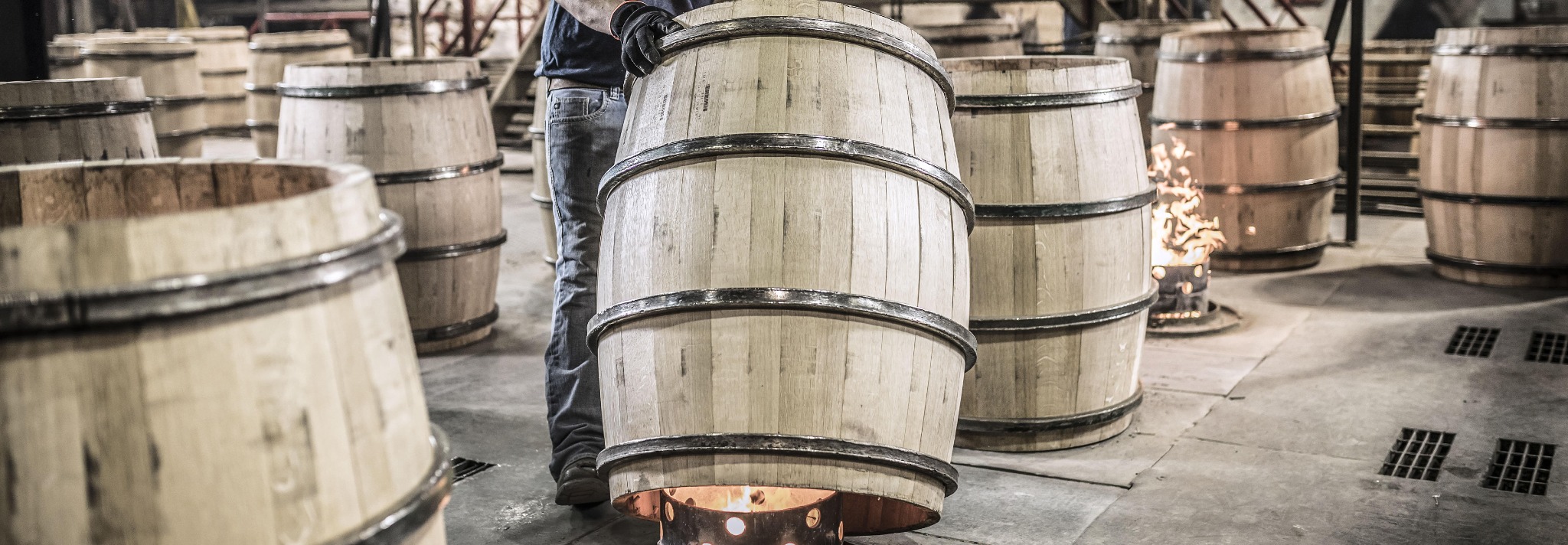
Previous contents · cask preparation · oak · fill · size · warehouse · timeThese influence the extraction, removal and transformation of compounds during maturation.
Production / maturation
Maturation changes the spirit in three ways
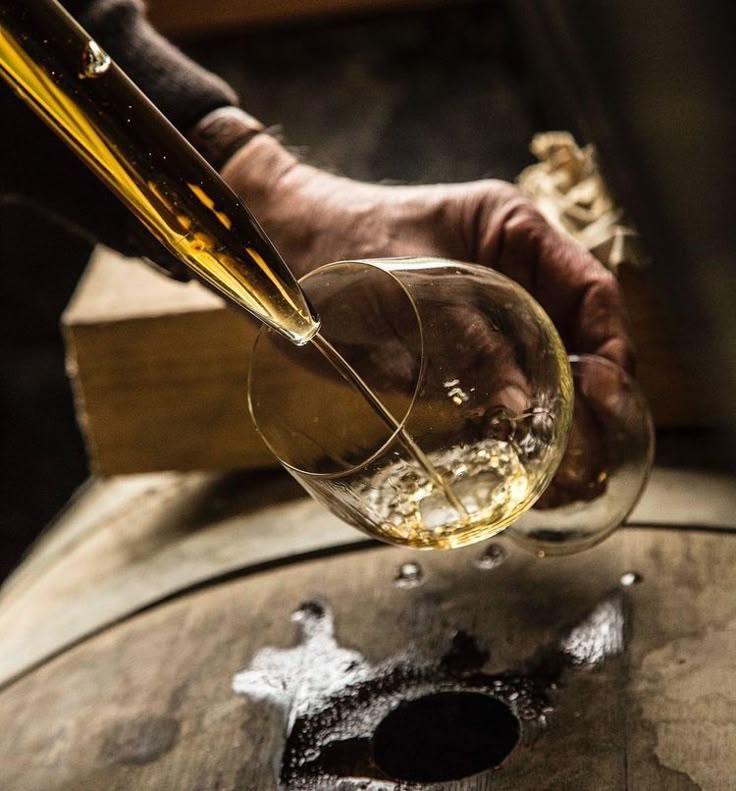
Compounds are extracted from the cask, some substances are removed from the spirit, and chemical reactions change its composition. Oak, previous contents, repeated use, time and storage conditions influence these processes.
Angel’s share is the spirit lost through evaporation during maturation. Both water and alcohol can be lost, reducing the volume remaining in the cask.
Scotland’s generally cool, humid conditions tend to produce gentler evaporation than hotter climates. Humid conditions can favour alcohol loss relative to water, allowing alcoholic strength to decrease.
Warehouse conditions, airflow and cask size also affect the outcome.
American oak character
American oak ex-bourbon casks commonly contribute vanilla, coconut, spice and dry wood character.
Sherry seasoning
Sherry-seasoned casks can contribute dried fruit, nutty character, spice and richer sweetness.
Repeated use
First-fill casks generally provide a stronger contribution than comparable refill casks. Repeated use usually reduces cask activity.
A second cask stage
A further period in another cask can change the mature whisky’s aroma, flavour and colour.
Cask size
Size changes the wood-to-spirit ratio
Smaller casks
More oak surface per litre can increase the rate of extraction.
Larger casks
Less oak surface per litre generally means slower extraction.
In practice
Cask history, oak and storage conditions also affect the rate and character of development.
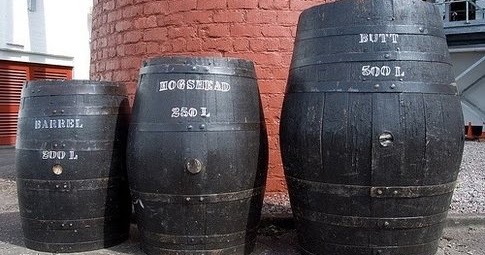
Cask format & scale
Typical cask capacities used in Scotch maturation.
Typical working capacities. Cask names are trade conventions and sizes vary. Scotch must mature in oak casks with a maximum capacity of 700 litres.
Cask history / ex-bourbon
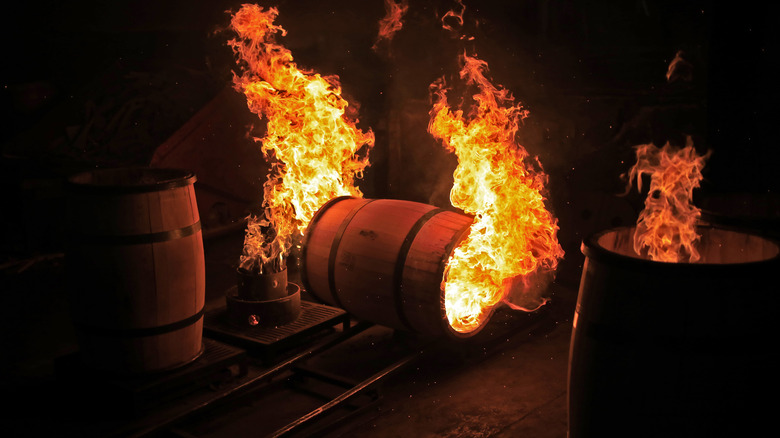
The influence of charred oak
Ex-bourbon barrels already have a charred interior from their previous use. This layer can help adsorb certain unwanted compounds, including some sulfur compounds, during maturation.
Heat treatment also changes the oak-derived compounds available to the whisky, contributing vanilla, spice and toasted notes.
Cask activity: heat treatment, previous contents and repeated use affect the cask’s contribution.
Connected knowledgeExplore the new charred oak requirement in bourbon production →
Universal foundationExplore cask history, climate and time in spirits maturation →
Check yourself
What does an age statement tell you? Which maturation details remain unknown?
Answer in your own words before checking.
It identifies the youngest whisky’s age. Cask history, previous fills and warehouse conditions provide further information about development.
Assembly prepares the release
Producers select mature stocks for the intended style, then prepare the whisky for bottling.
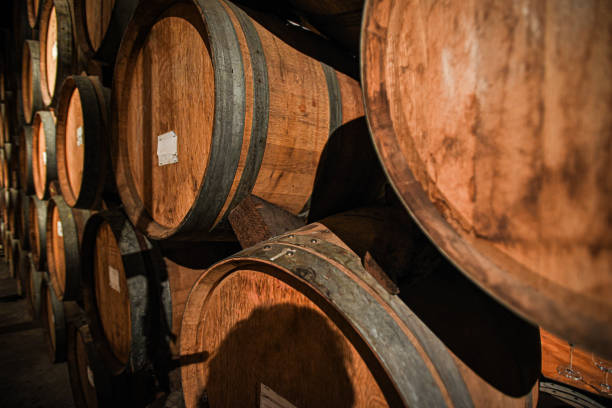
Selection / bottling
Selecting and combining casks
A single malt or single grain release may contain whisky from several casks at one distillery. Blended malt, blended grain and blended Scotch combine stocks according to their respective categories.
Water may be added to reach the intended bottling strength, which must remain at least 40% abv. Chill filtration reduces haze formation when the whisky is cooled or diluted. Plain caramel colouring is permitted for colour adjustment.
“Single” refers to one distillery. Bringing casks together, often described as marrying, can be part of producing a single malt or single grain release.
Selection considers aroma, flavour, texture, balance and consistency, within the requirements of the category.
Water may be added to reach the intended bottling strength, at a minimum of 40% abv.
Reduces the tendency to form haze at low temperatures or after dilution.
E150a is permitted for colour adjustment within Scotch whisky rules.
Taste from evidence
A consistent tasting method helps you describe a whisky clearly and support explanations of how it was made.
Use a common language
Start with broad aroma groups such as cereal, fruit, floral, smoke and oak. Then choose terms that describe what you perceive: malt, apple, pear, dried fruit, vanilla, coconut, clove, ash or medicinal smoke.
Record colour as part of appearance. Cask activity and permitted caramel colouring can both influence it, so establish age from the label and assess quality through tasting.
Connected knowledgeUnderstand how water and dilution can change aroma release and texture →
Five-step tasting method
Observe
Record appearance, aroma, palate, texture and finish.Name
Identify broad aroma and flavour groups such as cereal, fruit, floral, smoke and oak.Narrow
Choose precise descriptors, such as pear, dried fruit, vanilla, clove, ash or medicinal smoke.Connect
Relate observations to documented production and maturation details where the connection is supported.Compare
Taste another whisky or consult reliable producer information to examine your interpretation.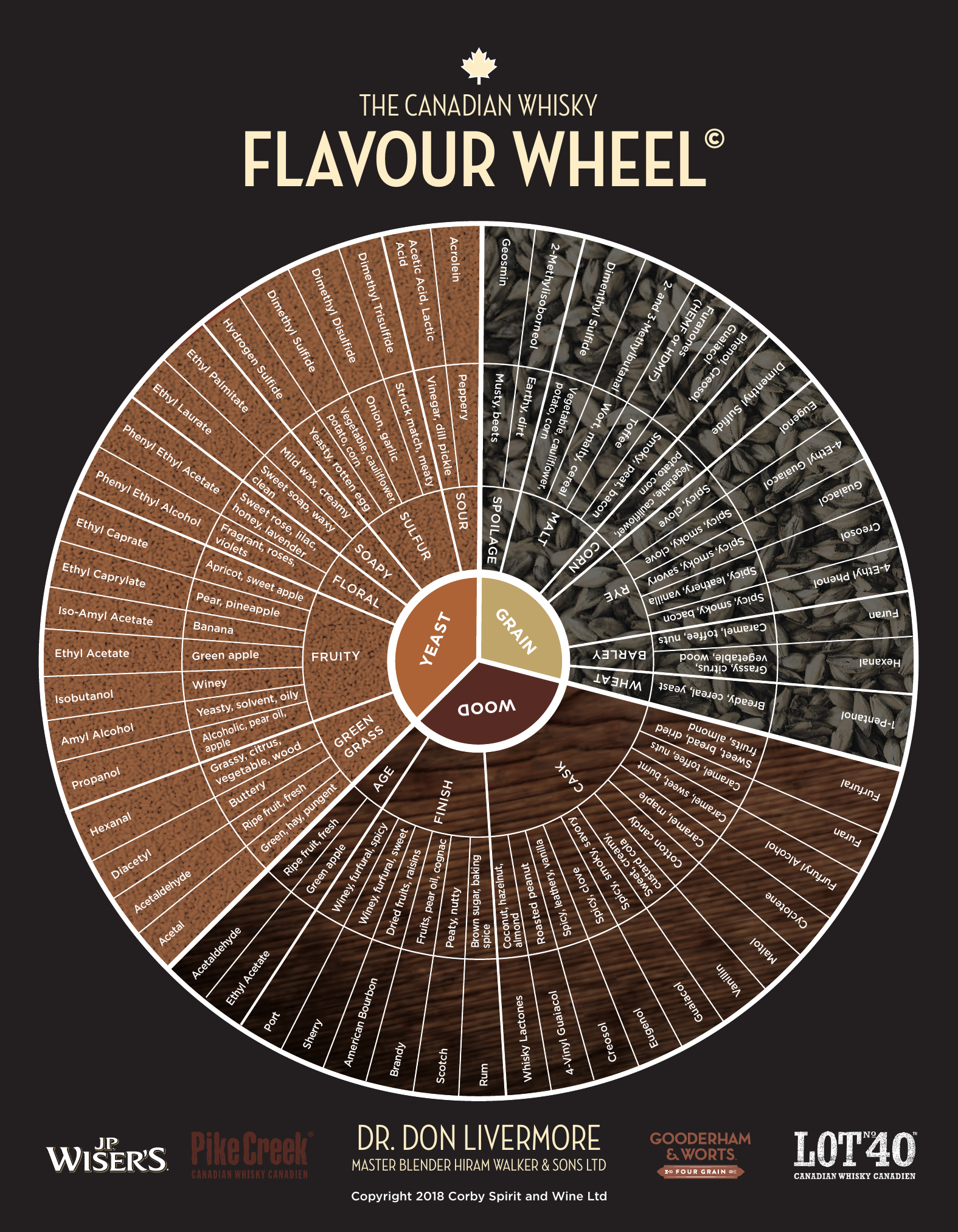
From broad families to precise descriptors
Dr Jim Swan’s flavour wheel work helped develop a shared whisky vocabulary, organised from broad aroma groups to specific descriptors.
The Dr Don Livermore wheel shown here groups descriptors around grain, yeast, wood and spoilage, with additional chemical context. Select terms that match the whisky in your glass.
Open the flavour wheel · PDFColour chart
Use these colours as a shared reference for recording appearance.
Cask type, previous contents, maturation time and permitted caramel colouring can all affect appearance.
How to read colour professionally
A darker colour may reflect greater extraction, cask seasoning or colour adjustment. Establish age from the label and assess quality through tasting.
Use consistent colour terms, then consider the available cask and bottling information when interpreting appearance.
Check yourself
When tasting professionally, what comes first: description or production explanation?
Answer in your own words before checking.
Description comes first. Record what you perceive, then use reliable information to explain it where possible.
Download
Simple guide carousel PDF
Use the short visual guide for a quick recap or a staff training session.
Behind-the-bar recap
Read the bottle
- Identify the legal category
- Read the age of the youngest component
- Use region for geographic context
- Check cask information and bottling strength
- Verify specific production claims
Behind-the-bar recap
Read the glass
- Record your observations
- Identify broad aroma and flavour groups
- Choose precise descriptors
- Support explanations with reliable information
- Compare whiskies to refine your judgement
REFSources & Further Reading
Legal, technical and educational references supporting this guide.
Law & category
Scotch Whisky Regulations 2009Primary law · legal definition and production requirements SWA guidance for producers and bottlersIndustry guidance · labelling and presentation Official Scotch Whisky categoriesIndustry · category terminology SWA Scotch Whisky regionsIndustry · geographic framework SWA Facts & FiguresIndustry · operating distillery count, May 2026 SWA 2026 distillery mapIndustry · current distillery orientationProduction
SWA cereals technical noteIndustry · cereal production context Bathgate · malt and wort processingResearch · malting, mashing and spirit character Saccharomyces cerevisiae in whisk(e)y productionResearch · yeast and fermentation Influence of yeast strain on new-make aromaResearch · fermentation and aroma Copper in malt whisky pot stillsResearch · copper contact and new-make compositionMaturation & bottling
Dr Jim Swan archive · American oakTechnical archive · maturation research Dr Jim Swan archive · sherry casksTechnical archive · cask history Dr Jim Swan archive · STR casksTechnical archive · shave, toast, re-char Dr Jim Swan archive · chill hazeTechnical archive · bottling behaviour Edinburgh Whisky AcademyEducation · Diploma in Single Malt WhiskyThe takeaway
Read the bottle.
Then read the glass.
The category explains the whisky’s legal identity, and an age statement identifies its youngest component. Region, cask history and bottling details provide context. Bring these together with careful tasting to describe the whisky and explain its character.