
Whisk(e)y Library / Japanese Category Guide 06
Japanese
Whisky
Identity, Production & Labelling.
The JSLMA industry standard sets production and labelling requirements for Japanese Whisky made by participating member businesses. It specifies where saccharification, fermentation, distillation, maturation and bottling must take place.
Scope This guide begins with the standard fully effective from April 2024, then explains ingredients, fermentation, distillation, blending, maturation, Mizunara, labelling and service. It also distinguishes qualifying Japanese Whisky from transparently labelled world blends.
Start with the standard →Continue where you left off →
Check a Japanese Whisky claim against the current JSLMA standard
Explain how fermentation, distillation, maturation and blending influence style
Interpret the label and choose an appropriate tasting or service method
Guide contents
Begin with the current standard, then follow production from raw materials to maturation, labelling and service.
The JSLMA standard sets production and labelling requirements
The standard applies to participating member businesses. It is not yet a national geographical indication or a general whisky law.
The standard became fully effective in April 2024
The Japan Spirits & Liqueurs Makers Association established its Standards for Labeling Japanese Whisky in 2021. The transition period ended on 31 March 2024, and the standard has applied fully to participating member businesses since April 2024.
It remains an industry standard. Compliance and enforcement depend on the association and its members. Japanese Whisky is not currently registered as a national geographical indication.
The voluntary JSLMA logo introduced in 2025 is a confirmation tool for compliant products from member companies. Its absence is not, by itself, proof that a whisky fails the standard. JSLMA has announced work toward legal codification and a geographical indication, but the current National Tax Agency GI list does not yet include Japanese Whisky.
A transparently labelled world blend can be a legitimate product without qualifying as Japanese Whisky. Packaging alone is not enough to classify a bottle.
Scottish production influenced early Japanese whisky
Japanese producers adopted Scottish techniques, then developed a production model suited to their own industry.
Japanese producers developed their own production model
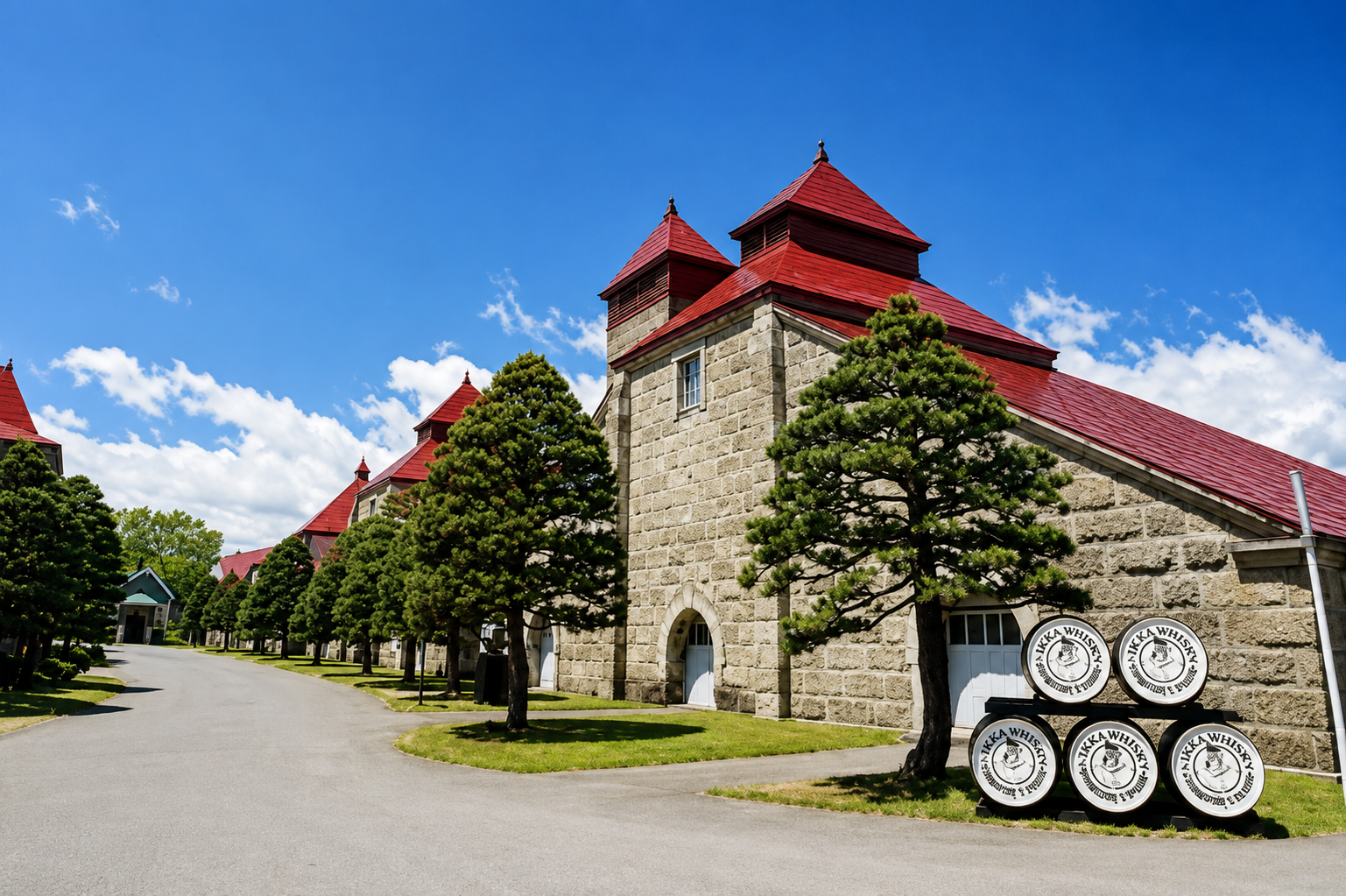
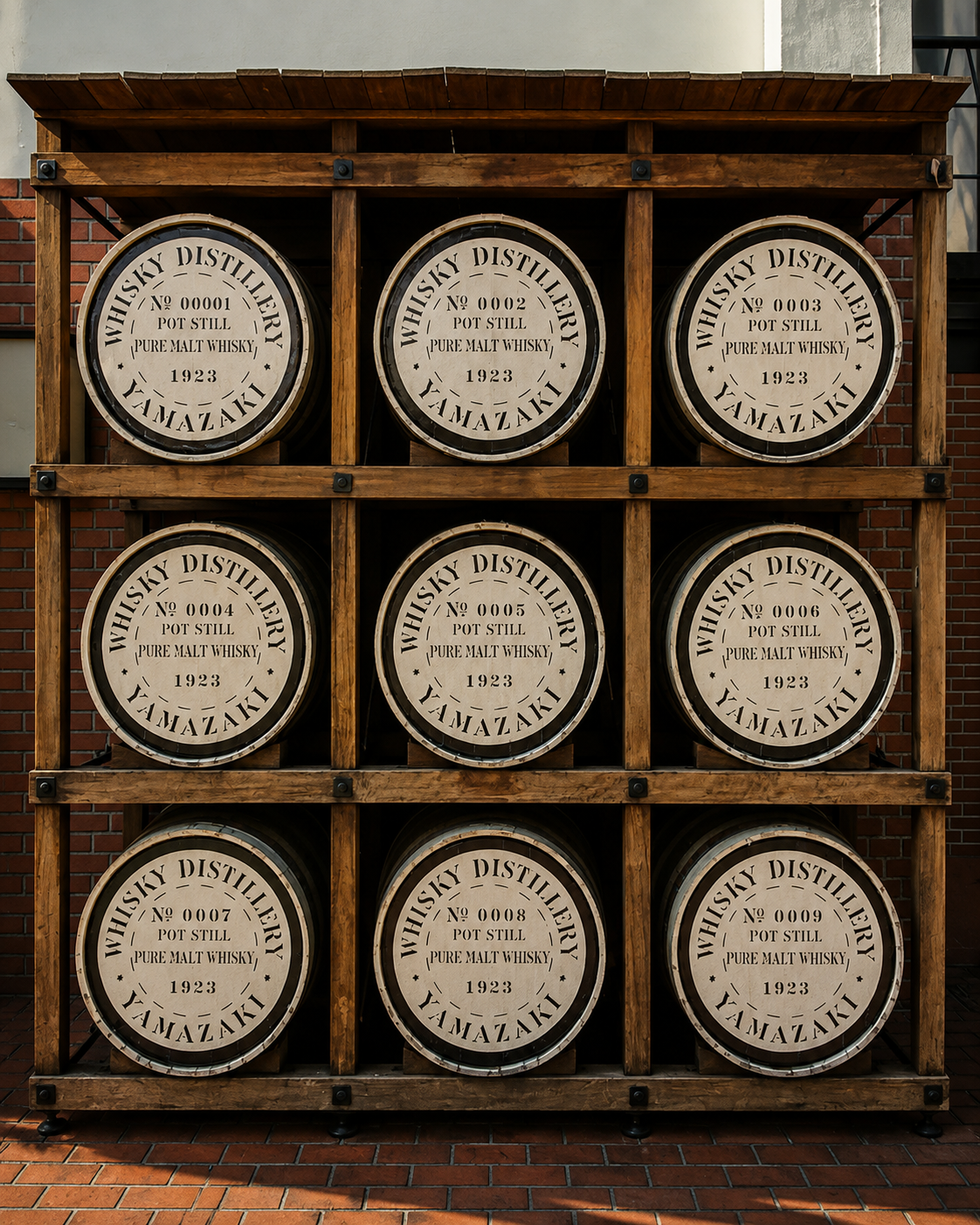
Masataka Taketsuru studied whisky production in Scotland before returning to Japan. Shinjiro Torii established Yamazaki in 1923, and Suntory released Shirofuda in 1929. Taketsuru later established Yoichi in Hokkaido in 1934.
Early Japanese whisky used Scottish production techniques, including malted barley, fermentation, copper pot stills and oak maturation. However, routine exchanges of mature whisky between competing companies were historically uncommon in Japan.
Major producers therefore created different malt and grain whisky styles within their own groups. Some also acquired overseas distilleries or used imported whisky in products that are transparently labelled outside the current Japanese Whisky standard.
Connected knowledgeCompare the protected Scotch identity that influenced early Japanese whisky →
Suntory establishes the site that anchors Japan’s commercial malt-whisky history.
Suntory releases its first whisky.
Taketsuru establishes the Hokkaido distillery that becomes Nikka’s first site.
Grain whisky and additional malt distilleries increase the range available for blending.
The JSLMA transition ends and the current standard applies fully to participating members.
Malted grain is required, but grain need not be grown in Japan
The standard requires production in Japan and Japanese water, but it does not require Japanese-grown cereals.
Agricultural origin and production origin are separate
Malted grain must be used, and other cereal grains are permitted. Japanese Whisky can therefore include malt whisky, grain whisky and blends of the two. The standard requires water extracted in Japan, but barley, wheat or maize may be imported.
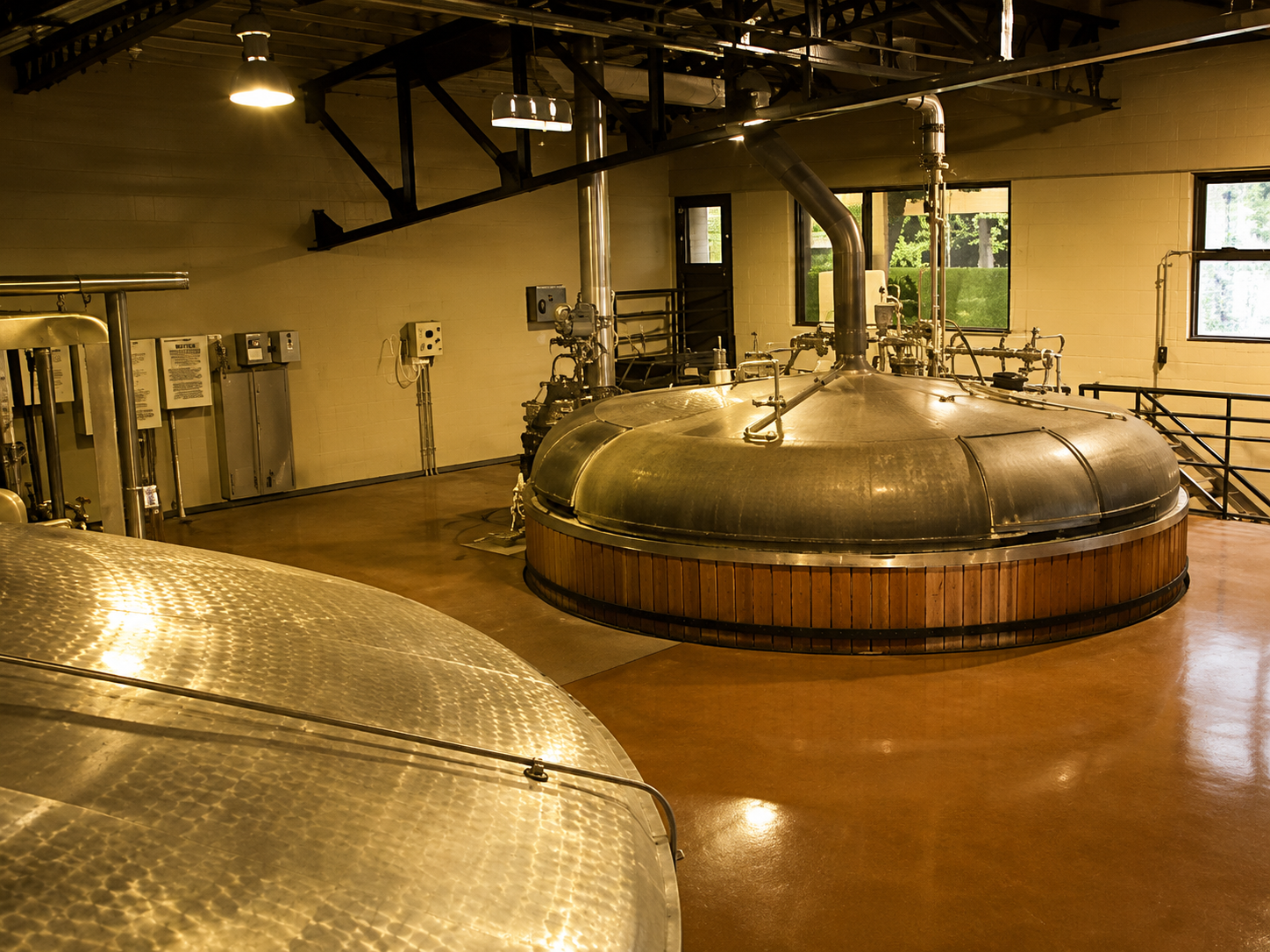
During mashing, grain starch is converted into fermentable sugars. Malt contributes enzymes and flavour potential, while other cereals can influence yield, texture and the style of distillate produced.
Connected knowledgeFollow barley preparation and malting in the Scotch guide →
Required
At least some malted grain must be used in every qualifying Japanese Whisky.
Permitted
Wheat, maize and other cereal grains can support grain whisky and blending components.
Required
The standard fixes the water source in Japan without turning water into a complete flavour explanation.
Fermentation choices influence the wash
The standard does not prescribe a national fermentation method or flavour profile.
Yeast, time, temperature and washbacks affect fermentation
Yeast converts fermentable sugars into alcohol and produces flavour compounds. Wort clarity, yeast strain, fermentation time, temperature, washback material and microbial activity can influence the wash sent to the still.
A producer may use controlled fermentation for a lighter spirit and a longer fermentation to produce more flavour compounds for another component. These are producer choices, not general rules for Japanese Whisky.
Lighter style
Consistent wort and fermentation conditions can produce a lighter or more fruit-forward wash.
More flavour compounds
Additional time can change the balance of esters, acids and other compounds available to distillation.
Microbial environment
Wood or stainless steel can influence hygiene, temperature control and microbial activity.
Use information about yeast, fermentation time or washback material only for the producer that provides it.
Connected knowledgeReview the common fermentation mechanism before comparing producer choices →
Universal foundationReview yeast, fermentation conditions and flavour-compound formation before comparing Japanese producer choices →
Continue · Chapter 05Still design creates different spirit styles →Still design creates different spirit styles
Still shape, heating method, reflux and cut points influence the composition of the new-make spirit.
Pot and continuous stills perform different roles
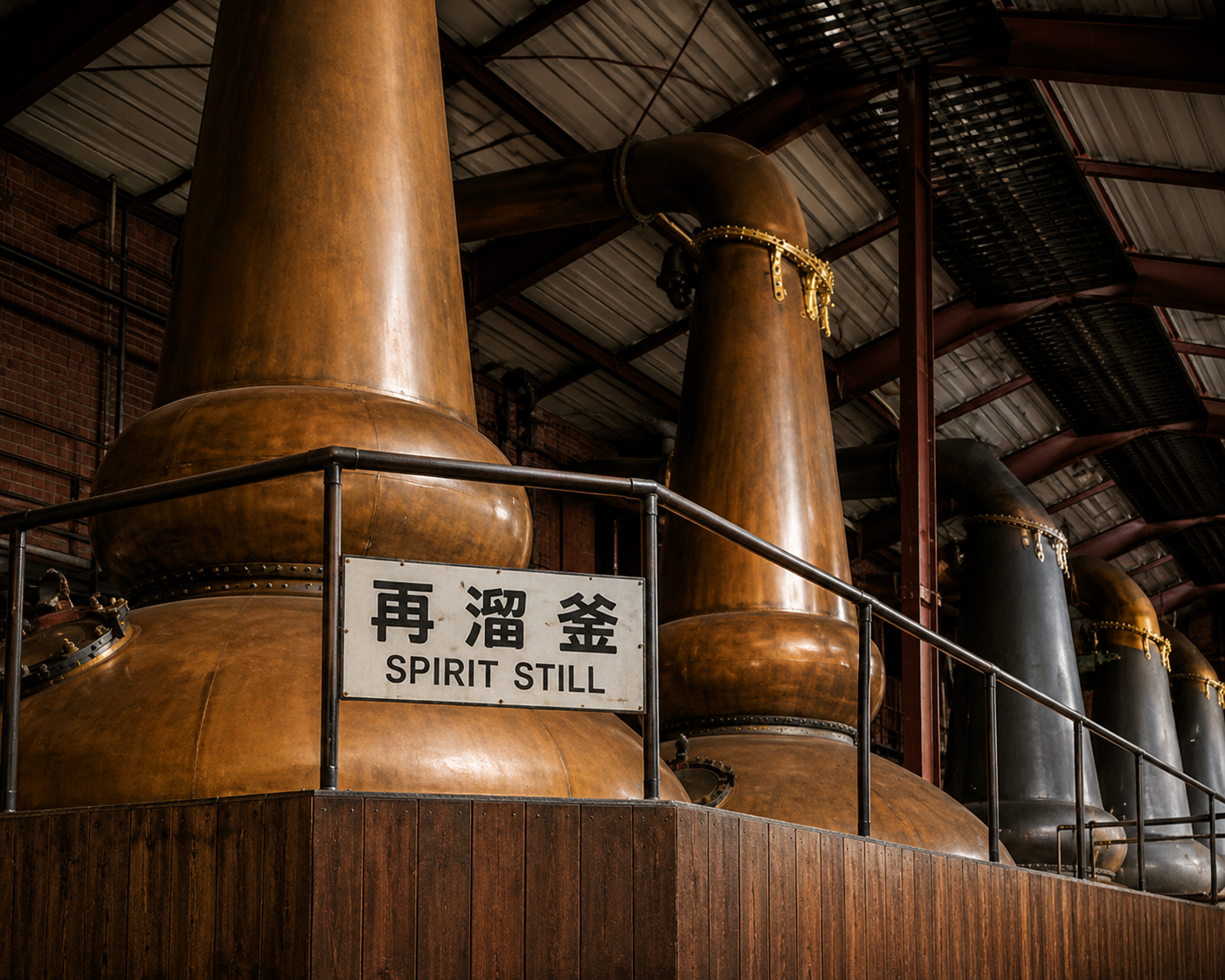
Pot-still shape, neck height, lyne-arm angle, condenser type, heating method and cut points affect reflux and the compounds collected in the spirit. Continuous stills can produce grain whisky and lighter components for blending.
Yoichi and Miyagikyo provide a useful comparison within one company. Yoichi uses straight-headed pot stills, downward lyne arms and direct coal firing. Miyagikyo uses bulged necks, upward lyne arms and indirect steam heating. Miyagikyo also produces grain whisky in Coffey stills.
Connected knowledgeCompare Japanese pot and continuous distillation with Scotch malt and grain production →
Yoichi · producer example
Weight and texture
- Straight pot-still heads
- Downward lyne arms
- Direct coal firing
Miyagikyo · producer example
Reflux and range
- Bulged pot-still necks
- Upward lyne arms
- Indirect steam heating and Coffey grain stills
Universal foundationPlace still shape, reflux, copper contact and collection decisions inside the wider distillation system →
Continue · Chapter 06Producers create components for blending →Producers create different components for blending
Japanese whisky companies often produce a range of malt and grain spirits because mature stocks are not commonly exchanged between competitors.
Blending requirements are planned before distillation
Japanese whisky groups have historically produced their own range of spirit styles instead of relying on mature malt stocks from competitors. They can vary fermentation, still design, distillery location and grain-whisky production to make the components required for future blends.
The blender selects from these stocks after maturation. Single malt is malt whisky from one distillery. Grain whisky can use other cereals and is commonly made in continuous stills. Blended whisky combines malt and grain whiskies. These terms describe production, not a simple quality ranking.
Connected knowledgeCompare Japanese blending with Canadian component production →
Wash variation
Different fermentation conditions can create different flavour compounds before distillation.
Spirit variation
Pot and continuous stills can produce spirits with different weights and strengths.
Cask variation
Wood type, previous contents, location and time create further differences.
A producer may combine Japanese and imported whisky and label the product as a world blend or world whisky. That can be honest and useful disclosure, but it is not the same provenance claim as fully qualifying Japanese Whisky.
Japanese Whisky must mature for at least three years in Japan
The standard sets the minimum time, place of maturation and maximum cask size. It does not require a particular oak species.
Cask type and climate influence style
Qualifying Japanese Whisky must mature in Japan for at least three years in wooden casks no larger than 700 litres. Producers may use American oak, wine- or sherry-seasoned casks, refill wood, Japanese oak and other permitted wooden vessels.
Maturation conditions vary across Japan. Hokkaido, mountain sites and warmer southern locations differ in temperature, humidity and warehouse conditions. These differences can affect evaporation, extraction and oxidation.
The intended use of a cask also matters. A blender may select it for structure, fruit, oak character, smoke or a small aromatic contribution to the final whisky.
Connected knowledgeContrast Japan’s permitted wooden casks with Bourbon’s required new charred oak →
Universal foundationCompare cask type, previous use, climate, time and blending purpose across spirit categories →
3 years · Japan
The standard requires both the minimum time and maturation in Japan.
700 L maximum
The wooden cask must not exceed 700 litres.
Wood · fill · site · time
Previous contents, cask activity, climate and blending purpose influence the result.
Mizunara is an optional cask choice
Japanese oak can influence maturation, but it does not prove where the whisky was produced or guarantee its quality.
A cask claim does not establish whisky origin
Quercus mongolica var. crispula, commonly called Mizunara in whisky, can be difficult to cooper. The wood is porous, the grain can make staves difficult to shape, and casks may be prone to leakage. With suitable construction and time, the wood can contribute distinctive aromas.
Mizunara is not required for Japanese Whisky. Many producers use American oak, refill casks, wine- or sherry-seasoned wood and other cask types. Producers outside Japan also use Mizunara, so the wood species does not establish the origin of the spirit.
Connected knowledgeCompare the influence of cask species and previous contents in Scotch Whisky →
Japanese oak
The producer used Mizunara for all or part of the maturation or finishing period.
Separate information
The cask claim does not prove where the spirit was fermented, distilled, matured or bottled.
Check the detail
Determine whether the claim covers full maturation, finishing or selected components of a blend.
Taste the whisky
Assess the balance of spirit character, wood, previous contents and age rather than expecting one aroma.
Sandalwood, incense and coconut are common descriptions, but they will not appear with the same intensity in every Mizunara-matured whisky.
How to read a Japanese whisky label
Japanese names, flags and landscapes are presentation. Confirm the category through the production claim and producer disclosure.
Begin with category and producer disclosure
Look first for the exact category wording: Japanese Whisky, World Blend or another clear description. The voluntary JSLMA logo can support a Japanese Whisky claim on a member-company product, but qualifying products are not required to display it.
Then identify the whisky type, age statement, abv and any cask claim. Under the current labelling framework, an age statement refers to the youngest whisky in the bottle. Colour, rarity and price do not provide missing production information.
Japanese Whisky, world blend or another clear designation.
Useful confirmation when present; not the only possible evidence.
Where fermentation, distillation and maturation occurred.
Malt, grain, single malt or blended whisky.
Time claim and bottling strength.
Wood, previous contents, finishing or component detail.
| Label shows | Reasonable conclusion |
|---|---|
| Japanese Whisky + JSLMA logo | The participating producer states that the product meets the JSLMA standard. |
| Japanese Whisky without logo | Check producer membership and current product disclosure. Absence of the logo alone does not disprove the claim. |
| World Blend / World Whisky | The product may be transparent and legitimate, but it is not presented as fully qualifying Japanese Whisky. |
| Japanese imagery alone | No reliable conclusion about production origin. |
Product status can change. Use a producer’s current page or technical sheet rather than an old bottle list or a market article when making a specific authenticity claim.
Connected knowledgeReinforce category-first label reading with Canadian whisky →
Continue · Chapter 10Tasting and service →Assess the individual whisky
Japanese whisky is not always light, smooth or delicate. Its style depends on production and maturation choices.
Japanese whisky includes many styles
A Japanese malt can be smoky, full-bodied or strongly influenced by oak. Grain whisky may be light and clean or show more body and cereal character. A blend may be delicate or complex. Relate the observed style to fermentation, distillation, maturation and blending information.
Assess the whisky neat first. Add water gradually if alcohol or oak masks aroma and flavour. A highball can provide length and refreshment, while mizuwari offers slower dilution and a softer texture. Choose the service to suit the whisky and the guest.
Connected knowledgeSee how gradual dilution changes aroma, texture and balance →
Assess aroma, texture, balance and finish before dilution.
Add small amounts and note which aromas and flavours become clearer.
Use cold temperature, dilution and carbonation for a longer, refreshing serve.
Use measured still-water dilution for a softer, longer drink.
Malt whisky
Consider fermentation, pot-still design, peat use and cask influence.
Grain whisky
Consider cereal character, body, rectification and cask influence.
Blended whisky
Consider how malt, grain and cask components contribute to balance.
RefSources & Further Reading
References
Sources behind the guide
Category status and labelling claims were checked against current official sources on 26 August 2026. Producer examples are identified as examples rather than national rules.
Standards & labelling
JSLMA · Standards for Labeling Japanese WhiskyOfficial ingredients, production, maturation and bottling criteriaJSLMA · Explanation accompanying the standardBackground, production structure and misleading-presentation guidanceJSLMA · Japanese Whisky logoCurrent confirmation-mark informationNational Tax Agency · Geographical indicationsCurrent Japanese alcoholic-beverage GI listJSLMA · Fair-competition labelling rulesCurrent whisky labelling and age-claim frameworkProducer & historical evidence
Suntory · Whisky heritageYamazaki and early company chronologyNikka · Masataka TaketsuruFounder history and Scottish studyNikka · Yoichi DistilleryDirect coal firing, still shape and Hokkaido siteNikka · Miyagikyo DistilleryPot-still contrast and Coffey grain productionNikka · Whisky production knowledgePot and continuous distillation routesSuntory · MizunaraProducer evidence for cooperage difficulty and maturation useThe takeaway
Start with the standard.
Then assess the whisky.
The standard establishes where Japanese Whisky must be produced and matured. Fermentation, distillation, cask selection and blending determine the style of the individual whisky.