Spelling
Whisky and whiskey are both established forms. The useful choice is to follow the legal category and producer label in front of you.
 Book a session
Whisk(e)y library
A structured guide to whisk(e)y traditions, from Scotch and Irish whiskey to American, Canadian, Japanese and world whisky, with production, maturation, law and labels connected.
Whisk(e)y is organized by legal tradition first, then by production and style. Terms such as single malt, grain, straight bourbon or blended whisky only make sense inside the rules that define them.
Answer first
Whisk(e)y is a family of grain spirits whose identity is defined by local law. Across the major traditions, cereal is prepared, fermented and distilled, then matured where the category requires it. The permitted grains, stills, distillation strength, wood, time and place change from one tradition to another.
Whisky and whiskey are both established forms. The useful choice is to follow the legal category and producer label in front of you.
Scotland, Ireland, the United States and Canada attach different production and maturation rules to the category name.
Single Malt, Pot Still, Bourbon, Straight Rye and Canadian Rye only become precise when read inside their own regulatory systems.
Category establishes the legal floor. Grain, fermentation, still design, cask, climate, blending and bottling decisions create the range above it.
This is the common learning route, not one compulsory recipe. Some traditions use different grain preparation, still systems or oak rules, and not every release is blended.
Guide 01
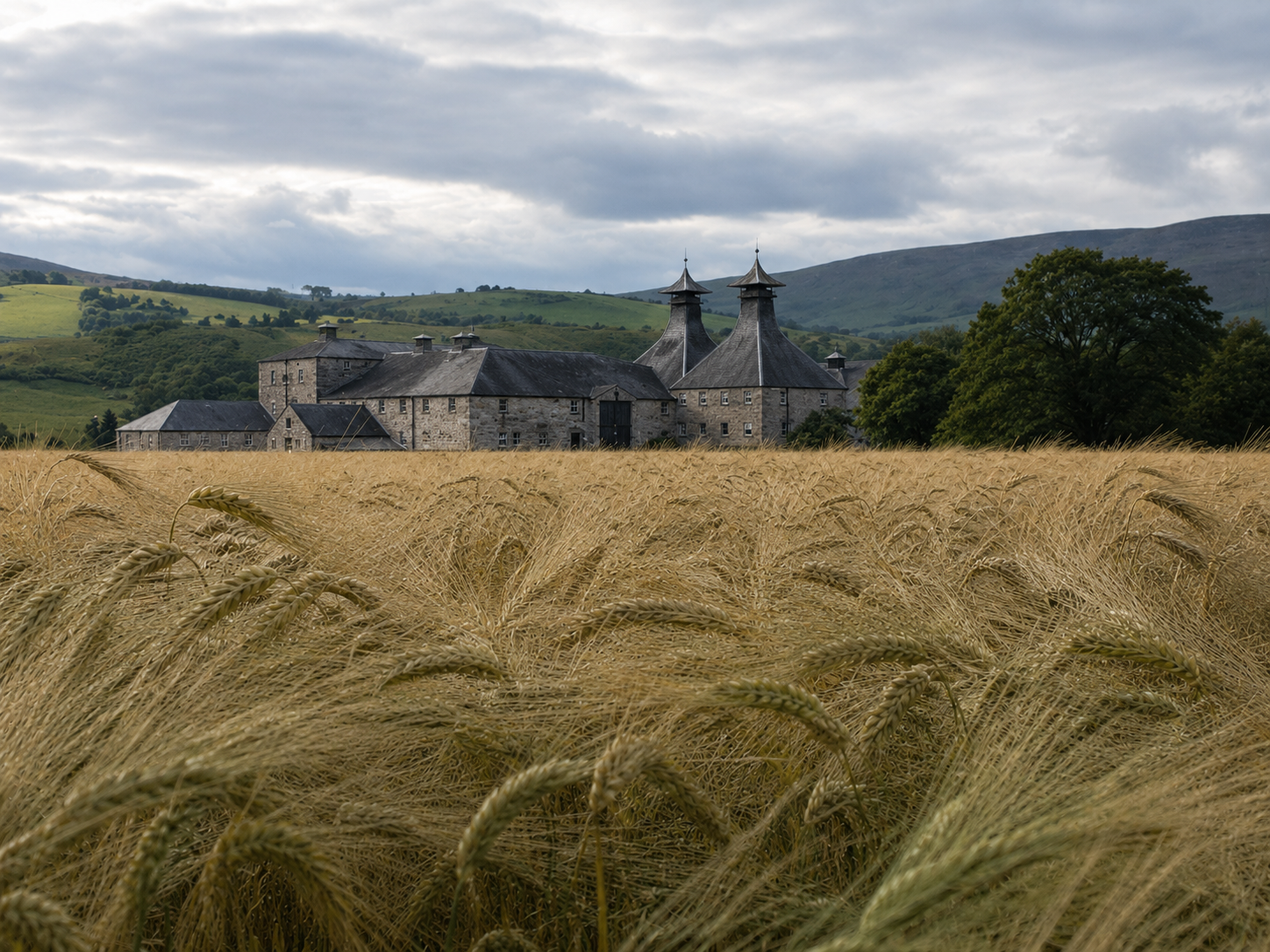
Scotch opens the sequence as the anchor guide. The roadmap then continues through four other published traditions without duplicating Scotch as another card.
Guide 01
Start with Scotch: five legal categories, raw materials, fermentation, distillation, maturation, blending, labelling and the sensory consequences of each production choice.
Open the guideThe live sequence moves from Irish Whiskey through Bourbon, American Rye & Corn, Canadian Whisky and Japanese Whisky. Future chapters remain visible only as a clear editorial roadmap.
Pot Still, Malt, Grain and Blended Irish Whiskey connected through island origin, cereal choice, distillation, maturation, labels and service.
OPEN CHAPTER → 03 Bourbon & American WhiskeyThe U.S. legal family explained through mash bills, sour mash, proof limits, charred new oak, warehouse conditions and regulated label language.
OPEN CHAPTER → 04 American Rye & Corn WhiskeyCompare two grain thresholds and two sharply different oak routes, then read Straight, Bonded, age and Canadian rye language accurately.
OPEN CHAPTER → 05 Canadian WhiskyA blend-led category where rye language, separate grain streams, distillation roles, small-wood maturation and house style must be read together.
OPEN CHAPTER → 06 Japanese WhiskyIdentity, production and label logic: test the current JSLMA standard, then follow fermentation, stills, blending, casks and service into the glass.
OPEN CHAPTER →What creates whisky style?
No single variable explains the glass. Read the production chain as a set of connected choices, then use the relevant guide chapter to go deeper.
Cereal proportions set the fermentable and structural starting point.
Yeast, time, temperature and hygiene build alcohol and aroma precursors.
Batch or continuous operation changes separation, reflux and collection.
Collection proof changes how much grain and fermentation character remains.
Still geometry, reflux and contact time influence spirit composition.
New, refill and previously seasoned wood begin with different extractive potential.
Temperature, humidity, airflow and position change maturation pace.
Component design and selection create balance, consistency and house style.
Proof reduction changes aroma release, texture and service decisions.
The glass tests whether the production explanation actually fits.
How to read whisky
Begin with regulated information. Add producer detail afterwards, then confirm the interpretation through structured tasting.
Establish the regulated route before interpreting style.
Country, region, state or distillery can carry different legal weight.
Read what the claim measures, then ask what it leaves unknown.
Separate required wood from optional finishing and marketing detail.
Strength gives service context and affects texture and aroma release.
Use disclosed mash, still, cask and blending information carefully.
Describe first, then test the production explanation.
Back to the full map
Move across spirit families or into the cross-category foundations that connect production and sensory analysis.
Open Spirits Library