Comparison 02
New Oak
vs Used Oak
Extraction, Fill History & Previous Contents.
The difference between new and used oak is whether the cask has held an alcoholic beverage before. On its first fill, spirit has access to a larger pool of readily extractable wood compounds. With reuse, fresh oak extraction usually becomes gentler and the cask’s previous contents become another variable. Oak species, seasoning, heat treatment, cask size, filling strength, climate and time still determine how strongly those differences are expressed.
Scope This comparison uses new oak, used oak, first-fill and refill as cask-history terms; explains how heat treatment and previous use alter cask activity; and then applies the distinction to major matured-spirit categories.
Start with cask history →Continue where you left off →Start with the cask history
After this comparison
01
Distinguish new oak, first-fill and refill as separate terms in cask history
02
Explain why wood preparation, previous use and fill history change cask activity
03
Read oak claims inside the legal rules and production context of the spirit
Answer first
What is the difference between new oak and used oak?
New oak is unused cooperage entering its first alcoholic fill; used oak has already completed one or more fills. New oak therefore begins with a larger pool of readily available wood extractives. In a used cask, earlier fills have removed some of those compounds, while material associated with previous contents may remain in the staves. These terms identify the cask’s history before filling. Quality and flavour still depend on wood species, heat treatment, previous contents, fill history, spirit, time and maturation conditions.
Comparison sequence
Establish cask history first. Then follow wood preparation, previous use, fill number, category law and the evidence in the glass.
01Start with the cask’s history02New oak and fresh wood extraction03What changes after the first fill04How first fill relates to cask history05Previous contents add another variable06Why refill casks remain useful07The category sets the limits08Use cask information to explain the glassREFSources & Further Reading
Start with the cask’s history
New and used describe the cask before the current spirit enters it. Cask quality and activity depend on its specification, condition and history.
Define the terms before comparing their effect
A new cask is unused cooperage. A used cask has previously contained an alcoholic beverage. The distinction matters because each filling changes the wood. Soluble compounds are extracted from the staves, the inner surface is altered, and some of the previous liquid can remain within the wood after the cask is emptied.
The producer therefore chooses a cask for the job it needs to do. A more active cask can provide faster extraction and a stronger oak contribution. A cask that has already been used can give a gentler rate of extraction, which may be useful for a delicate distillate or for longer maturation. In some spirit categories the choice is also controlled by law.
No previous alcoholic fill.
One or more previous fills.
Fill number is one part of cask activity; wood, heat, size, filling strength, climate and time also matter.
New oak and fresh wood extraction
Unused cooperage gives the spirit direct access to the wood’s original extractive pool before any alcoholic fill has removed part of it.
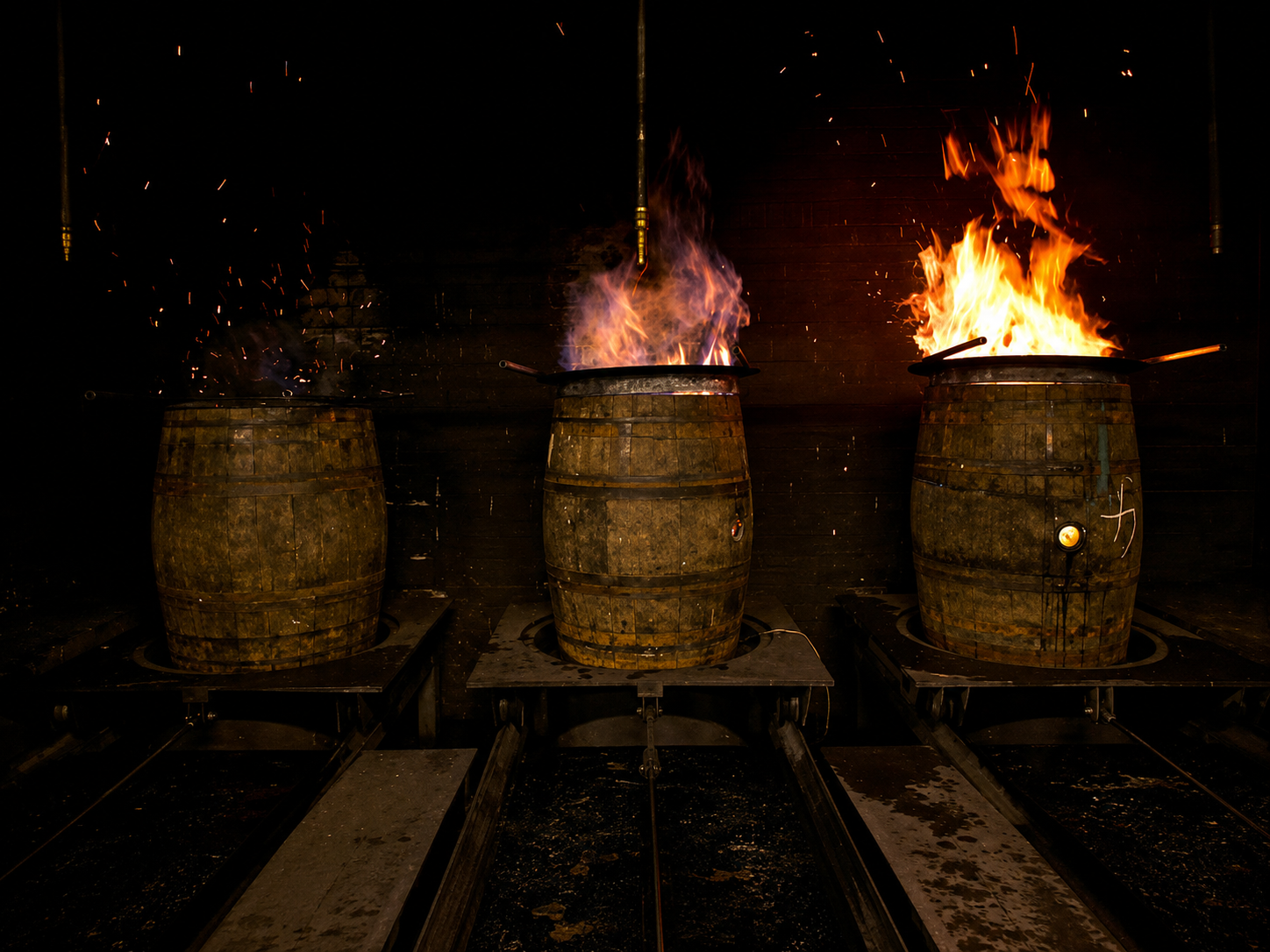
Seasoning and heat prepare the wood
Oak contains structural material and extractives including lignin, hemicellulose, tannins, lipids and volatile compounds. Seasoning changes the stave before cooperage. Toasting and charring then alter the inner surface: heat breaks down wood components and changes the compounds that can later be extracted by the spirit.
Among the compounds associated with heated oak are vanillin, furanic compounds, volatile phenols and oak lactones. Their concentration and sensory effect vary with oak species and cooperage treatment. A heavily charred American oak barrel and a lightly toasted European oak cask both qualify as new oak, while their extraction environments differ substantially.
New oak can therefore produce rapid colour and flavour extraction, particularly in warm conditions or smaller casks. The term new describes previous use; the resulting style still depends on the specification of the cask and the conditions of maturation.
Changes the starting composition of the wood.
Changes moisture and some harsh green-wood characteristics before cooperage.
Transforms the inner surface and the compounds available for extraction.
Smaller vessels expose more wood relative to the volume of spirit.
The main oak species used in spirits cooperage
Species is one part of the cask specification. The spirits industry relies most heavily on American white oak and the two principal European cooperage oaks, with Mizunara used on a much smaller scale. Each species begins with a different wood structure and chemical composition, while forest origin, growth rate, grain, stave selection, seasoning and heat treatment continue to shape the finished cask.
Read botanical species and geographic trade terms separately. French oak, Hungarian oak, Slavonian oak and the broader term European oak are geographic or trade descriptions. Each may include more than one species in commercial cooperage. In practice, European cooperage commonly uses Quercus petraea, Quercus robur, or both.
Quercus alba. The dominant commercial species for American whiskey barrels; ex-Bourbon casks then carry this wood into maturation systems around the world.
Quercus petraea. A principal European cooperage species used in France and Central Europe, including many casks destined for wine and spirits.
Quercus robur. A principal European cooperage species with a long role in Cognac; the Cognac specification recognises it alongside Quercus petraea.
Quercus mongolica var. crispula (with Quercus crispula used as a synonym). Japanese oak used selectively in whisky; its permeable structure makes cooperage demanding and casks can be prone to leakage.
Industry terms need context. American, French, European and Japanese oak are useful commercial descriptions, but the cask still needs to be read through species, forest or origin, grain, seasoning, heat treatment and previous use. Smaller regional cooperage programmes also use oaks such as Quercus pyrenaica; these remain secondary to the main species above in global spirits maturation.
Continue · Chapter 03What changes after use →What changes after the first fill
Once a cask has matured another liquid, both the amount of readily extractable wood material and the history of the staves have changed.
Earlier fills change the oak
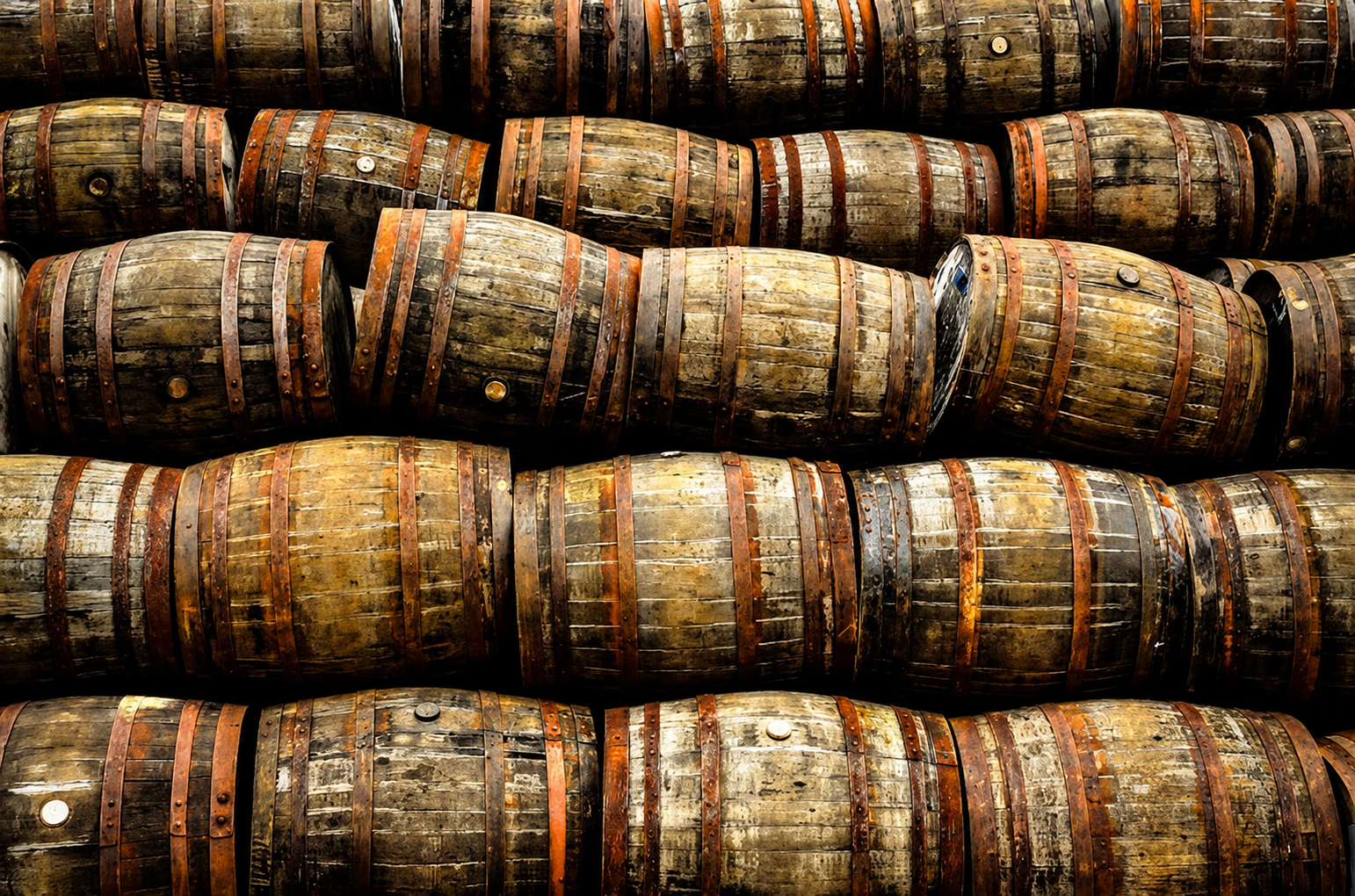
During the first maturation, spirit removes a proportion of the compounds that are most readily extracted from the oak. When the cask is emptied, the next spirit therefore enters wood that has already been extracted to some degree. The degree of extraction varies from cask to cask: the length and strength of the previous fill, temperature, wood type and any later repair or rejuvenation all affect what remains.
The staves can also retain some of the liquid previously held in the cask. This becomes important when a producer uses ex-Bourbon, ex-wine, ex-fortified-wine or other seasoned casks. The contribution of that previous liquid varies with cask history, so flavour must be assessed from the individual spirit and supporting production information.
More fresh wood available
Extraction from the oak is generally stronger at the beginning of the cask’s working life.
Extraction is usually gentler
Some extractives have already been removed, while previous contents and fill number become more important.
How first fill relates to cask history
First-fill and refill terminology describes a cask’s use within a maturation system. New and used describe whether the cask has held alcohol before.
In Scotch whisky, the distinction is especially important
A first-fill ex-Bourbon barrel is used oak because it has already matured Bourbon in the United States. The term first fill refers to its first use for Scotch whisky. If the cask is later emptied and filled with Scotch again, it becomes a refill cask.
Fresh oak extraction generally becomes gentler as the number of fills increases. Cask activity also depends on previous contents, length of use, storage and any reconditioning. A fuller reading of a first-fill cask therefore asks what it held before and how it has been used since.
TermWhat it meansWhat still needs to be known
New oakNo previous alcoholic fill.Species, seasoning, toast/char, size and maturation conditions.
Used oakThe cask has been filled before.Previous contents, number of fills and later treatment.
First fillCommon Scotch term for the first Scotch use of a cask after its earlier history.It may already be used oak.
RefillThe cask has already matured Scotch before the present fill.Remaining activity depends on earlier fills, condition and later treatment.
Previous contents add another variable
A used cask can contribute remaining oak compounds and material associated with the liquid that occupied the staves before the current spirit.
Previous-content labels record part of the cask history
Ex-Bourbon, ex-wine and ex-fortified-wine casks are useful production descriptions because they identify part of the cask’s history. The amount of previous liquid retained in the staves, the activity of the oak and the strength of the sensory contribution vary from cask to cask.
The way the cask acquired its previous contents also matters. A cask used commercially for wine and a cask seasoned with wine specifically for the spirits industry may share a broad previous-content description but have different histories. Time since emptying, transport, storage, fill number and preparation before refilling can all change the contribution of the cask.
Brings the history of a charred American-whiskey barrel: previously extracted oak plus whatever influence remains from the Bourbon fill.
Wine type, seasoning or maturation history, wood and handling all influence what may be available to the next spirit.
Rum, brandy and other permitted previous uses can become part of the cask history where category rules allow them.
A second cask is used after the main maturation period to change the balance of oak and previous-content influence.
Why refill casks remain useful
Repeated use usually lowers the rate of fresh oak extraction. That can be an advantage when the producer wants maturation to develop without oak dominating the distillate.
Refill casks continue to mature spirit
A refill cask normally contributes less fresh oak character than a new or more active first-fill cask. This can leave more room for fermentation- and distillation-derived character, particularly during longer maturation.
Maturation nevertheless continues. Extraction may be slower, but reactions within the spirit, interaction with the wood surface and the loss of water and ethanol through the cask continue as described in the Maturation in Spirits foundation. The relative importance of these processes changes with cask condition and warehouse environment.
In practice. More active wood can build oak-derived character quickly. Refill wood allows maturation to continue with less emphasis on fresh extraction. The appropriate choice depends on the spirit and the intended maturation period.
Continue · Chapter 07The category sets the limits →The category sets the limits
Before interpreting a cask choice, establish what the spirit’s legal category requires and what it leaves to the producer.
Bourbon and named U.S. grain whiskiesOpen Bourbon →
Bourbon, rye, wheat, malt and rye malt whisky are stored in charred new oak barrels at no more than 125 proof. The corresponding straight categories require at least two years in those barrels.
Corn whiskyOpen Corn →
Corn whisky may be bottled without oak maturation. When it is stored in oak, the standard uses used or uncharred new oak at no more than 125 proof; Straight Corn Whisky requires at least two years.
American single malt whiskyCurrent U.S. standard
The current standard permits used, charred new or uncharred new oak barrels up to 700 litres. Straight American Single Malt Whisky requires at least two years.
Scotch whiskyOpen Scotch →
Scotch matures in Scotland for at least three years in oak casks no larger than 700 litres. Producers may use new oak or previous-use casks that fit the permitted Scotch framework.
Irish WhiskeyOpen Irish →
Irish Whiskey matures for at least three years on the island of Ireland in wooden casks no larger than 700 litres. The technical file allows both new casks and casks previously used for other alcoholic beverages.
Canadian whiskyOpen Canadian →
Canadian whisky must be aged for at least three years in “small wood”: wood casks or barrels with a capacity no greater than 700 litres.
CognacOpen Cognac →
Cognac requires at least two years of uninterrupted ageing exclusively in oak vessels. Cellar practice can move eaux-de-vie between newer and older oak to manage the rate of extraction.
Read the category first. “New oak” or “used oak” only becomes meaningful once the spirit’s legal requirements are known.
Continue · Chapter 08Use cask information in the glass →Use cask information to explain the glass
Production information guides sensory reasoning; observation remains the starting point.
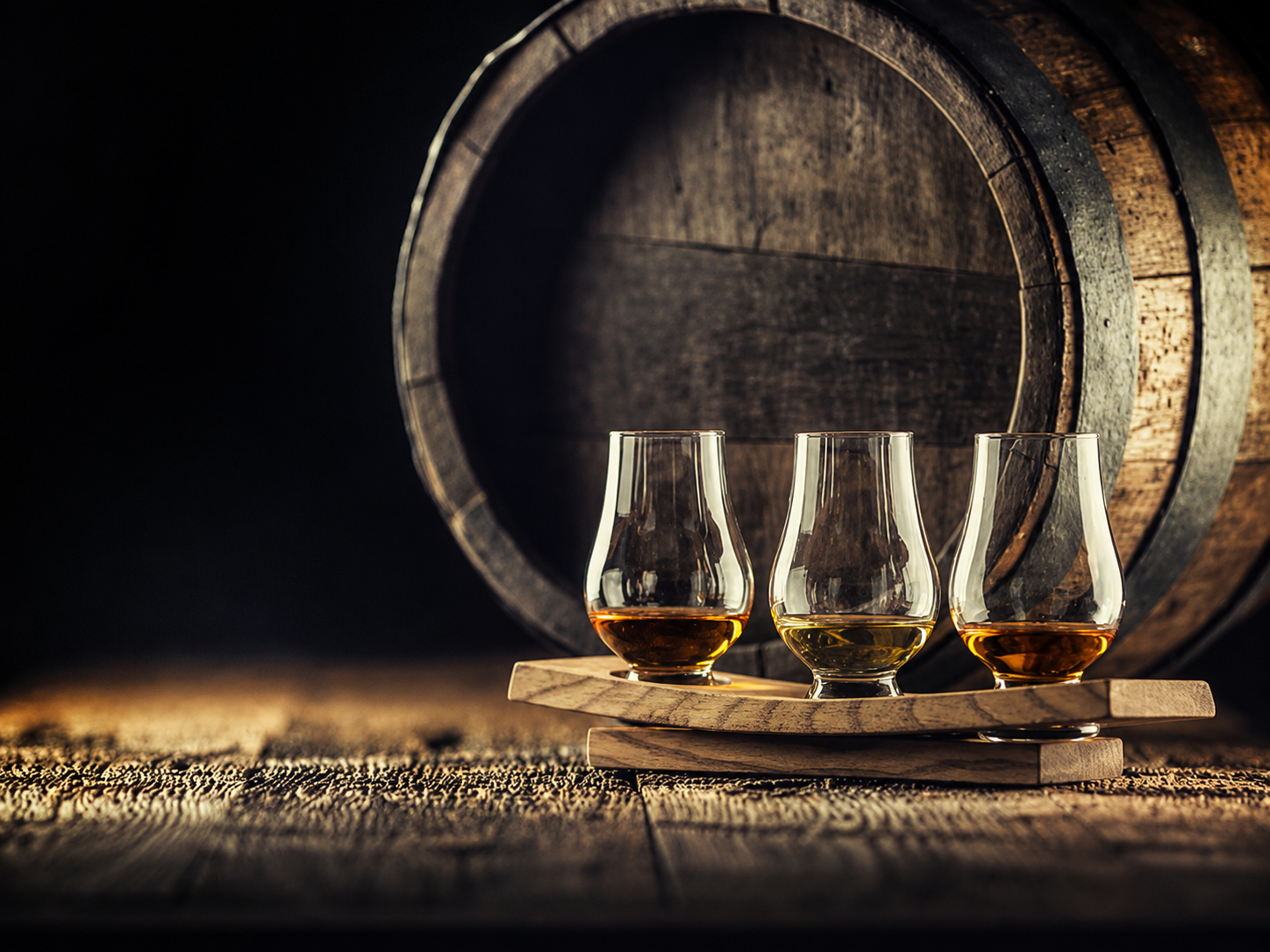
Begin with evidence, then make the connection
A spirit matured in new oak is more likely to show a pronounced fresh-oak contribution than the same spirit matured in a well-used cask. Treat this as a working expectation and check it against the glass. Vanilla, dark colour and ex-Sherry labelling are useful clues whose meaning depends on the wider production context.
Describe the spirit first. Reliable information about category, cask history, wood specification and maturation conditions can then be used to explain the observations. This keeps production knowledge and sensory evidence in the correct order.
Reading order
- 01Category — what does the law require or permit?
- 02Cask history — new, used, first fill or refill?
- 03Wood — species, seasoning, toast or char, and size?
- 04Previous contents — what occupied the cask before?
- 05Conditions — filling strength, climate, warehouse and time?
- 06Glass — which expected effects are actually present?
RefSources & Further Reading
References
Sources behind the comparison
This comparison was reviewed on 30 August 2026 against current category rules and technical research on oak maturation. Legal requirements are separated from common producer practice, and sensory language is framed as a possible consequence of production and checked against observed evidence.
Oak & maturation
Forestry · Oak wood and alcoholic-beverage maturationWood structure, extractives, heat treatment and maturation chemistryBeverages · Sources of Volatile Aromatic Congeners in WhiskeyPeer-reviewed review of maturation-derived congeners and production contextWSET Level 3 Award in SpiritsProfessional framework for explaining production choices and spirit styleIndependent Stave Company · Oak species for cooperageIndustry overview of Quercus alba, Quercus petraea and Quercus robur in barrel productionU.S. Forest Service · American white oakQuercus alba taxonomy, timber properties and its major role in whiskey-barrel cooperageHouse of Suntory · Mizunara cooperage evidenceProducer evidence on the practical difficulty and long maturation associated with Japanese oak casksKew Science · Mizunara taxonomyAccepted botanical name Quercus mongolica var. crispula and synonymy with Quercus crispulaBeverages · Different Woods in CooperagePeer-reviewed review of traditional and regional oak species used in cooperage, including Quercus pyrenaicaOfficial category evidence
27 CFR §5.143 · WhiskyCurrent U.S. standards for Bourbon, corn whisky, straight whisky and American single maltScotch Whisky Association · Allowable maturation casksCurrent guidance on oak casks and permitted previous uses for Scotch WhiskyGovernment of Ireland · Irish Whiskey GICurrent technical-file and verification material for Irish WhiskeyJustice Laws · Canadian whiskyCurrent three-year small-wood requirementCognac GI · Official EU specificationOak-vessel requirements and the traditional use of Quercus petraea and Quercus roburSummary
Cask history changes the rate and type of oak influence.
New oak begins with the greatest access to readily extractable wood compounds. Used oak has already undergone one or more fills and may also retain material associated with previous contents. The final effect depends on wood specification, cooperage, fill history, category rules and maturation conditions.