
Vodka & Neutral Spirits Library / Guide 10
Vodka Law,Labels &GeographicIdentity
Definitions, labels & protected origin.
Vodka is a legal category, not just a style. The rules decide what may be called vodka, what information belongs on the label and when a place-name such as Polska Wódka / Polish Vodka has protected meaning.
Scope Guides 01–09 cover production. This guide focuses on legal identity and label reading. Flavoured vodka is handled separately in Guide 11.
Start with the legal category → Continue where you left off →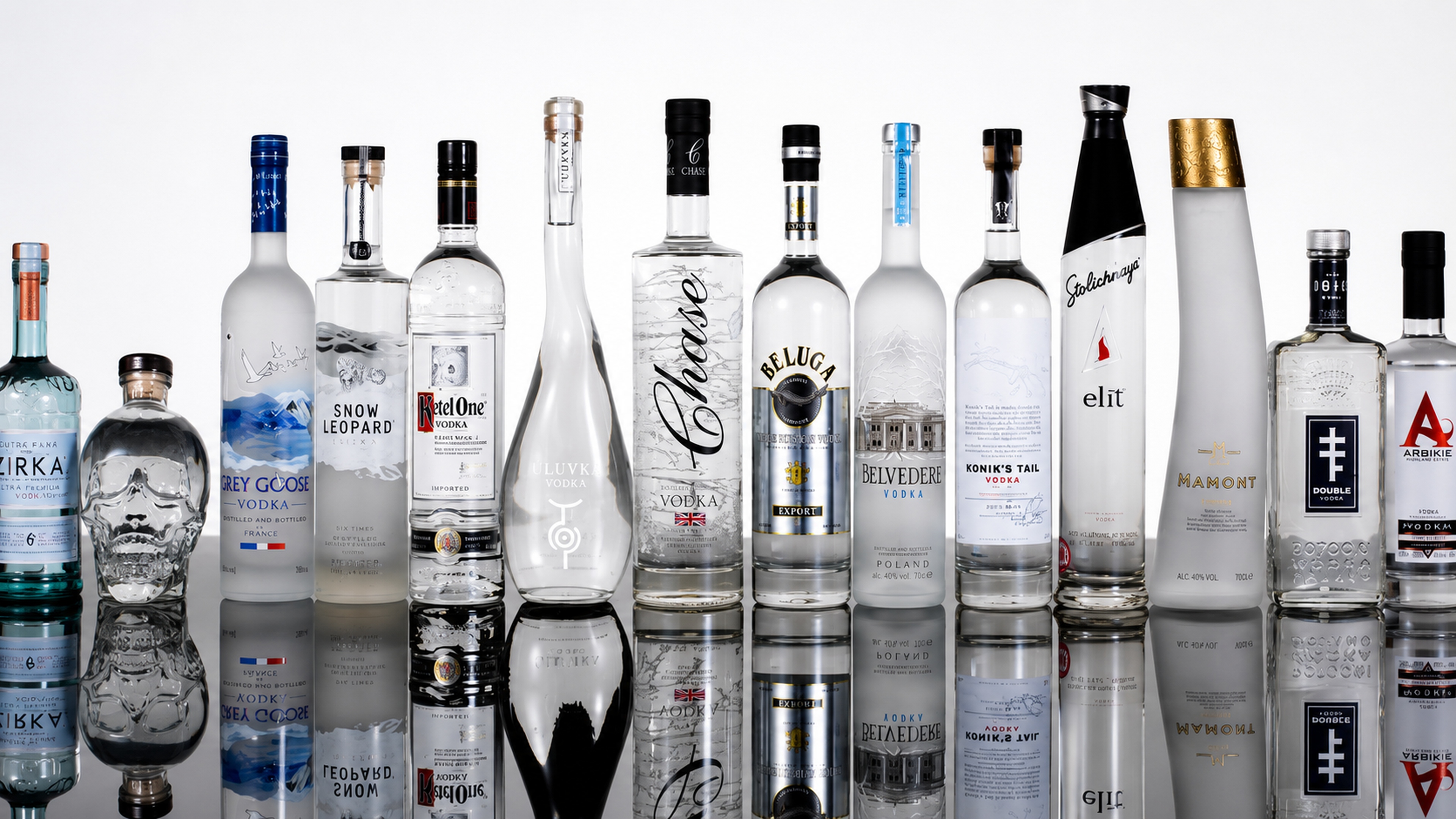
Guide contents
Start with the word “vodka”, compare the two major legal models, then learn what a label and a protected geographic name can actually tell you.
Vodka is a legal category
The same word can sit inside different legal systems. That is why the market matters when you read a vodka label.
EU rules define the agricultural alcohol, minimum bottling strength, permitted treatments, sweetening limit, colour rule and when the raw material has to be stated.
U.S. rules first define neutral spirits, then place vodka inside that class with its own limits on treatment, sugar, citric acid and wood storage.
Do not mix the rulebooks
A statement that is correct in one market may not be the legal definition in another. The useful habit is to ask: Which market is this bottle being sold in, and which rulebook defines the category there?
“Vodka” is a protected legal name. The law sets the minimum category requirements; the producer then makes style choices inside those boundaries.
European Union: what may be called vodka
EU law allows more than one agricultural base, but it also tells the producer when that base has to be declared.
Vodka is made from ethyl alcohol of agricultural origin produced after fermentation and distillation.
Potatoes and cereals can be used directly. Other agricultural raw materials can also be used, but that changes the labelling requirement.
The finished vodka must be bottled at no less than 37.5% alcohol by volume.
EU-category vodka may not be coloured.
The label must prominently state “produced from …” followed by the raw material used. The statement belongs in the same visual field as the legal name.
EU vodka may contain sweetening products up to 8 g/L, expressed as invert sugar. This is a legal ceiling, not a target or a quality grade.
Additional distillation and treatments such as activated charcoal are permitted. The category can also have subtle organoleptic adjustment without becoming predominantly flavoured. Guide 11 takes over when flavour becomes the defining feature.
United States: vodka sits inside neutral spirits
The U.S. model starts with a very high-strength neutral-spirit definition and then adds specific rules for the vodka type.
U.S. neutral spirits may be distilled from any suitable material at or above 190 proof.
Vodka may contain up to 2 g/L sugar and up to 1 g/L citric acid under the current standard.
If bottled, neutral spirits — including vodka — must be bottled at no less than 80 proof.
U.S. vodka may not be aged or stored in wood barrels, apart from a narrow paraffin-lined bottled-in-bond exception.
Adding other flavouring or blending materials moves the product into flavoured vodka or a distilled-spirits specialty category, as appropriate.
The phrase is permitted when the vodka receives the charcoal treatment specified by the regulation. This is different from using “filtered” as a broad marketing statement.
Read the label in layers
Do not start with the story on the back label. Start with the information that identifies the product legally.
Look for the word that legally identifies the spirit: for example, Vodka.
Read the stated percentage of alcohol by volume and compare it with the category minimum for that market.
Net contents and producer, bottler or importer information help identify what is in the container and who is responsible for it.
These become especially useful when the law requires them or when a protected geographic name is being used.
The exact checklist depends on the market
U.S. distilled-spirit labels include mandatory items such as brand name, class or type, alcohol content, net contents, name and address, the health warning and — for imports — country of origin. EU labels follow a different legal framework. The habit is the same: separate mandatory identity from optional marketing.
If you can identify the legal name, ABV, origin and any required raw-material statement before reading the brand story, you are much less likely to confuse advertising language with regulation.
Polska Wódka / Polish Vodka is more than “made in Poland”
This is a protected geographical indication. The name links the raw material and the production process to Poland.
The agricultural alcohol must come from rye, wheat, barley, oats, triticale or potatoes grown in Poland.
All stages of manufacture covered by the specification take place in the territory of Poland.
For unflavoured Polska Wódka / Polish Vodka, the Polish definition does not allow additions other than water.
Why a GI matters
A country statement tells you where a product comes from. A geographical indication goes further: the protected name can only be used when the product meets the registered rules for origin and production.
The protected name also has a flavoured-vodka form under its own rules. We keep that branch for Guide 11 so this chapter stays focused on geographic identity.
Some words are legal. Others are marketing.
The easiest label mistake is treating every impressive-sounding statement as if it were a regulated quality grade.
Examples include the legal name Vodka and protected names such as Polska Wódka / Polish Vodka. Their use depends on meeting specific rules.
“Distilled five times”, “filtered seven times” or “made from wheat” may describe a real production fact. The statement alone does not rank quality.
Words such as premium, luxury, exceptionally smooth or similar language do not automatically create a protected legal quality grade.
Country of origin is not the same as a GI
A vodka can be produced in Poland without qualifying for the protected name Polska Wódka / Polish Vodka. Likewise, a strong production claim may be true without telling you whether the vodka is better. Read the regulated information first.
Start with the legal category, then the market, the ABV, origin and any required raw-material statement. After that, read the brand claims and decide what they genuinely add.
Remember the law
One name, different rulebooks
- EU vodka: minimum 37.5% ABV
- U.S. vodka: a type of neutral spirit; bottled at minimum 40% ABV
- Raw-material declarations can be legally required
- Market context matters when comparing labels
Remember the label
Identity before marketing
- Find the legal/category name first
- Read ABV and origin information
- Distinguish factual claims from quality grades
- A protected GI carries more specific origin rules
REFSources & Further Reading
Current legal and regulator sources used to verify the definitions, labelling rules and protected geographic identity in this guide.
European Union
Regulation (EU) 2019/787 · current consolidated textCategory 15 Vodka; ethyl alcohol of agricultural origin; spirit-drink labelling and geographical indications eAmbrosia · EU Geographical Indications RegisterOfficial register for protected spirit-drink geographical indicationsUnited States
27 CFR § 5.142 · Neutral spirits or alcoholCurrent U.S. neutral-spirit and vodka standard of identity TTB · Anatomy of a Distilled Spirits LabelCurrent practical guidance on mandatory label information and placementPoland / protected origin
Polish legal text · Polska Wódka / Polish VodkaRaw materials, Polish origin and production requirements for the protected name Polish Agricultural and Food Quality Inspection · reading spirit labelsCurrent consumer guidance on legal names, geographical indications and misleading claimsThe takeaway
Read the law.
Then read the label.
Legal definitions establish what may be sold as vodka in each market. Origin claims, ingredients, flavour terms and bottling information then add the details needed to interpret an individual bottle.