
Guide contents
Follow the rum from the fermenter to the blend, or go straight to the Caroni label and the tasting.
Where was the rum made?
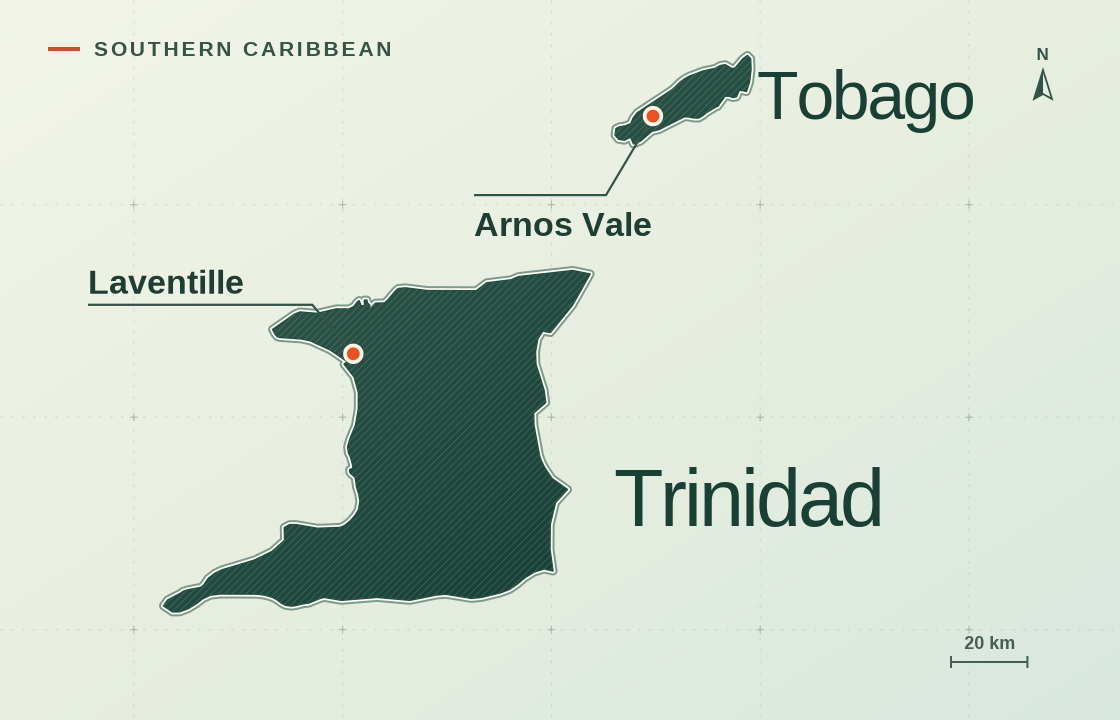
Trinidad and Tobago is one country. Its two main islands have different places in the story of rum.
Tobago: the mill at Arnos Vale
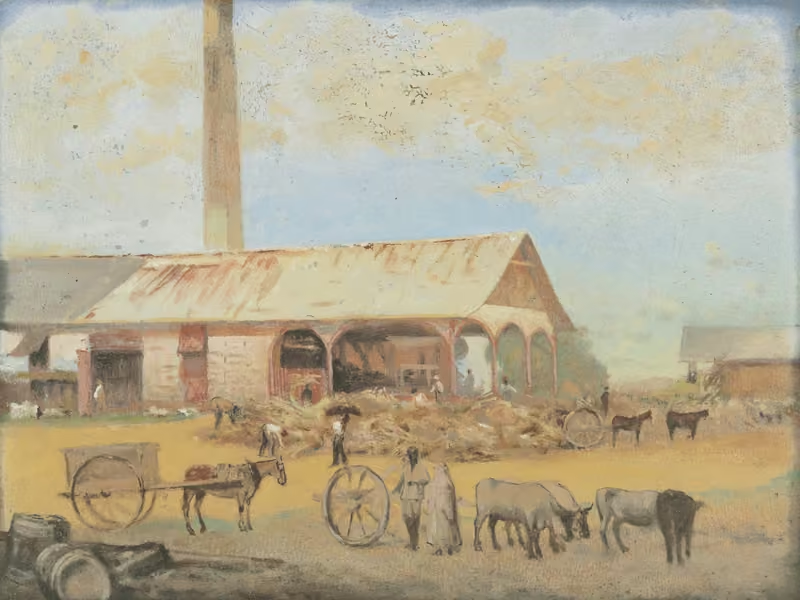
At Arnos Vale, a waterwheel drove the rollers that crushed the cane. The juice went to the boiling house. Once the sugar crystals were separated, the estate had two products: raw sugar to ship to England, and molasses that could be made into rum.
Enslaved Africans did much of the work on Tobago’s colonial sugar estates. The wheel and rollers that survive at Arnos Vale show just one part of that work.
Trinidad: the distillery at Laventille
The Trinidad distillery behind Angostura rum is called Trinidad Distillers Limited, often shortened to TDL. It is in Laventille, near Port of Spain. If you know Angostura from the small bottle of aromatic bitters behind the bar, it is the same house, but a different product.
Caroni was a separate distillery on Trinidad. When its name appears on an old rum, it tells you where that spirit was distilled, even if another company bottled it.
What goes into the fermenter?
Angostura starts with molasses. It still contains sugar after the mill has taken out the crystals.
From the mill to the vat
Trinidad’s sugar mills once supplied its distillers. Today TDL uses imported molasses. That distinction matters when you read “distilled in Trinidad”: it tells you where the rum was distilled, without telling you where the cane grew.
At the distillery, the molasses is diluted with water. Yeast can then feed on the sugars and produce alcohol, carbon dioxide and compounds that contribute to aroma.
When is the wash ready?
Angostura grows its own yeast from a strain it traces to the 1940s. Fermentation usually takes 24 to 36 hours, although some batches run for up to 72. The distiller can allow a longer fermentation when making a heavier style.
The fermented liquid is called the wash. Here it contains about 8 to 8.5% alcohol by volume (abv). This is the liquid that enters the still.
How can one still make light and heavy rum?
At Angostura, the answer is where the distiller collects the spirit.
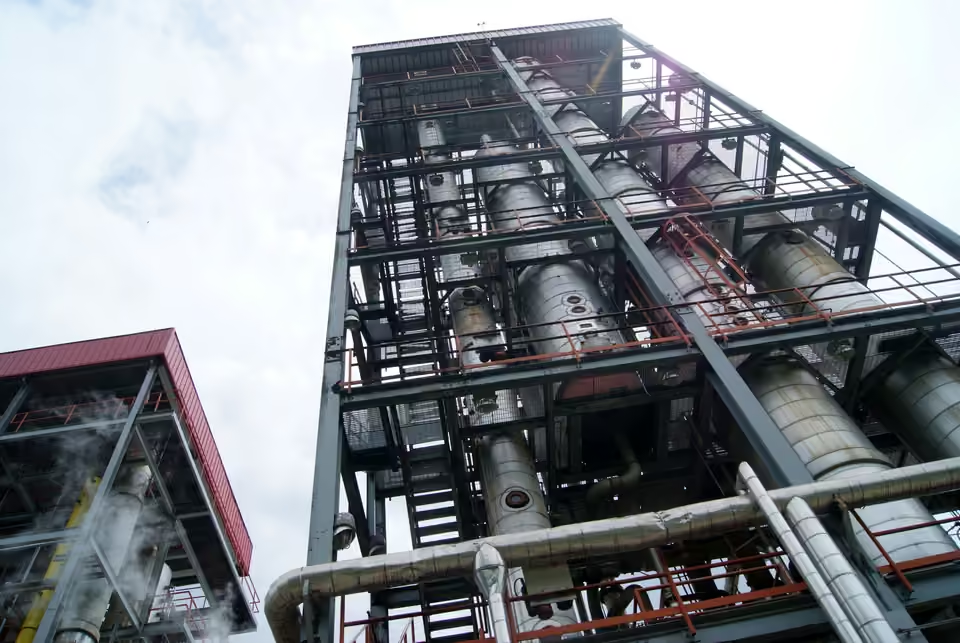
In a continuous still, fresh wash can enter while spirit is being collected. Inside a column, rising vapour meets liquid flowing down. As some of the vapour condenses and some of the liquid evaporates again, alcohol becomes more concentrated and flavour compounds separate. This repeated separation is called rectification.
- Heavier spirit
- About 80% abvThe distiller collects spirit from the first column, called the stripping column. More of the character developed in fermentation carries over.
- Lighter spirit
- About 95% abvThe spirit passes through all five columns. This separates more of the flavour compounds from the alcohol, giving a lighter distillate.
Why can an aged rum be clear?
Oak can give a rum colour. What the producer does after ageing can change what you see.
What the cask contributes
Angostura matures both light and heavy rums in American white oak barrels previously used for bourbon. As the spirit rests, it takes up colour and flavour from the wood. Vanilla or toasted notes can sit alongside the fruit already present in the distillate.
What filtration changes
Take Angostura 3 Year Old. It spends time in oak, then passes through charcoal twice to remove colour. Pour it beside a sheet of white paper and it looks clear. Smell it and you may still find vanilla or toasted coconut.
If a guest asks, “Has this white rum been aged?”, you can answer for this bottle: yes. Its clarity comes after the cask.
What does the blender look for?
Two casks from the same distillery can play quite different roles in a finished rum.
Give each rum a job
A mark is the distillery’s designation for a particular style of distillate. A lighter mark can give a blend a delicate base. A more aromatic one can bring a fruit note forward or give the flavour more persistence. The blender tastes trial blends and adjusts the proportions to get the character the bottle is known for.
A Trinidad example: Fernandes VAT 19
The Fernandes family sold its rum business to Angostura in 1973. The Fernandes name still appears on VAT 19. Angostura makes it by blending light and heavy rums from its continuous still. You would miss half the explanation if you described it simply as a light column rum.
TDL has also sold rum in bulk to other blenders. That is why a rum distilled there can turn up under a name other than Angostura.
Why do we still see Caroni on bottles?
The distillery closed in 2002. Some of the rum it had already distilled remained in cask.
The sugar estate and the still
Caroni made rum alongside a sugar factory on Trinidad. It used both pot and column stills over the years and became particularly well known for its heavier marks. The distillery stopped in 2002. The 2003 date you may see refers to the closure of the state sugar company, Caroni (1975) Ltd.
A Caroni from 1998
In 2004, Velier began acquiring surviving Caroni stocks. Other independent bottlers have also released rum from the distillery. Take this example from Compagnie des Indes: a molasses rum distilled in a column still. The bottler picked out hot tar and liquorice on the nose. Here, “tar” is a way of describing a smell, just as “vanilla” is in the clear Angostura.
- Distilled
- January 1998
- Bottled
- September 2020
- Age on the label
- 22 years
- Bottling strength
- 57.5% abv
The dates explain how a bottle released in 2020 can come from a distillery that stopped working eighteen years earlier.
Is the number a date or an age?
Read the words beside the number. Two bottles from the same house can use a number in quite different ways.
Angostura 1919: a name
In 1932, a fire damaged a government rum warehouse in Trinidad. J. B. Fernandes bought surviving casks that had been filled in 1919. The name commemorates those casks. A bottle of Angostura 1919 on a shelf today does not contain rum distilled in that year.
Angostura 7 Year Old: an age
Here the words “Year Old” tell you what the seven means. The regional rum standard, CRS 25:2008, specifies that an age statement on a blend refers to its youngest spirit. The seven is not the average of the casks.
The percentage beside abv answers a different question: how much alcohol is in the rum as bottled? It tells you neither the age nor how heavy the original distillate was.
Taste two rums from the same house
Pour a small measure of Angostura 3 Year Old and 7 Year Old into two identical glasses. Check the abv on each bottle before you compare them.
Start with the three
Smell first, then take a small sip. Can you pick out fresh fruit, vanilla or toasted coconut? Which is easiest to find once you swallow? A rum can smell sweet and still feel dry on the palate.
Go back and forth
Now try the seven. Look for cocoa, coffee or toffee. Does the flavour stay with you longer? Return to the first glass before you answer. Often it is easier to recognise a quieter aroma after you have tried the other rum.
