
Common juniper is the species named in the current EU definition of gin.
Gin, Genever & Botanicals · Guide 03
Juniper & the Botanical Recipe
Raw Material, Proportion & Aromatic Structure.
Gin's aromatic identity begins with juniper. The finished profile is created by the recipe around it. Coriander, citrus peel, roots, spices, flowers, herbs and other plant materials are selected for the character they contribute and for the way they work with one another. Their condition, preparation, proportion and extraction determine how much of that character reaches the spirit.
Scope This guide concentrates on botanical raw materials and recipe construction. It introduces extraction only where the method changes how a recipe should be understood; the detailed mechanics of maceration, vapour infusion, separate distillation and vacuum techniques are reserved for Guide 04.
Start with juniper →Continue where you left off →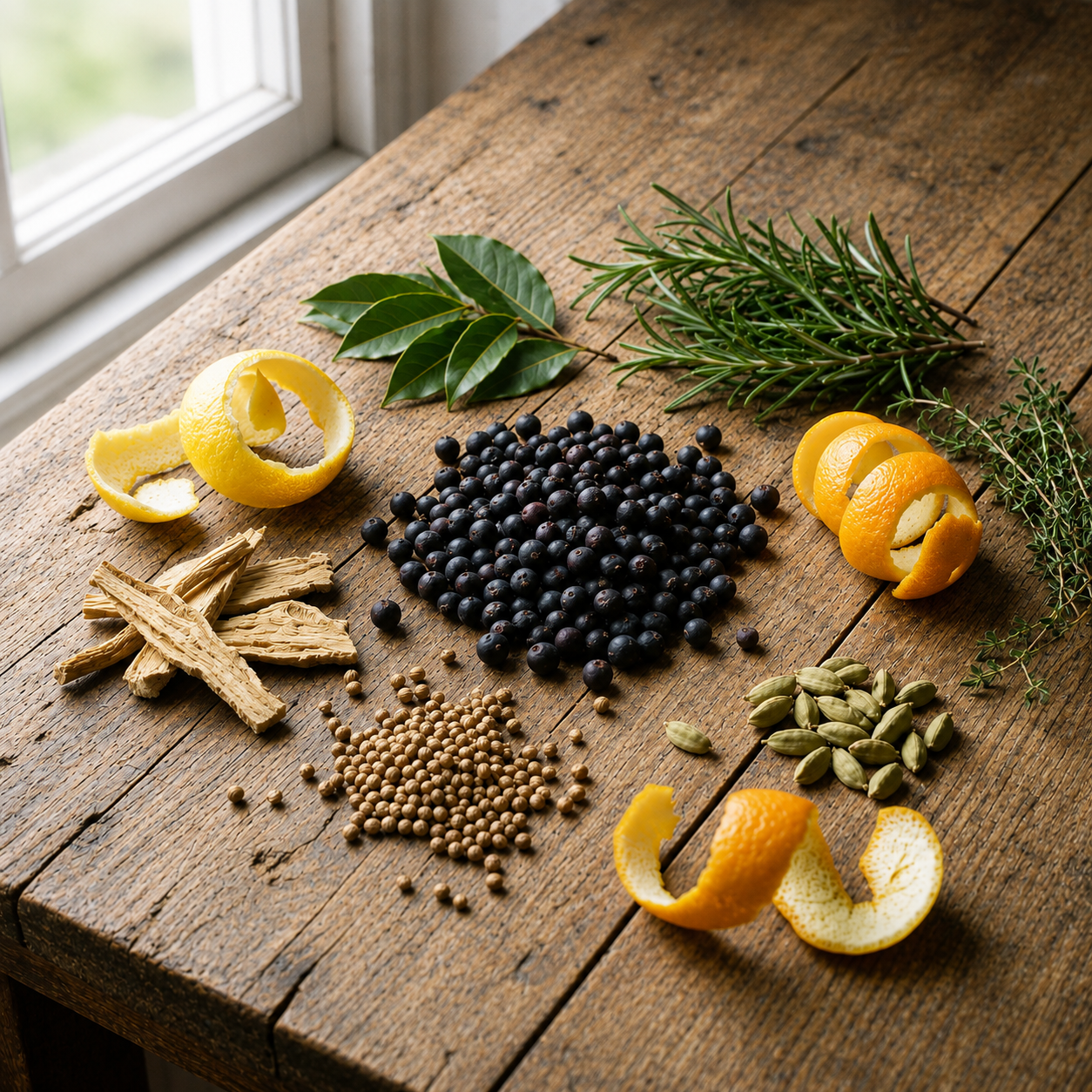
After this guide
01
Explain why juniper is the legal and sensory reference point for gin
02
Describe how coriander, roots, citrus, spices, flowers and herbs contribute to a recipe
03
Connect botanical quality, proportion and extraction to the finished aromatic structure
Answer first
What is a gin botanical recipe?
A botanical recipe is the combination of plant materials and proportions used to build gin's aromatic character. Juniper (Juniperus communis) provides the required reference point in current EU gin law. Supporting materials can contribute citrus, spice, floral, herbal, earthy, bitter or sweet aromatic impressions. The recipe reaches the glass through the condition of the raw materials, their preparation, the alcoholic strength at contact, the extraction method and the distiller's final assembly.
Guide contents
Move from juniper and raw-material quality through botanical families, proportion and extraction, then use the finished glass to assess how the recipe is expressed.
01Juniper sets the reference point02Botanical quality begins before the still03Build the recipe by aromatic function04Coriander connects citrus and spice05Roots add earthy structure06Citrus peel carries fresh top notes07Spice, floral and regional materials widen the profile08Proportion defines the recipe09Extraction decides what reaches the distillate10Read botanical structure in the glass
Juniper sets the reference point
Common juniper supplies the characteristic flavour of gin and gives the rest of the recipe a clear aromatic centre.
Start with the plant that defines the category
Juniperus communis is a conifer in the cypress family. The structures used by distillers are commonly called berries, although botanically they are fleshy seed cones. When ripe and properly handled, they can contribute pine, resin, green herbs, camphor, lavender and citrus-like notes. Their essential oil contains a mixture of volatile compounds including α-pinene, myrcene, sabinene and limonene; the balance varies with the plant material and its condition.
Current EU gin law places this sensory role at the centre of the category. Gin is produced by flavouring agricultural ethyl alcohol with Juniperus communis, and the finished taste must remain predominantly juniper. This legal requirement establishes the reference point while allowing considerable variation in intensity and expression.
For tasting and recipe analysis, identify the juniper character first. A strongly juniper-forward gin may place pine, resin and green herbal notes near the front of the profile. Another recipe may give citrus, floral or spice notes more room while retaining juniper as the predominant taste. The useful question is how the supporting botanicals change the shape of that reference point.
The precise balance depends on the raw material, preparation and extraction.
Juniper remains the principal sensory reference within the EU gin category.
Botanical quality begins before the still
Species, origin, maturity, drying, storage and preparation determine the aromatic material available for extraction.
The still can only work with the material it receives
Botanicals arrive at the distillery with their own history. Growing conditions influence essential-oil composition; harvest timing affects maturity; drying changes water content and aroma; storage determines how well volatile compounds are retained. Distillers who depend on a consistent house recipe therefore need consistency in the raw materials as well as consistency in the still.
The preparation step matters as well. Seeds may be used whole or cracked. Roots are commonly dried and cut. Citrus can arrive as fresh or dried peel. Fresh herbs, flowers and fruit contain more water and can behave differently from dried material when they meet alcohol or vapour. Surface area, moisture and physical condition all influence how quickly compounds become available for extraction.
Recipe control begins with specification: the botanical species, supplier, origin where relevant, condition on arrival and the way each material is prepared. Small changes at this stage can alter the finished gin even when the written list of ingredients stays the same.
What a distiller checks
Identity: correct species and plant part.
Condition: maturity, dryness, freshness and freedom from musty or stale character.
Preparation: whole, cracked, cut, peeled, dried or fresh.
Consistency: enough similarity between lots to preserve the intended house profile.
Build the recipe by aromatic function
A useful recipe map groups botanicals by the character they contribute and the role they play around juniper.
Ingredient lists become useful when their relationships are clear
Classic gin recipes often return to a small group of materials: juniper, coriander, angelica, orris and citrus peel. Modern recipes may add flowers, herbs, spices, fruit, tea or locally significant plants. The number of botanicals gives little information by itself. A short recipe can be highly complex, while a long list can still produce a focused profile.
For study, it is useful to group botanicals by aromatic function. This is a teaching framework, while the botanicals themselves often cross more than one sensory family. Coriander can read as citrus and spice; cardamom can combine citrus, resin and warm spice; orris can contribute floral, earthy and tea-like notes.
Read the recipe as a set of relationships: which material establishes the centre, which ones lift it, which ones add weight or persistence, and which ones provide a distinctive accent.
Continue · Chapter 04Follow coriander →Coriander connects citrus and spice
Coriander seed is a common partner to juniper because its aromatic profile can bridge bright citrus character with warm spice.
The seed carries a broad aromatic range
Coriandrum sativum is widely used in gin recipes. Distillers normally work with the dried seed, which is rich in essential oil. EWA describes its contribution as warm, gingery and citrus-like; linalool is often a major component of the oil, alongside smaller proportions of other terpenes.
That combination makes coriander especially useful in a juniper-led recipe. It can extend citrus character into the middle of the palate, add peppery or gingery warmth and help connect resinous juniper with brighter peel notes. The exact result depends on origin, lot, preparation and dosage.
Coriander is common, and producers decide how strongly it should show and how it should interact with the other botanicals. In one gin it may be clearly spicy; in another it may sit quietly behind juniper and citrus.
The seed is used because it carries the aromatic oil relevant to gin production.
Its profile can bridge bright top notes and warmer mid-palate spice.
Coriander often links juniper, citrus and spice without becoming the dominant note.
Roots add earthy structure and persistence
Angelica and orris can add earthy, herbal, musky and floral depth while supporting the way other aromas sit together.
Angelica and orris contribute in different ways
Angelica root, commonly Angelica archangelica, is a familiar component of classic gin recipes. EWA describes the root as earthy, slightly bitter and herbal, with a nettle-like aroma. Producers may also use angelica seed or other parts of the plant, although the root is the most familiar reference in traditional recipes.
Orris is the cured rhizome of iris. It is harvested after several years of growth and then dried or aged before use. Its aroma can show violet, tea, musk and earthy notes. Distillers have also long described orris as helping a recipe feel more integrated. In practical tasting, its own contribution may be subtle, so exact identification is strongest when producer information confirms its use.
Roots can give a gin depth beneath the brighter top notes of juniper and citrus. Their effect depends on dosage and extraction; a small amount can sit underneath the recipe, while a larger amount can move earthy, bitter or floral character closer to the foreground.
Often used to add dry, rooty depth beneath juniper and citrus.
Cured iris rhizome can add a floral-earthy accent and support integration.
The same root can move from background structure to an obvious flavour depending on how it is used.
Citrus peel carries fresh top notes
Lemon and orange peel are classic gin materials; variety, freshness, drying and peel preparation influence the aromatic result.
The aromatic oil sits mainly in the coloured outer peel
Lemon peel can contribute sharp, zesty and fresh citrus character. Bitter and sweet orange broaden the range from dry, pithy and perfumed notes to sweeter, rounder orange aromas. EWA notes that dried lemon peel is widely used, while bitter orange is commonly dried and sweet orange may be used fresh or dried.
Preparation influences the balance. The coloured outer peel contains much of the aromatic oil; thicker cuts can carry more of the white pith and therefore more bitterness. Fresh peel introduces water and a different volatile profile from dried peel. Producers specify the form that best suits the recipe and the extraction method.
Citrus is often read as a top-note family because many of its aromatic compounds are highly volatile. Its expression still depends on the full production system. A bright citrus aroma may come from peel, another botanical with citrus-like compounds, or a combination of both. Producer disclosure gives the strongest basis for naming the exact source.
Dried peel is a familiar traditional material, with fresh peel also used by producers.
Seville and other bitter-orange peels are common references in classic recipes.
Fresh or dried sweet-orange peel can bring a softer orange character to the recipe.
Spice, floral and regional materials widen the profile
Cardamom, cassia, pepper, flowers, herbs, fruit and local plant materials can give a recipe a distinctive second layer around juniper.
Additional botanicals should have a clear job in the recipe
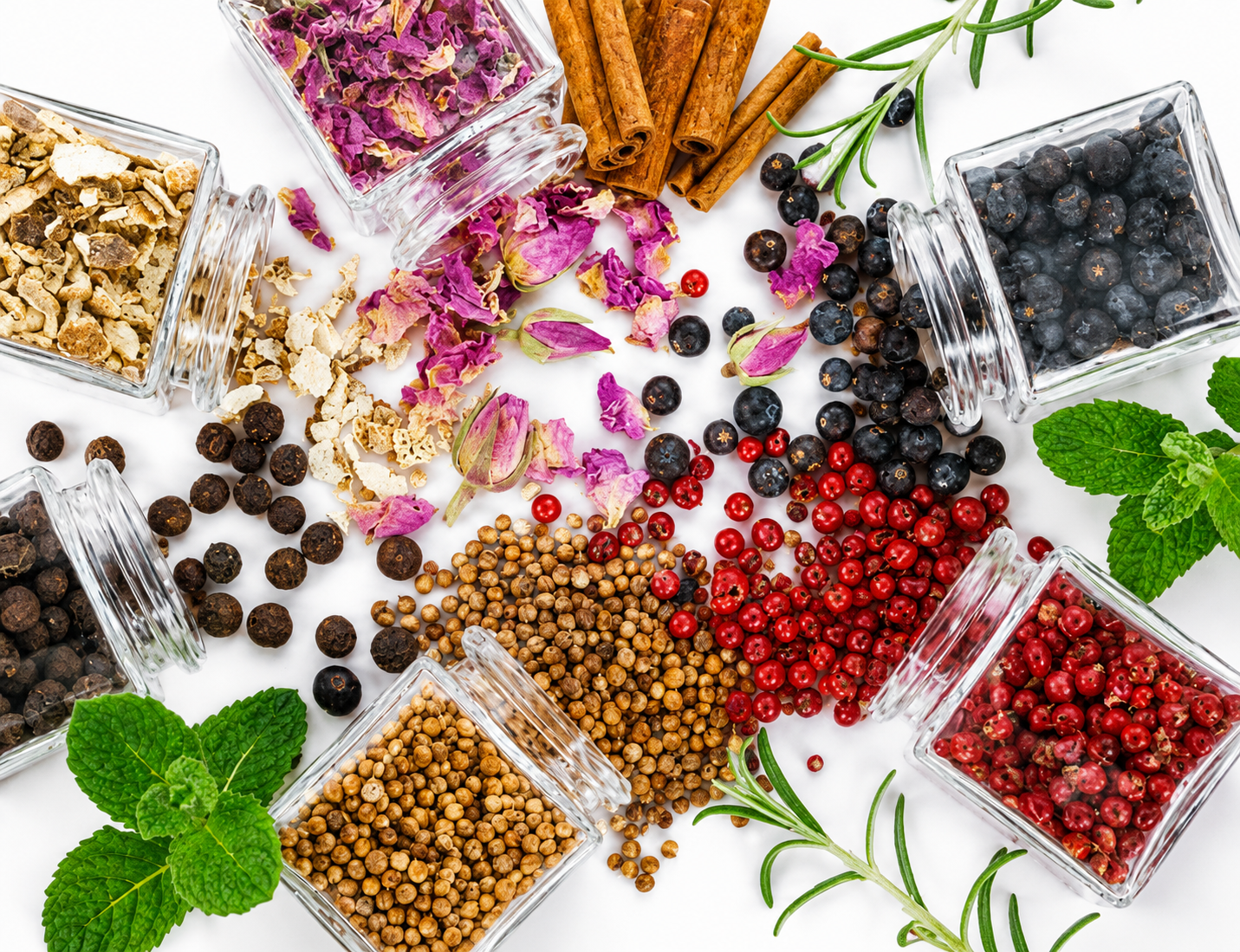
Cardamom can contribute green, citrus-like and warm spice notes. Cassia and cinnamon bring sweeter wood spice. Peppercorns and grains of paradise can add dry heat and aromatic spice. Rose, lavender and other flowers can move the profile toward perfumed or floral aromas, while herbs such as rosemary, thyme or mint contribute fresh green character.
Contemporary producers also work with tea, fruit, seaweed, leaves, seeds and locally significant plants. These materials can create a recognisable house profile when their contribution is clear in the finished gin. Provenance adds context when it explains a raw-material choice or a producer's recipe.
Fresh botanicals can be especially variable because water content, harvest condition and storage life change quickly. Dried materials generally offer easier storage and repeatability. Producers adjust specifications, dosage and extraction to keep the intended profile consistent from batch to batch.
Proportion defines the recipe
The ingredient list identifies what is present; the proportions determine how strongly each material contributes.
Recipe design is a balance of concentration and relationship
Gin recipes are commonly proprietary, and producers use their own ratios. The distiller chooses the mass of each botanical in relation to the alcohol charge, water, contact strength, still capacity and expected extraction. Those decisions determine whether juniper feels broad and resinous, whether coriander sits clearly in the middle, and whether citrus or floral material remains a background accent or moves forward.
Changing one botanical can alter the apparent intensity of another. More citrus may make juniper feel fresher; more root material can make the same recipe feel drier or more earthy; additional sweet spice can shift the balance toward warmth. Recipe development therefore works through trials, comparison and adjustment, with each botanical judged inside the whole recipe.
Consistency requires the written recipe and the raw-material specification to work together. A fixed weight of botanicals can produce a different result when essential-oil content, moisture or preparation changes from one lot to the next.
How much of each material enters the recipe.
The solvent strength at contact influences what dissolves and how quickly.
Whole, cracked, cut, fresh and dried materials expose different surface areas and moisture levels.
Contact method determines which aromatic compounds move into the spirit.
Blending and dilution set the final concentration and balance in the bottle.
Extraction decides what reaches the distillate
A written recipe describes the ingredients; the extraction method determines which parts of their aromatic chemistry are carried into the spirit.
The same recipe can behave differently under a different extraction system
Botanicals can steep in diluted alcohol before or during distillation, meet alcoholic vapour in a basket or chamber, be distilled separately and blended later, or be processed through lower-temperature systems such as vacuum distillation. Producers may combine several routes in one gin.
Each method changes contact time, temperature, solvent conditions and the path taken by volatile compounds. More volatile components can move readily into vapour, while heavier or less volatile material may require different contact conditions. The distiller therefore designs the recipe with the extraction system in mind.
This chapter provides the bridge into Guide 04. The next guide will examine maceration, vapour infusion, separate botanical distillates, vacuum distillation, cut points and post-distillation assembly in detail. For recipe reading, ingredient names and quantities become most useful when the extraction route is known.
Plant material contacts diluted alcohol before or during the distillation run.
Alcoholic vapour passes through botanicals held above or beside the pot.
Individual or grouped botanical distillates can be assembled later to control the final profile.
Read botanical structure in the glass
Describe the aromas that are present, then use known recipe and production information to explain their position and intensity.
Begin with juniper, then widen the assessment
Locate the juniper character first and describe its intensity and quality. Pine, resin, green herbs, camphor and citrus-like notes are useful references. Then move outward into the supporting families: citrus, spice, roots and earthy notes, floral material, fresh herbs, fruit and any distinctive accent that can be described clearly.
Next assess how those families relate to one another. A balanced gin can be strongly juniper-forward, show a pronounced citrus layer within a juniper-predominant framework, or carry a clear floral accent. Integration describes whether the components feel coherent in the finished spirit; equal intensity across every aroma is unnecessary.
Treat individual aroma descriptors as sensory evidence. Exact botanical identification becomes stronger when producer disclosure confirms the ingredient. Lemon-like character can come from lemon peel, coriander, another citrus botanical or several materials acting together. The tasting note should describe what is observed first and use production information to explain it second.
On the palate, add texture, sweetness, alcohol warmth, flavour intensity and finish. Botanical oils, bottling strength, permitted sweetening and dilution can all affect how the recipe presents. The finished glass is the result of raw material, proportion, extraction, distillation and assembly working together.
A practical reading order
1. Juniper: locate the category reference and its intensity.
2. Supporting families: citrus, spice, roots, floral, herbal, fruit and other accents.
3. Relationship: note which families lead, support or sit in the background.
4. Texture: assess oiliness, weight, sweetness and alcohol integration.
5. Finish: record which botanical families persist.
6. Production evidence: connect confirmed botanicals and extraction information to the pattern already observed.
RefSources & Further Reading
References
Sources behind the guide
This guide was structured around professional gin teaching and botanical reference material. Current legal statements were checked against the present European spirit-drinks regulation; botanical descriptions were cross-checked against Edinburgh Whisky Academy and Gin Guild material. Sensory descriptions are presented as useful references; actual expression varies with the raw material and production system.
Primary teaching & botanical references
WSET Level 3 Award in SpiritsProfessional framework for production choices, category structure and sensory analysisEdinburgh Whisky Academy · Certificate in GinJuniper, coriander, angelica, orris, citrus and gin botanical teaching structureThe Gin Guild · Ginopedia BotanicalsIndustry botanical reference and examples of the range of materials used in ginThe takeaway
Read the recipe.
Then read the glass.
Juniper establishes the reference point. Coriander, roots, citrus, spices, flowers, herbs and other materials build around it. Their quality and preparation determine what enters the recipe; proportion determines the balance; extraction and distillation determine what reaches the finished gin.